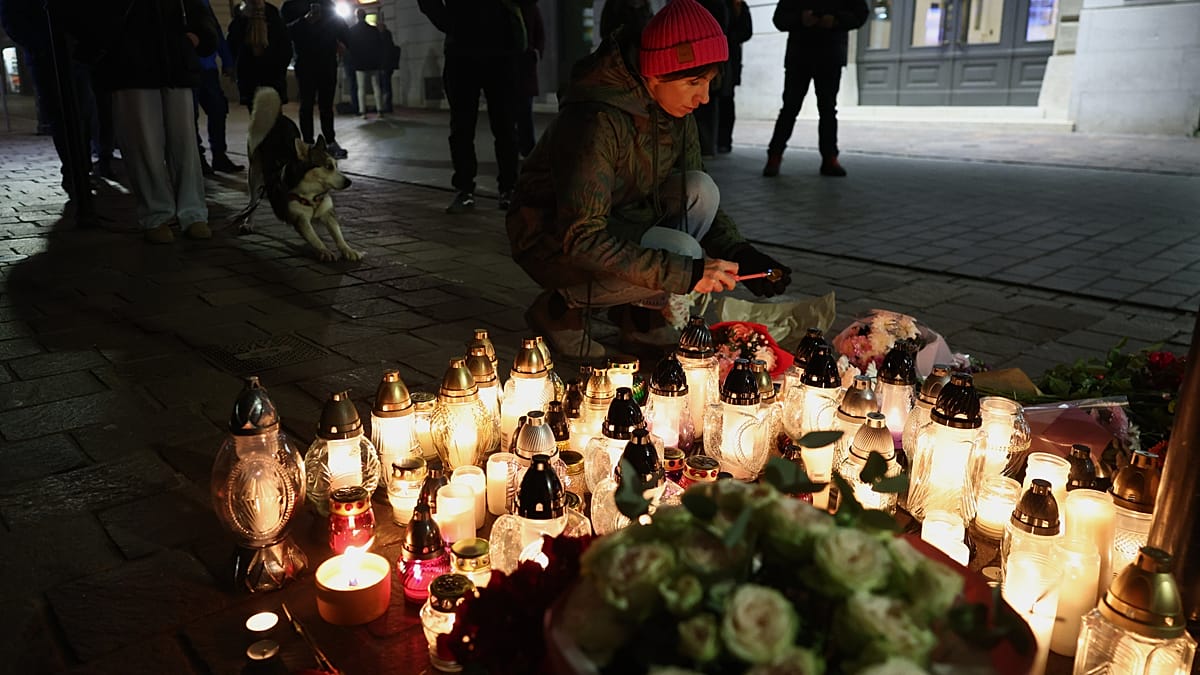
Kraków's historic Main Square reopened to the public on Sunday morning, barely a day after a gunman opened fire in the heart of the southern Polish city, killing six people and wounding fifteen others. The swift reopening, announced by municipal authorities, was accompanied by an outpouring of grief as residents placed candles and flowers at the site, transforming the medieval square into a makeshift memorial.
The attack, which took place on Saturday afternoon, sent shockwaves through Poland and across Europe. Witnesses described scenes of panic as the gunman, armed with a handgun, targeted people outside a popular café. Police confirmed that the suspect, a 34-year-old Polish citizen, was arrested shortly after the attack. His motive remains under investigation, though early reports suggest he had no prior criminal record.
By Sunday, the square had regained a semblance of normalcy, but the visible reminders of the violence were impossible to ignore. Bullet holes were still visible in the windows of the café where the attack began, and forensic teams continued their work in cordoned-off areas. The city's mayor, Jacek Majchrowski, urged residents to come together, saying, "Kraków is a city of culture and openness. We will not let fear divide us."
European solidarity and security concerns
The attack has prompted an outpouring of support from across the continent. European Commission President Ursula von der Leyen expressed her condolences on social media, writing, "Our hearts are with the people of Kraków. Europe stands with Poland in this difficult moment." Similar messages came from leaders in Germany, France, and the Czech Republic, with many offering practical assistance to Polish authorities.
The shooting has also reignited debates about public safety and gun control in Poland, which has some of the strictest firearms laws in the European Union. However, the ease with which the suspect obtained a weapon has raised questions about enforcement and the black market. Polish Interior Minister Mariusz Kamiński announced that a full review of gun licensing procedures would be conducted, saying, "We must ensure that such a tragedy never happens again."
Security experts have noted that while mass shootings are rare in Poland, the country has seen a rise in violent incidents in recent years. The attack in Kraków is the deadliest in the country since 2019, when a gunman killed five people in a Warsaw apartment building. The incident has also drawn attention to the broader issue of public safety in Central Europe, a region that has largely avoided the mass shootings seen in Western Europe and the United States.
Local authorities have announced three days of mourning, with flags at half-mast across the city. A vigil is planned for Monday evening in the Main Square, where residents will gather to honor the victims. The names of the deceased have not yet been officially released, but local media have reported that they include both Polish nationals and at least one foreigner.
The reopening of the square was a deliberate act of defiance, according to city officials. "We cannot let the actions of one individual dictate how we live our lives," said Deputy Mayor Bogusław Kośmider. "Kraków has survived centuries of turmoil, and it will survive this."
As the investigation continues, Polish police have urged anyone with information to come forward. Meanwhile, the European Union has offered its full support, with the European Parliament observing a minute of silence in memory of the victims. The attack has also prompted discussions about the need for a coordinated European response to violent extremism, though authorities have not yet classified the shooting as an act of terrorism.
For now, the people of Kraków are left to mourn and to heal. The candles that flicker in the Main Square are a testament to the city's resilience, and to the shared grief that has united Europe in the wake of this tragedy. As one resident told local television, "We are heartbroken, but we are not broken."