Searching for a parking spot on the congested streets of Athens may soon become less frustrating thanks to a new digital tool. Parkout, a free mobile application launched by the Municipality of Athens, uses a peer-to-peer model to connect drivers who are about to vacate a space with those actively looking for one.
The app does not rely on sensors or additional infrastructure. Instead, when a driver is ready to leave a parking spot, they signal this through the app. Nearby motorists seeking parking receive a real-time notification, allowing them to head directly to the newly freed space. The departing driver is asked to wait briefly so the incoming driver can claim the spot, creating a cooperative exchange.
Targeting Athens' Parking Pain Points
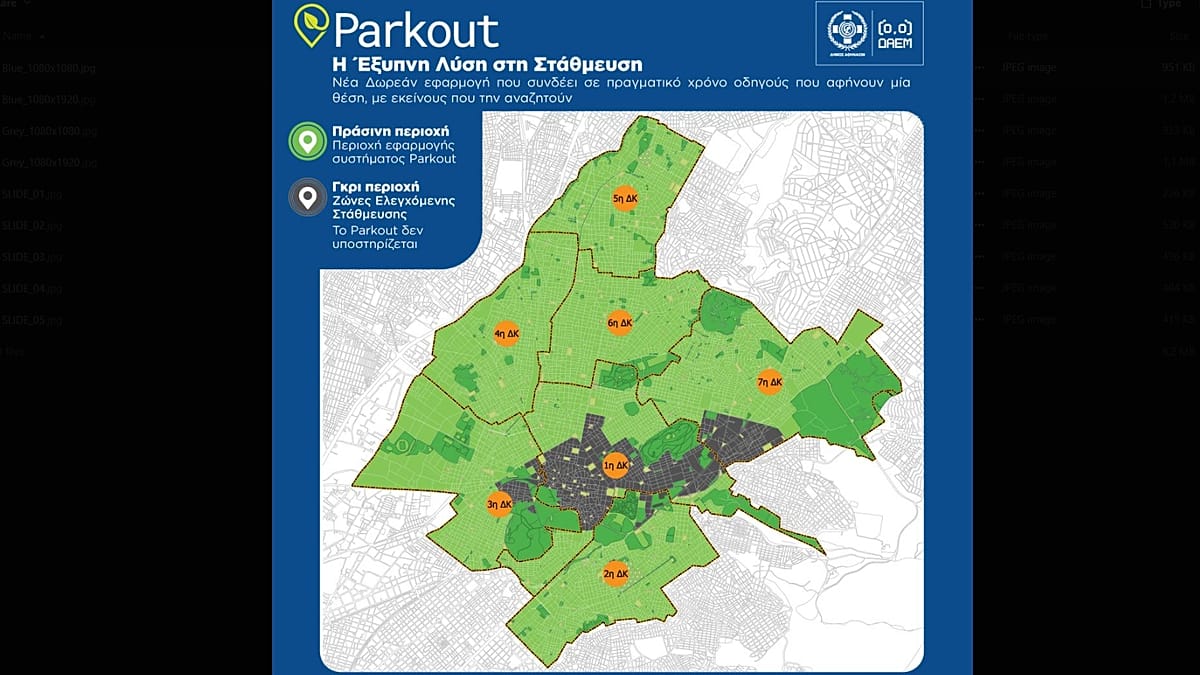
Parkout is designed for neighborhoods in the Greek capital where the city's controlled parking system does not apply. These include Patissia, Kypseli, Ampelokipoi, Pangrati, Neos Kosmos, Petralona, Kolonos, and Votanikos, among others. It is not available in areas with regulated parking, such as the Commercial Triangle, Plaka, the Acropolis vicinity, Kolonaki, Exarchia, Ilisia, and Lycabettus.
The initiative aims to reduce the time drivers spend circling blocks in search of a spot—a phenomenon that contributes to traffic congestion and higher carbon dioxide emissions. By facilitating direct communication between users, Parkout seeks to make urban mobility more efficient.
According to the municipality, the app offers a practical solution to one of the most common challenges faced by motorists in the capital. It leverages the immediate exchange of information to improve everyday life. The app is available for both Android and iOS devices.
Athens has been grappling with parking shortages for years, a problem exacerbated by narrow streets and high vehicle density. Similar peer-to-peer parking apps have emerged in other European cities, but Parkout is tailored to the specific layout and regulatory environment of Athens. The city's controlled parking zones, which cover the historic center and upscale districts, operate with permits and paid meters, leaving many residential areas without formal management.
The launch of Parkout comes amid broader efforts to modernize Athens' urban infrastructure. The city has also seen developments like the restoration of direct flights between Paphos and Athens, boosting connectivity. Meanwhile, the local bar scene has gained international recognition, with Athens bars topping the inaugural Europe's 50 Best list, highlighting the city's cultural vibrancy.
Environmental benefits are a key selling point. By reducing the time spent idling in traffic, Parkout could help lower fuel consumption and emissions in a city that frequently struggles with air quality. The app's reliance on user cooperation rather than costly hardware makes it an accessible tool for a wide audience.
Critics might question whether the peer-to-peer model can scale effectively, as it depends on a critical mass of active users. However, the municipality is optimistic that widespread adoption will create a self-sustaining network. Early feedback from beta testers in neighborhoods like Pangrati and Kypseli has been positive, with users reporting shorter search times.
For now, Parkout remains focused on Athens, but its model could inspire similar initiatives in other European cities facing comparable parking challenges. As urban populations grow, innovative solutions like this may become essential for managing limited street space.