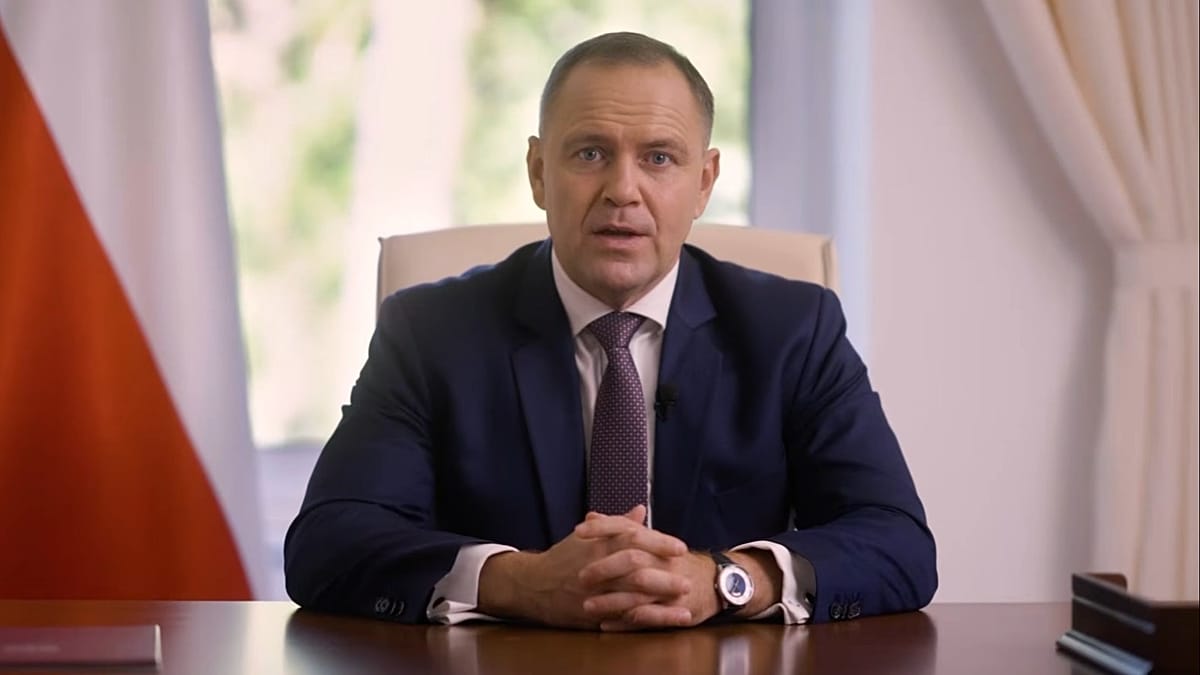
Polish President Karol Nawrocki on Friday vetoed a bill that would have introduced civil partnerships, dealing a setback to one of the ruling coalition's key social policy pledges. The legislation, championed by Prime Minister Donald Tusk's centrist government, aimed to create a legal framework for unmarried partners, including same-sex couples, granting them rights such as joint property ownership, access to medical information, and burial decisions.
In a statement posted on X, Nawrocki justified his decision by invoking the Polish Constitution, which defines marriage as a union between a woman and a man. "I have always emphasised that nothing that is a quasi-marriage can count on my support," he wrote. "As the guardian of the Constitution, I cannot accept a solution that would lead to the loss of the special status of marriage."
The bill, first submitted to the Sejm in December 2024, proposed a "status of the closest person" for unmarried partners. To soften opposition from conservative lawmakers, coalition leaders stressed that the status would not be limited to romantic partners—it could also apply to neighbours or family members living together. Despite these concessions, the legislation failed to win over the president, who is closely aligned with the nationalist Law and Justice party (PiS).
A Veto That Can Be Overridden—But Only in Theory
Under Polish law, the president's veto can be overturned by a three-fifths majority vote in the Sejm, the lower house of parliament. However, such a supermajority is rare in Poland's deeply divided political landscape. Tusk's Civic Coalition, which governs alongside the centre-right Third Way and the Left, holds 248 of the 460 seats—short of the 276 votes needed to override a veto. PiS and its allies, who control 194 seats, have consistently opposed the measure.
Tusk responded sharply to the veto, calling it "an expression of contempt toward people and their right to happiness and a normal life." The prime minister had made civil partnerships a flagship promise during the 2023 election campaign, pledging to introduce legislation within his first 100 days in office. But governing with more conservative coalition partners and sharing power with Nawrocki—a PiS ally—has slowed progress on social reforms.
The veto comes at a time when Polish public opinion is shifting. In 2025, the state research agency CBOS found that 62% of Poles supported legalising same-sex partnerships, the highest level of support ever recorded for the measure. Yet the political will to act on that sentiment remains constrained by the country's institutional checks and the influence of conservative factions.
Poland remains one of the few EU member states without any form of legal recognition for same-sex couples. Neighbouring countries like Germany, the Czech Republic, and Lithuania have all introduced civil unions or marriage equality in recent years. The veto underscores the persistent divide between Warsaw's liberal-leaning government and the conservative presidency, a dynamic that has also played out in other areas, such as judicial reform and media freedom.
For now, the bill's fate is uncertain. Tusk's coalition could attempt to reintroduce the legislation in a modified form, or push for a parliamentary vote to override the veto—though the latter seems unlikely given the current arithmetic. The issue is also likely to feature prominently in the next presidential election, scheduled for 2028, where Nawrocki's stance could become a rallying point for both supporters and opponents.
Elsewhere in Europe, similar debates have unfolded. In Hungary, Prime Minister Viktor Orbán's government has also resisted same-sex partnership recognition, while in the Baltic states, progress has been uneven. The Polish case highlights the broader tension between EU-level norms on non-discrimination and the domestic political realities of member states.