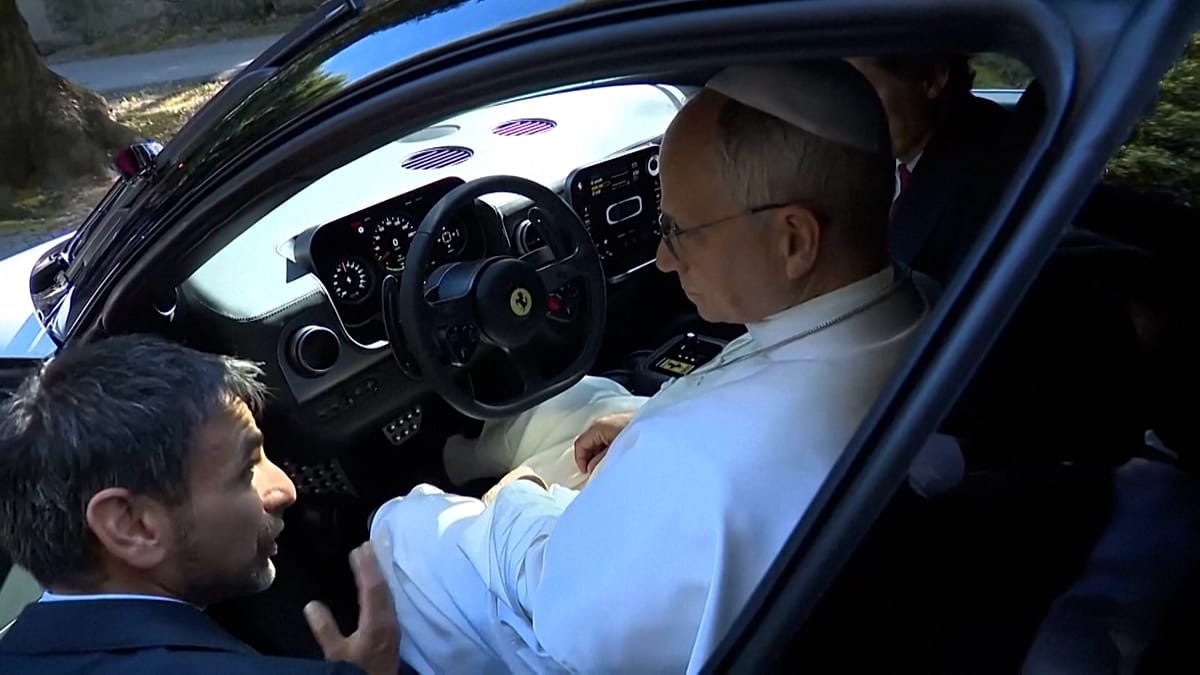
On 26 May, Pope Leo XIV welcomed Ferrari's first fully electric vehicle, the Luce, to the papal summer residence at Castel Gandolfo, south of Rome. The pontiff took the wheel for a brief test drive, marking a symbolic intersection of tradition and innovation that resonates across Europe's automotive and cultural landscapes.
A Papal Blessing for Electric Mobility
The Luce, whose name means "light" in Italian, represents Ferrari's strategic pivot toward electrification. The Maranello-based manufacturer, long synonymous with roaring V12 engines, has committed to having 40% of its sales be fully electric by 2030. The meeting with Pope Leo XIV, who has emphasised environmental stewardship and technological ethics since his election, underscores the broader European debate about sustainable luxury and industrial transformation.
Ferrari's CEO Benedetto Vigna described the encounter as "a moment of great emotion," noting that the Pope showed keen interest in the car's engineering and its potential to reduce emissions without sacrificing performance. The Luce is expected to retail at around €550,000, positioning it as a flagship for the brand's electric ambitions.
The event comes amid mixed reactions to Ferrari's electric strategy. Earlier this year, Ferrari's €550,000 EV sparked online mockery and political criticism in Italy, with some questioning the compatibility of high-performance electric vehicles with the country's cultural heritage and economic priorities. Yet the company argues that electrification is essential for long-term competitiveness, especially as the European Union tightens emissions regulations.
Vatican and the Green Transition
Pope Leo XIV has made climate action a cornerstone of his papacy, echoing his predecessor's encyclical Laudato Si'. The Vatican City State itself has invested in solar panels and electric vehicle charging stations, aiming to become carbon neutral by 2050. The Pope's willingness to test the Luce signals a pragmatic embrace of technology that aligns with these goals, even as the Church continues to grapple with the social implications of rapid industrial change.
Ferrari's move also reflects a broader trend in European luxury automotive manufacturing. Competitors like Porsche, with its Taycan, and Rimac, the Croatian hypercar maker, have already demonstrated that electric powertrains can deliver exhilarating performance. For Ferrari, the challenge is to maintain its exclusivity and driving emotion while navigating the shift away from internal combustion.
The Luce's debut at Castel Gandolfo is not the first time a Pope has engaged with cutting-edge transport. Pope Francis famously used a modified Fiat 500L as his popemobile, and earlier pontiffs have blessed everything from trains to spacecraft. But the electric supercar visit carries particular weight as Europe confronts the twin pressures of climate change and industrial competitiveness.
As the continent experiences spring heat surges that test readiness, the need for decarbonisation becomes ever more urgent. Ferrari's electric future, blessed by the highest authority in the Catholic Church, may help bridge the gap between tradition and transformation in a country where automotive heritage is deeply woven into national identity.
The Luce is expected to enter production in 2026, with Ferrari planning to build a dedicated assembly line at its Maranello plant. Whether the car will win over sceptics remains to be seen, but for one afternoon at least, the Pope's test drive offered a glimpse of a quieter, cleaner future for even the most passionate of driving machines.