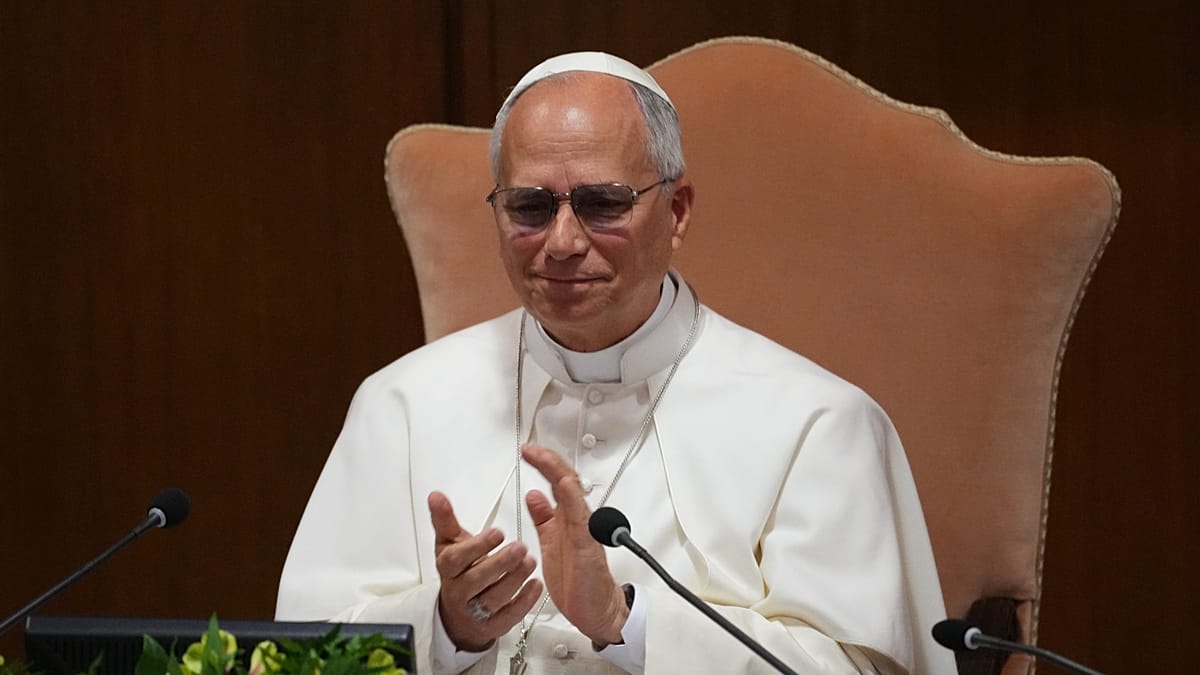
Pope Leo XIV has issued a sweeping encyclical warning that the global race to develop artificial intelligence—especially for military applications—is being driven by a 'culture of power' that risks creating new forms of slavery. The document, dated May 15, marks the first major papal intervention on AI and comes 145 years after a previous Pope Leo, Leo XIII, published Rerum Novarum, a landmark critique of the industrial revolution's exploitation of workers.
The encyclical, addressed to the Catholic Church's 1.4 billion followers, denounces the unchecked pursuit of technological supremacy, particularly in the development of ever more sophisticated remote warfare systems. 'The culture of power that fuels the AI race treats human life as expendable,' the pontiff writes, warning that autonomous weapons could reduce warfare to a 'video game' where moral responsibility is diluted.
Echoes of the Industrial Revolution
Leo XIV's text explicitly links the current AI boom to the social upheavals of the 19th century. Just as Leo XIII condemned the 'slavery' of factory workers under industrial capitalism, the new encyclical argues that AI-driven automation and surveillance risk creating a 'digital serfdom' where individuals are stripped of agency. The pope calls for international regulations to ensure AI serves human dignity, not corporate or state power.
The Vatican's stance aligns with growing concerns across Europe about the ethical implications of AI. In Brussels, the European Union has been drafting the AI Act, a comprehensive regulatory framework that seeks to ban certain high-risk uses of AI, including social scoring and real-time biometric surveillance. The encyclical could bolster the position of MEPs pushing for stricter rules on autonomous weapons.
However, the pope's critique extends beyond the battlefield. He warns that AI-driven algorithms in hiring, lending, and criminal justice can perpetuate systemic biases, effectively 'enslaving' marginalized communities. 'Technology must be a tool for liberation, not a chain,' the document states.
European Reactions and the Tech Race
The encyclical has drawn mixed reactions from European capitals. In Paris, President Emmanuel Macron's office noted that France supports 'ethical AI development' but stopped short of endorsing a ban on autonomous weapons. In Berlin, the Bundestag is debating a resolution to limit AI use in military drones, a move that could gain momentum from the papal intervention.
Meanwhile, the tech industry has pushed back. A spokesperson for a major European AI consortium argued that 'innovation cannot be shackled by moral panic,' pointing to the economic benefits of AI in healthcare and logistics. The pope's document, however, insists that profit and power must not override fundamental human rights.
The encyclical also touches on the geopolitical dimensions of the AI race, noting that competition between the United States, China, and Europe is exacerbating the problem. 'Nations vie for dominance as if technology were a new colony to be conquered,' Leo XIV writes, urging a 'new humanism' that prioritizes cooperation over rivalry.
For European readers, the pope's message resonates with ongoing debates about the EU's role as a regulatory superpower. As the bloc seeks to balance innovation with ethics, the encyclical offers a moral framework that could influence policy from the Élysée to the European Commission.
The document concludes with a call for a global summit on AI ethics, echoing proposals from the Vatican and the UN. Whether such a summit will materialize remains uncertain, but the pope's intervention ensures that the moral stakes of the AI race are now impossible to ignore.