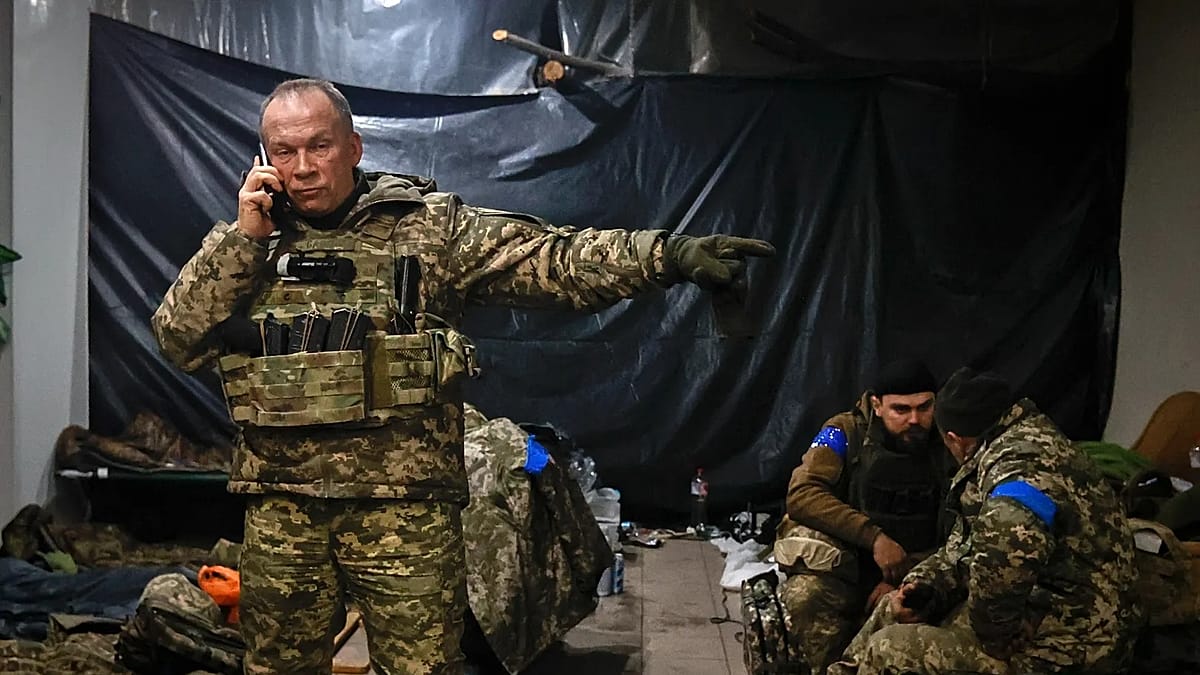
Ukraine's commander-in-chief, General Oleksandr Syrskyi, has cautioned that a decisive shift in the war with Russia remains a distant prospect, even as Ukrainian forces continue to inflict significant losses on the invading army. In a Telegram post, Syrskyi acknowledged that while his troops have slowed Moscow's advance and raised the cost of the invasion, it would be a mistake to underestimate the Kremlin's resolve.
“The aggressor has not abandoned its plans for the complete occupation of the Luhansk and Donetsk regions,” Syrskyi wrote. He added that Russian forces are seeking to expand offensive operations into the Dnipropetrovsk and Zaporizhzhia regions, as well as establish a buffer zone in northern Ukraine. The intensity of Russian missile and drone strikes has also increased, he noted.
The front line has seen only minor shifts in recent months, but the human toll remains severe. According to data from the Center for Strategic and International Studies, Ukrainian forces have suffered between 525,000 and 625,000 casualties, including 125,000 to 150,000 fatalities, from February 2022 to June 2026. Russian losses are even higher: an estimated 1.4 million casualties and up to 450,000 deaths over the same period.
Ukraine's Counterstrikes on Russian Energy
In response to relentless bombardment of cities like Kyiv and Kherson, Ukraine has intensified its campaign against Russia's energy infrastructure. Targeted strikes on oil refineries, depots, and terminals aim to disrupt one of Moscow's most critical revenue streams. These attacks have sparked fuel shortages across Russia and occupied territories, with long queues at petrol stations and rising prices forcing the Kremlin to ban diesel exports to mitigate the impact.
President Volodymyr Zelenskyy confirmed this week that Ukraine's Security Service had struck refineries in Stavropol and Tver, an oil pumping station in Ufa, and a loading terminal in Rostov. Syrskyi reported that over the past six months, Ukraine has hit 697 targets inside Russia.
Speaking at the 2026 NATO summit in Ankara, Zelenskyy said nearly 28,000 Russian soldiers were “eliminated” in June alone, the vast majority by drones—a weapon that has become a defining feature of the conflict. The summit also highlighted broader alliance dynamics, as NATO's cohesion faces tests from internal strains and shifting US priorities.
Patriot Missile Production in Ukraine
In a significant development, US President Donald Trump announced that Washington would grant Kyiv a license to produce its own Patriot air defence missiles. Zelenskyy has long pressed for more of these advanced systems to bolster Ukraine's air defences against Russian missile and drone barrages. “We're going to give a license to you to make Patriots,” Trump told Zelenskyy in Ankara, though he had yet to inform the missile's manufacturers. Technical talks are still needed before production can begin.
The Patriot system, one of the most sophisticated air and missile defence platforms in the world, could significantly enhance Ukraine's ability to protect its cities and critical infrastructure. However, the timeline for local manufacturing remains unclear.
As the war grinds into its fifth year, Syrskyi's sober assessment underscores the reality that Ukraine faces a long, attritional struggle. While Kyiv has demonstrated its capacity to strike deep inside Russian territory and disrupt Moscow's energy exports, the Kremlin shows no sign of abandoning its maximalist goals. The coming months will test both sides' ability to sustain the fight, with European capitals watching closely as the conflict continues to reshape the continent's security landscape.