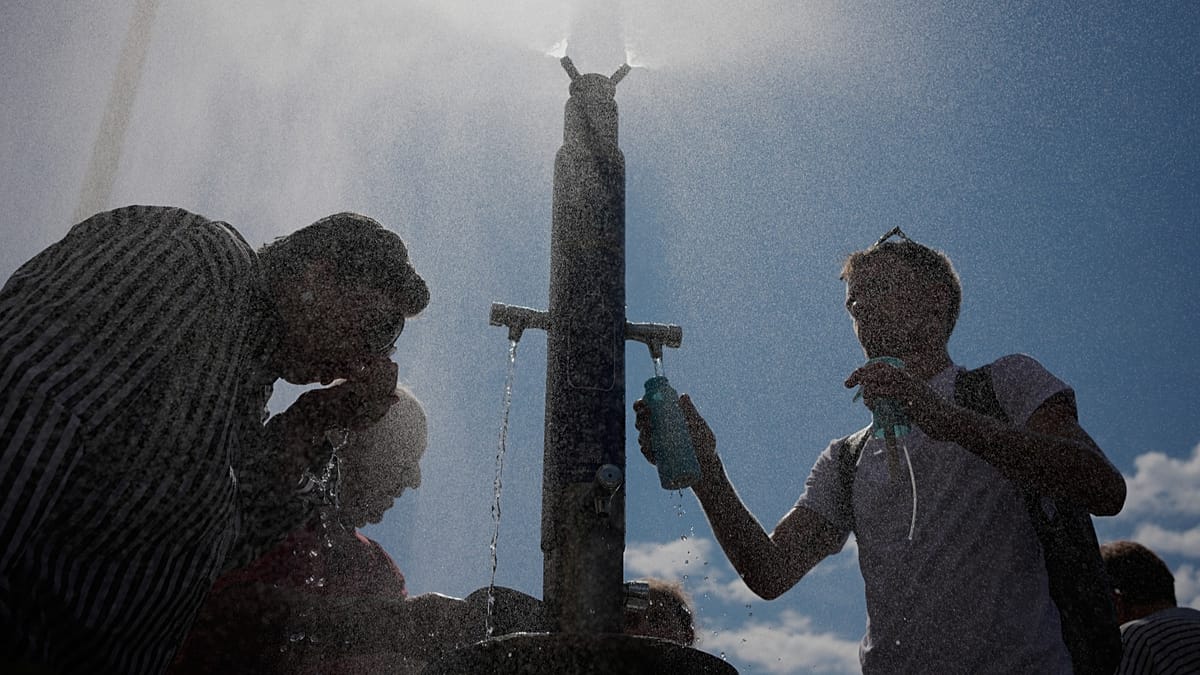
On Friday, the French government took the unprecedented step of activating an “Orsec extreme heat plan” for several departments in western France as a new heatwave intensifies and is expected to persist until at least Bastille Day on 14 July. The plan, typically reserved for natural disasters such as floods, was triggered for areas under a red heat alert, including Morbihan, Ille-et-Vilaine, Mayenne, Sarthe, Loire-Atlantique, Vendée, Maine-et-Loire, Vienne, and Deux-Sèvres.
Government spokesperson Maud Bregeon told TF1 that “consultations, exchanges and work have been carried out” to coordinate the response. Météo France reported that nine departments were placed on red alert on Friday, with 72 under orange alert. The red warning will expand to 24 departments on Saturday at midday, covering all of Île-de-France, including Paris.
Wildfires and Health Impacts
Wildfires have already consumed more than 25,000 hectares (250 square kilometres) of land this year—double the area burned by the same date in 2025, according to Julien Marion, director general of civil security. “Since the beginning of the year, we have recorded a little over 8,000 fire outbreaks,” he said, noting that the increase is linked to the third heatwave since May.
The health toll is mounting. Official figures show over 2,000 excess deaths during the June heatwave and 300 during the late-May hot spell. France’s High Council for Climate warned on Thursday that national policies to combat global warming are “insufficient.” Expert Valerie Masson-Delmotte cautioned: “We are entering a dangerous zone. Our infrastructure, land-use planning, ecosystems, and economic activities have evolved based on a climate that no longer exists.”
In response, the government is opening cooling centres for vulnerable groups, including the elderly and homeless. Of the 30,000 air conditioning units promised to hospitals, 6,000 have been delivered and installed, Bregeon said. France operates more than 2,900 health facilities.
The extreme heat is part of a broader European pattern. As Southern and Central-Eastern Europe bear the brunt of extreme heatwaves, France’s experience underscores the continent’s vulnerability. Meanwhile, Germany braces for another heatwave with temperatures up to 38°C this weekend, highlighting the widespread nature of the crisis.
The Orsec plan’s activation marks a shift in how France prepares for climate-related emergencies, moving beyond floods to address the growing threat of extreme heat. With temperatures expected to remain high through the national holiday, authorities are urging caution and preparedness.