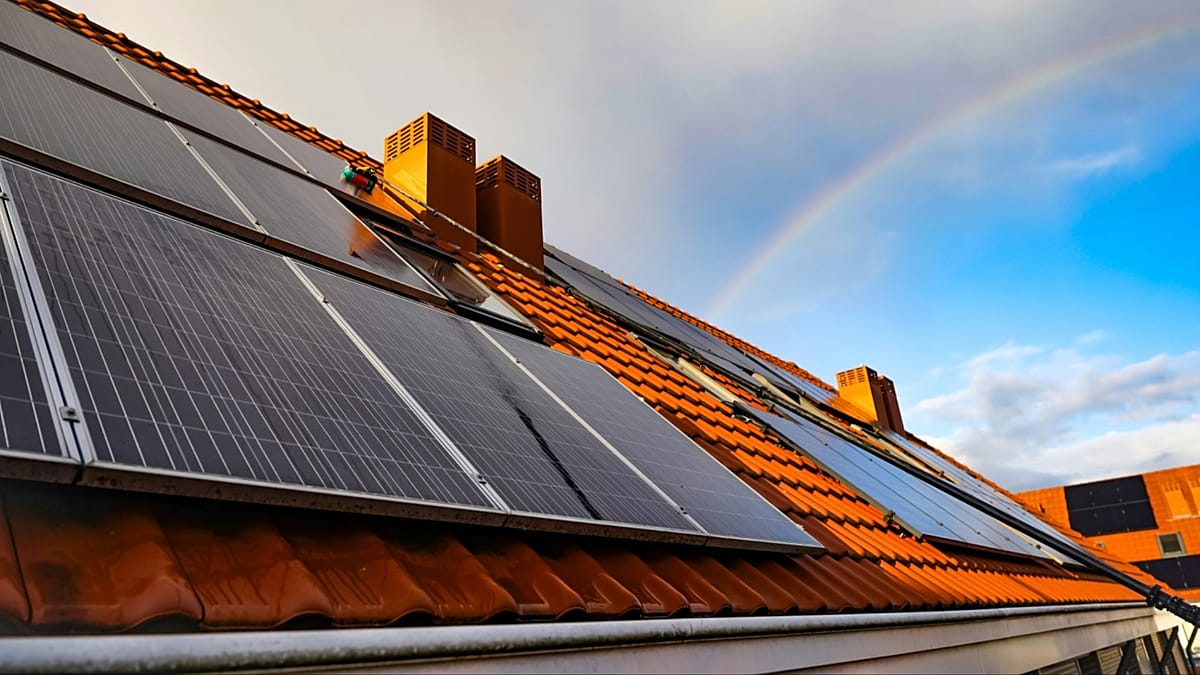
As Europe swelters under another intense heatwave, with temperatures breaking records in France and the heat shifting eastward across central Europe, a new analysis from energy think tank Ember offers a glimmer of relief: a typical UK home with rooftop solar panels generates enough electricity to run an air conditioning unit for five hours per day. But the question remains—can air conditioning ever be truly environmentally friendly, even when powered by sunlight?
The Environmental Cost of Cooling
The International Energy Agency (IEA) estimates that space cooling—primarily air conditioning, but also fans—consumed around 2,100 terawatt-hours (TWh) of electricity in 2022, roughly seven percent of global electricity. Much of this power comes from fossil fuels, making AC a significant driver of carbon emissions. In 2022, space cooling caused approximately one billion tonnes of CO2, nearly three percent of total global emissions.
With climate change pushing temperatures higher, the number of AC units worldwide could triple by 2050 to 5.5 billion. The European Union, which currently has a lower uptake of AC compared to regions like the United States, is forecast to have over 275 million units by 2050. In the UK, the Climate Change Committee has urged the government to invest in AC and other cooling methods, such as green shading, for public services like schools. A 2026 assessment suggests 22 percent of UK buildings will need active cooling under a 2°C warming scenario.
AC has proven benefits: the 2021 Lancet Countdown report estimated that cooling units prevented nearly 200,000 premature deaths in 2019. Yet, researchers at the University of Birmingham warn that in a worst-case scenario, AC could produce more CO2 than the current annual emissions of the United States by 2050.
Solar and AC: A Complementary Pair?
Ember's analysis highlights the synergy between solar power and air conditioning. “Solar power and air conditioning are complementary technologies with similar seasonal patterns, though air conditioning use tends to be weighted later in the day,” the think tank states. On 21 and 22 June, a typical UK rooftop solar installation generated 15 MWh, enough to power a full-house AC setup for five hours per day. Across the 1.9 million UK homes with rooftop solar, that translates to 10 million solar-powered AC hours per heatwave day.
However, the environmental impact of AC extends beyond electricity consumption. Air conditioning units rely on refrigerants—chemical blends like hydrofluorocarbons (HFCs) and hydrochlorofluorocarbons (HCFCs)—which are potent greenhouse gases, trapping thousands of times more heat than CO2. According to Our World In Data, greenhouse gas emissions from ACs totaled 1,750 tonnes of CO2 equivalent in 2022, accounting for 3.2 percent of all greenhouse gas emissions.
While AC units are becoming more energy-efficient, the IEA notes that globally, people buy units that are half as efficient as the best available options, often due to upfront costs. In an average UK home, installation costs around £2,500 (€2,895) per room. The EU and UK are phasing out fluorinated gases in favor of natural refrigerants like propane and CO2, but propane's flammability complicates installation. A ban on F-gases in smaller self-contained AC units is expected in the EU by 2032, with other systems following by 2035, and all HFCs eliminated by 2050.
The Urban Heat Island Effect
Even with efficient units, the process of absorbing heat from indoors and dumping it outside contributes to the urban heat island effect, where heat is trapped between buildings and absorbed by asphalt and concrete. According to the EU's Copernicus Climate Change Service (C3S), the centers of London and Paris regularly record temperatures around 4°C higher than rural surroundings at night.
“As global temperatures rise, we risk being locked into an ‘arms race’ where defending ourselves against extreme heat is causing the issue to get worse,” says Professor Yuli Shan from the University of Birmingham. This dilemma underscores the need for a broader approach to cooling, including passive measures like green roofs and shading, alongside solar-powered AC.
For a deeper dive into the political and practical challenges of air conditioning in Europe, see our analysis: Air Conditioning in Europe: The Facts Behind the Heated Political Debate. Meanwhile, the EU's energy transition continues to evolve, as EU Energy Ministers Win Greater Control Over Bloc's Future Grid After Clashes with Commission.