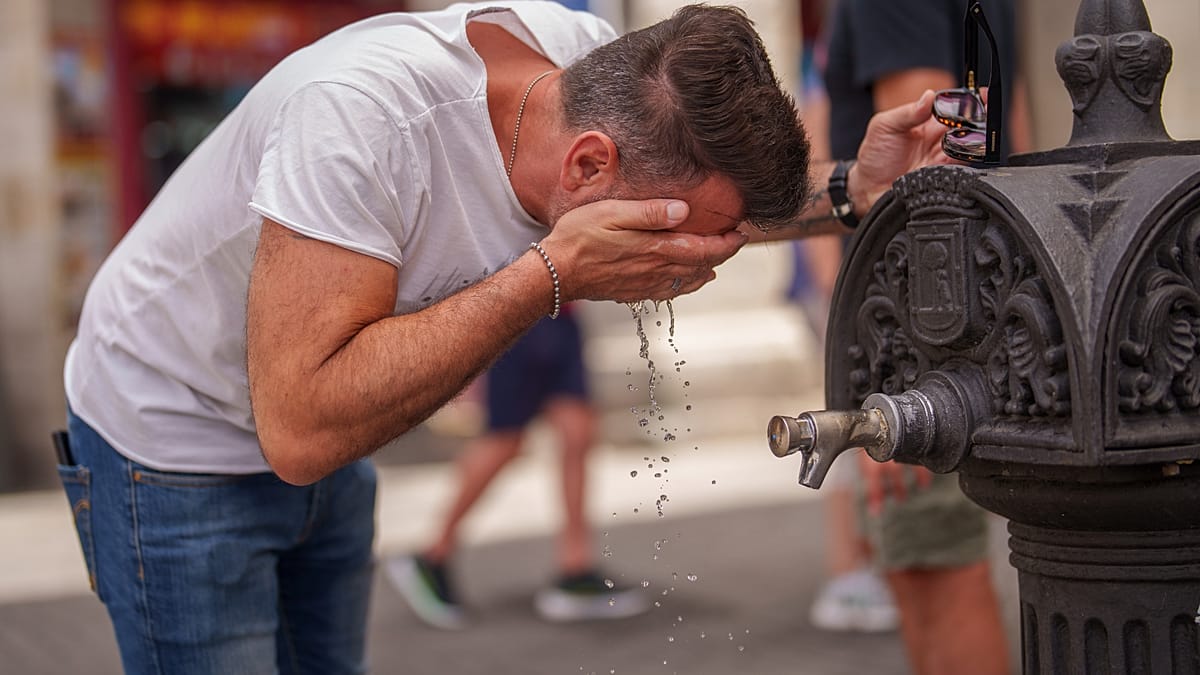
From the parched plains of Andalusia to the shrinking Danube, Europe's water crisis is no longer a distant threat but a present reality. This summer's record heat has left 38 percent of the continent's land in drought, according to the European Commission, and decades of overuse, mismanagement, and pollution have pushed lakes, rivers, and aquifers to their limits. In response, Brussels has unveiled an ambitious plan to make the EU water-resilient by 2030 and beyond.
A system under strain
Water stress is measured by the European Environment Agency (EEA) using the Water Exploitation Index Plus (WEI+), which flags stress when a country uses 20 percent of its renewable freshwater resources and severe stress at 40 percent. Today, 30 percent of Europeans and 20 percent of the EU's land face water scarcity every year, the Commission reports. The continent's water system is already stretched thin: total water abstractions fell by 14 percent between 2000 and 2023, yet the EU still withdraws around 200,000 cubic metres annually—often more than nature can replenish.
Emerging industries are adding pressure. Semiconductor fabs and data centres, vital to Europe's digital ambitions, consume vast amounts of water. Meanwhile, wastewater reuse remains negligible—only 2.4 percent of treated wastewater is recycled, a fraction of what is possible. Aging infrastructure compounds the problem: Europe loses an average of 23.5 percent of its treated drinking water to leaks before it reaches consumers, according to the 2026 EurEau report. Investment varies wildly—Germany spends €9 billion a year on water networks, France €6.5 billion, while Slovenia manages just €100 million.
Climate change intensifies the crisis
Climate change is amplifying these pressures. Temperatures in Europe are rising at 0.56°C per decade—double the global average—according to Copernicus, the EU's Earth observation programme. Droughts are more frequent and severe: in 2024 alone, they affected over 600,000 square kilometres of land, damaging forests and croplands. The EEA projects that by 2050, droughts will intensify, increasing evaporation and further depleting already-stressed reserves.
Pollution makes matters worse. Over-abstraction concentrates nutrients and chemicals in groundwater, as the EEA explained to Euronews, reducing the amount of clean, usable water. This vicious cycle—overuse, pollution, and climate change—leaves Europe with few buffers against extreme weather.
The Water Resilience Strategy
Launched in June 2025, the EU's Water Resilience Strategy is a comprehensive response. It aims to protect the water cycle, promote a water-smart economy, and ensure access to clean, affordable water for all Europeans. The strategy includes more than 50 actions, with an online tracker monitoring progress—three are already complete.
Thomas Bajada, the Maltese MEP who shepherded the strategy through the European Parliament, stresses a fundamental shift in mindset. “Water is no longer just an environmental investment. It is an investment in people's wellbeing, Europe's food security, public health, economic competitiveness and resilience,” he told European Pulse. “If Europe underinvests in water today, it will not be institutions that feel the consequences first, it will be ordinary people.”
The strategy's first pillar focuses on restoring the natural water cycle. A “sponge facility” will help ecosystems retain, purify, and release water, boosting biodiversity and resilience. Shared water-scarcity indicators and early warning systems will improve preparedness for droughts.
The second pillar targets water quality. Stronger enforcement of the Water Framework Directive aims to improve the ecological health of rivers and lakes, while measures to reduce pollution and remove contaminants from drinking water protect public health.
Efficiency first
The third pillar introduces a “water efficiency first” principle, prioritising waste reduction over new supply sources like desalination. The EU has set a target of a 10 percent increase in water efficiency by 2030, through measures such as water reuse in agriculture and industry, smart planning for digital and industrial sectors, and reducing leakage in public supply networks. A Digital Action Plan will modernise water management with smart metering, AI-based forecasting, satellite soil-moisture monitoring, and leak detection.
Bajada cautions that the 10 percent target is a political signal, not a one-size-fits-all solution. “Climate change affects European regions differently,” he said, calling for sector-specific and basin-level goals that reflect the diverse water uses and risks across agriculture, industry, public supply, and energy.
The final pillar encourages water-efficient products through the Ecodesign Regulation and supports water pricing based on usage and ability to pay, ensuring fair access while promoting conservation. Member states are also required to inform citizens about national water conditions and involve them in water management plans.
As Europe grapples with leaks, overuse, and pollution, the strategy offers a roadmap—but implementation will be key. With France already imposing water restrictions and Balkan rivers hitting record lows, the urgency is clear. The EU's plan is a bold step, but its success will depend on sustained investment and political will across all 27 member states.