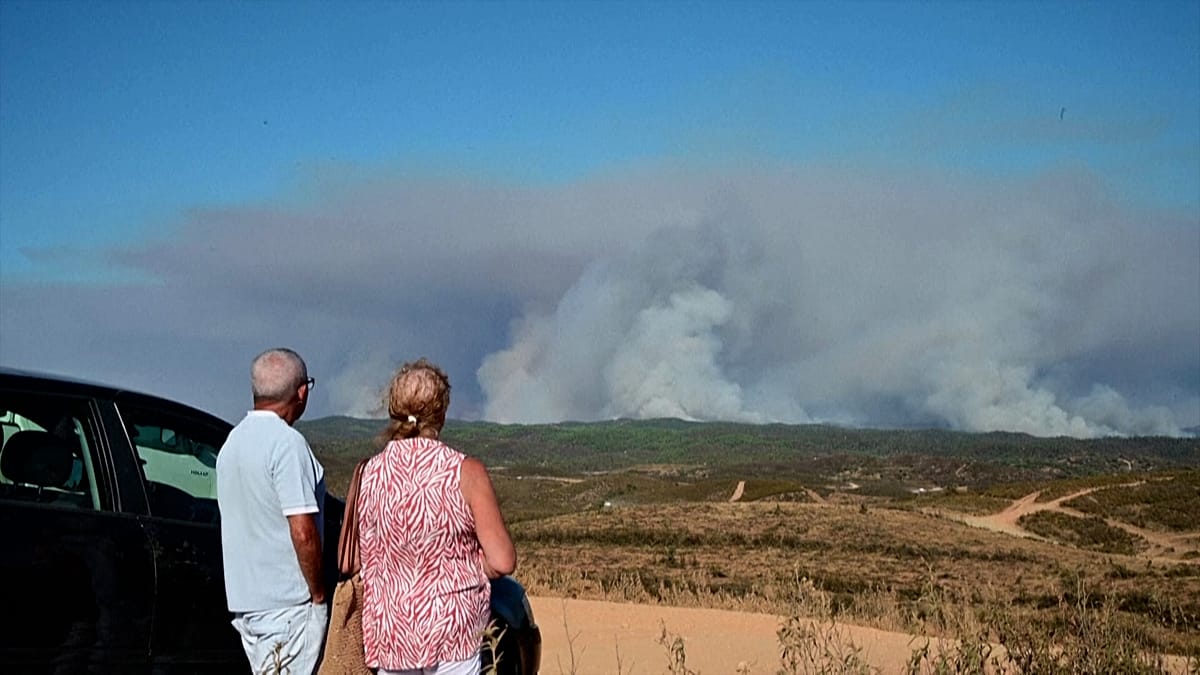
A large wildfire raging in Spain's southwestern province of Huelva has forced around 800 residents to flee their homes, with authorities reporting that roughly 20,000 hectares of land have already been scorched. The fire, which broke out amid an intense heatwave and prolonged drought, is one of the most serious blazes to hit the Iberian Peninsula this summer.
Emergency services, supported by military units and water-dropping aircraft, have been battling the flames for days. The fire has threatened several small villages and rural properties, prompting preventive evacuations as a precaution. Local officials said the blaze has been difficult to contain due to strong winds and extremely dry vegetation, conditions that have turned the region into a tinderbox.
Drought and heat: a combustible combination
The Huelva fire is the latest in a series of wildfires that have erupted across southern Europe this season. In Spain, the drought has been particularly severe, with reservoirs in Andalusia at critically low levels and agricultural regions struggling to cope. The situation is not unique to Spain: France has imposed water restrictions across nearly 70% of its territory, and other Mediterranean countries are facing similar challenges.
Climate scientists point to a clear trend: rising temperatures and reduced rainfall are making wildfires more frequent and more intense. "The Mediterranean basin is a climate change hotspot," said Dr. Elena Martínez, a researcher at the Spanish National Research Council. "We are seeing longer fire seasons and fires that behave in ways we haven't experienced before."
The blaze in Huelva has also strained regional resources, with firefighters working around the clock. In neighbouring regions, a separate fire near Tírig in Castellón has burned 810 hectares, adding to the pressure on emergency services.
Evacuations and community response
Local authorities have set up temporary shelters for evacuees, many of whom left their homes with little more than personal documents. "We had to leave everything behind," said María Gómez, a resident of one of the affected villages. "The smoke was thick, and the police told us to go immediately."
The Spanish government has pledged support, with Prime Minister Pedro Sánchez expressing solidarity with those affected. The military's emergency unit, known as UME, has been deployed to assist in firefighting efforts. So far, no injuries have been reported, but the economic and environmental toll is expected to be significant.
Wildfires are not new to Spain, but their scale and timing are changing. Three wildfires raged simultaneously across Spain earlier this month, and the pattern is repeating across the continent. From Albania to Portugal, record heat has fueled fires that have forced evacuations and destroyed thousands of hectares of forest.
Experts warn that the current drought could persist, with forecasts suggesting little rain in the coming weeks. For Huelva, the immediate priority is containment, but the longer-term challenge is adapting to a climate that is becoming increasingly fire-prone. As one firefighter put it, "We are fighting not just the flames, but the new reality of a hotter, drier Europe."