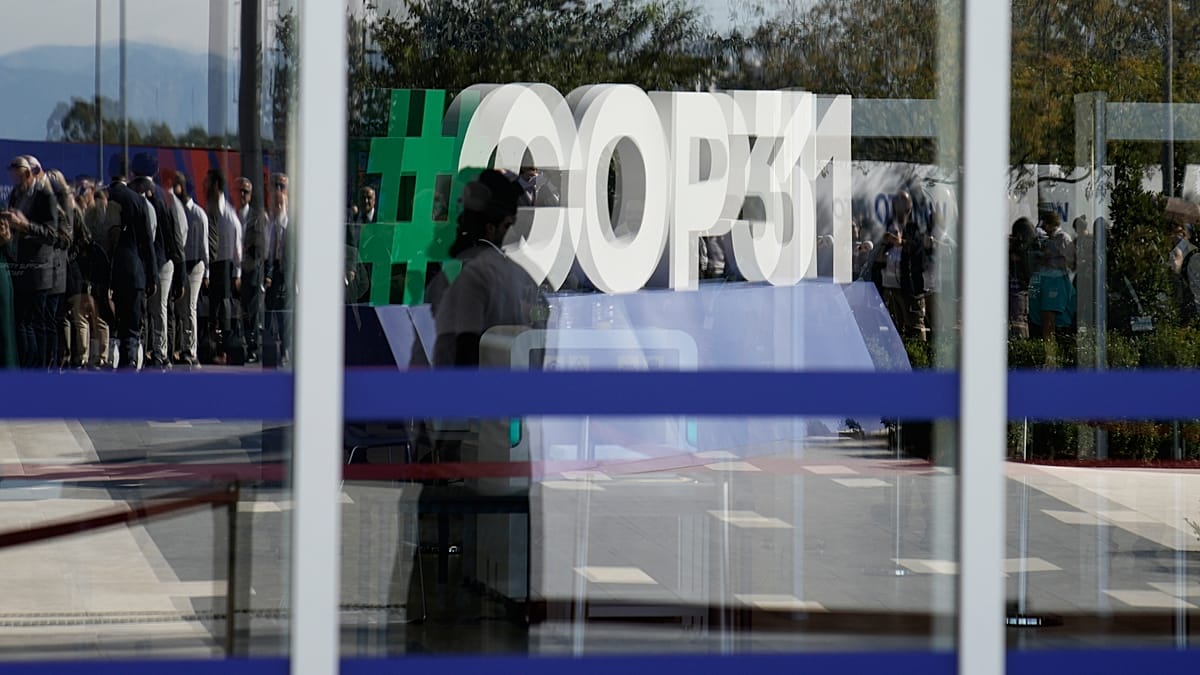
As the opening day of COP31 in Belém gets underway, health is finally taking centre stage—but the money is not following. Researchers warned on Monday that only a sliver of global climate finance reaches healthcare, leaving hospitals and clinics across Europe and beyond dangerously exposed to the accelerating impacts of extreme heat, floods, and drought.
“Health financing is only a very, very minor part, with 1% of overall climate finance spending,” said Dennis Tänzler, executive director at Adelphi Research, an independent think tank focusing on environmental and development policy. The figure underscores a systemic neglect: while governments increasingly acknowledge the health consequences of a warming planet, investment in preparing health systems has not kept pace with the risks.
A growing toll on lives and livelihoods
The human cost is already stark. According to the 2026 Lancet Countdown report on climate change and health, heat was associated with an estimated 710,000 deaths worldwide in 2023, with roughly 71% of those attributable to human-caused climate change. And that was not the hottest year on record. “Since then, 2024 was an even harder year, 2025, and now 2026. So these values are going to continue to increase,” said Stella Hartinger, regional director of the Lancet Countdown for Latin America.
Europe has not been spared. Provisional UN estimates put excess mortality across the continent at more than 30,000 people over the summer, with approximately 16,000 excess deaths during the 22–28 June heatwave alone. The continent’s ageing population and urban heat islands make it particularly vulnerable, yet national health budgets remain woefully underfunded for climate adaptation.
Beyond mortality, rising temperatures are taking an economic toll on households. A separate analysis by Adelphi Research covering eight countries—including France, Italy, and other EU states—found that heat stress forces workers to cut hours, take extra breaks, or stop altogether. Heat-related illnesses also drive up out-of-pocket medical expenses, especially where access to health insurance and paid sick leave is limited.
Brazil’s struggle mirrors a global challenge
Brazil, the host of COP31, illustrates the difficulty of adapting a universal healthcare system to a warming climate. The country’s Sistema Único de Saúde (SUS) provides free healthcare to all, but growing climate risks and deep social inequalities are straining its ability to protect vulnerable communities, particularly those far from major cities.
Daniel Porcel, from Brazil’s Talanoa Institute, said financing remains the main obstacle. “How do we make SUS ready for the new climate reality?” he asked, pointing to the need to reinforce hospitals against extreme weather and to train medical professionals for climate-related illnesses. Brazil approved a national climate adaptation plan last year, including 16 sectoral plans—one specifically for health—but Porcel stressed that more investment is essential.
The funding gap is not unique to Brazil. Across Europe, from Lisbon to Warsaw, health systems are grappling with how to cope with more frequent heatwaves, wildfires, and vector-borne diseases. The superbug crisis, which already claims 35,000 lives a year in the EU, is likely to be compounded by climate pressures, as are the warnings from the UN climate chief that global warming is now a health emergency on a pandemic scale.
Experts argue that climate finance must be rebalanced. Currently, the vast majority of funds go to mitigation—reducing emissions—while adaptation, and health adaptation in particular, receives a pittance. The political will at COP31 will be tested by whether negotiators can shift this allocation.
For Europe, the stakes are immediate. The summer of 2026 has already shown that heatwaves can overwhelm emergency services and morgues. Investing in climate-resilient health infrastructure—from cooling centres in Paris to flood-proof hospitals in the Balkans—is no longer a future concern but a present necessity. As the Lancet Countdown makes clear, every year of delay translates into more avoidable deaths and greater strain on health workers.
The message from Belém is unambiguous: health must move from the margins to the core of climate finance. Without a dramatic increase in funding, the continent’s healthcare systems will continue to be caught off guard by a crisis that is only intensifying.