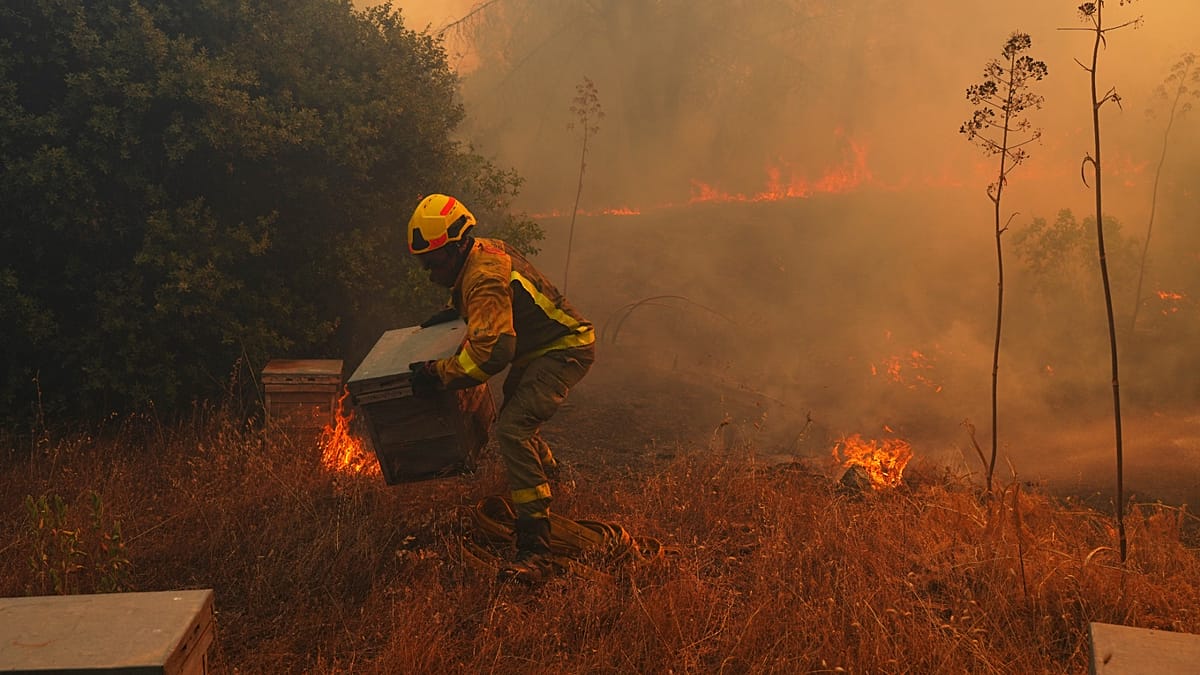
Firefighters in eastern Spain are locked in a difficult battle against a wildfire that has scorched 810 hectares near the town of Tírig, in the Castellón province of the Valencian Community. The blaze broke out on Friday and has since drawn a substantial response: more than 300 ground personnel and 21 aircraft are now deployed, according to regional emergency services.
The fire is burning through rugged, dry terrain, complicating access for ground crews. Aerial units have been dropping water and retardant in an effort to slow the advance, while bulldozers and hand crews work to establish containment lines. Local authorities have not reported any injuries, but several hamlets and farmhouses in the immediate vicinity have been evacuated as a precaution.
Heat and drought fuel the flames
The Castellón outbreak is the latest in a series of wildfires that have tested southern Europe this summer. A prolonged heatwave, combined with months of below-average rainfall, has left vegetation exceptionally dry. In Spain, the national weather agency AEMET has recorded temperatures several degrees above the seasonal norm, and forecasters warn that conditions will remain challenging over the coming days.
This is not an isolated incident. Wildfires in Huelva and Castellón have already forced hundreds to evacuate this season, and the pattern extends beyond the Iberian Peninsula. A wildfire above Lake Garda in Italy recently forced the evacuation of 200 residents and tourists, while blazes have also been reported in Albania and Greece. The broader picture is one of a continent increasingly exposed to fire risk as climate change intensifies.
In Spain, the regional government of Valencia has activated its emergency coordination centre, and the Military Emergency Unit (UME) has been placed on standby. The UME, a specialised branch of the armed forces, has been deployed in previous major fires, and its involvement underscores the severity of the situation.
Local impact and response
The fire has disrupted daily life in the rural communities around Tírig, a municipality known for its prehistoric rock art and olive groves. Roads have been closed, and residents have been advised to stay indoors where possible. The regional forestry service has asked the public to avoid the area to allow emergency vehicles free passage.
Environmental groups have pointed to the fire as another example of the pressures facing Mediterranean ecosystems. "These fires are becoming more frequent and more intense," said a spokesperson for the environmental NGO SEO/BirdLife. "We need to invest in prevention, not just response."
Scientists have long warned that the Mediterranean basin is a climate change hotspot, with rising temperatures and shifting rainfall patterns increasing the likelihood of large fires. A study published earlier this year by the European Commission's Joint Research Centre found that the area burned by wildfires in southern Europe has increased by nearly 50% over the past decade compared to the 1990s.
For now, the immediate priority is containment. Firefighters are working in shifts around the clock, and additional resources have been requested from neighbouring regions. The Spanish government has offered support, and the EU's Copernicus satellite system is providing real-time mapping of the fire perimeter to assist coordination.
As the blaze continues, residents are hoping for a change in the weather. Forecasts suggest a slight drop in temperatures later in the week, but little rain is expected. The fire in Tírig is a stark reminder that, in a warming Europe, the fire season is no longer a summer anomaly but a recurring challenge that demands sustained attention and resources.