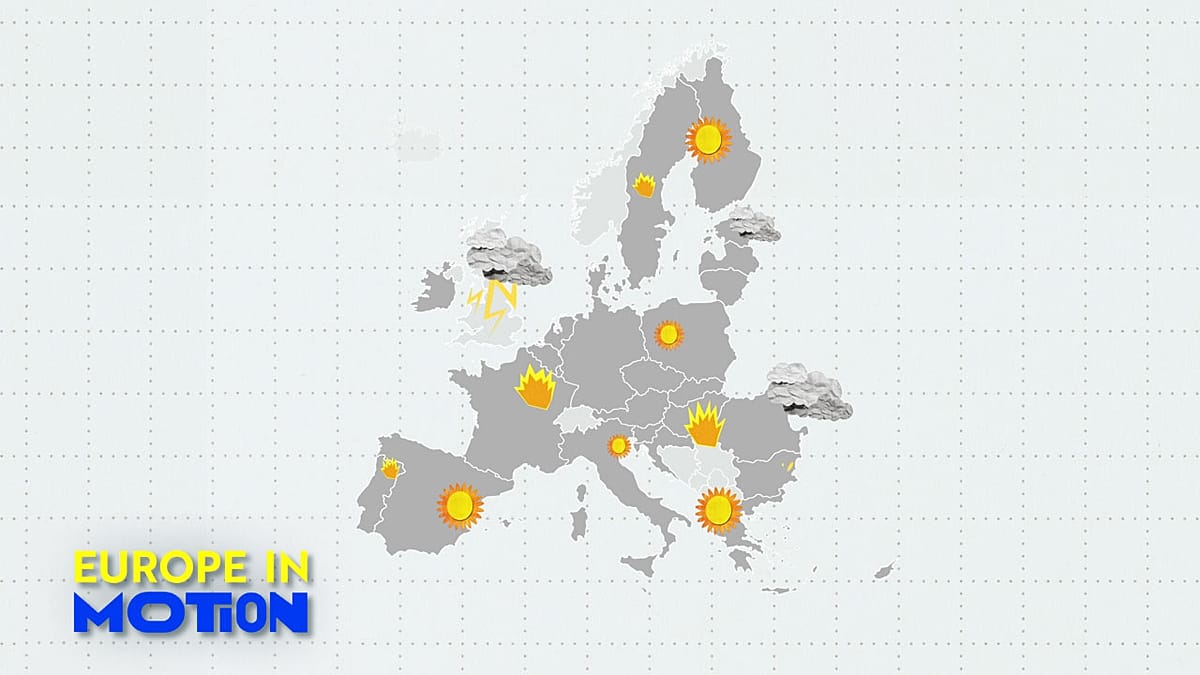
As another record-breaking heatwave sweeps across the continent, new research from the European Environment Agency (EEA) and Eurofound reveals that the burden is far from evenly shared. Four out of five Europeans report being affected by extreme weather, but the intensity and type of hazard vary sharply by region.
Regional Disparities in Climate Impacts
In southern and central-eastern Europe, more than 85% of respondents have experienced climate-related disruption, from severe outdoor heatwaves to unbearable indoor temperatures. Wildfires and their smoke were reported by 41% of respondents in Greece, 35% in Portugal, and 20% in Cyprus, compared to a European average of just 8%. Currently, southern Europe is battling wildfires that have forced thousands to evacuate and even prompted officials to ban spectators from a portion of the Tour de France cycling race. On 3 July, Copernicus satellites captured a smoke plume drifting westwards over the Atlantic from wildfires across north-west Portugal.
Conversely, flooding affects different regions: nearly 26% of respondents in Austria and 19% in Slovenia reported being affected, against an EU-wide average of 11%. These contrasting hazards underscore the continent's diverse climate vulnerabilities.
Income, Housing, and Health as Key Factors
A person's income, housing quality, and health significantly shape how severely extreme climate events impact them. Nearly 40% of Europeans cannot afford to keep their homes cool during summer heat peaks. The highest share of respondents unable to afford cooling is in central-eastern Europe at 46.1%, compared to 30.1% in northern Europe. For households struggling to make ends meet, this figure rises to over 66%, prompting significant worry about the future across Europe.
More than 60% of people in southern Europe report deep concern about future temperature extremes—more than double the level recorded in northern Europe. This anxiety is compounded by the region's higher exposure to heatwaves and wildfires.
The findings align with broader European efforts to address heat resilience. The EU is pushing a holistic cooling strategy as heatwaves test the continent's preparedness. Meanwhile, the WHO has warned that Europe is unprepared for deadly heatwaves, highlighting the urgent need for targeted interventions.
As extreme weather reshapes daily life, some Europeans are seeking alternatives. The 'coolcation' trend is gaining momentum in Alpine regions, while waterways offer a sustainable alternative to air conditioning. Yet for millions in southern and central-eastern Europe, such options remain out of reach.
The data underscores a stark reality: Europe's climate crisis is not a uniform threat. It hits hardest where vulnerability is highest, demanding region-specific policies and investments to protect the most affected populations.