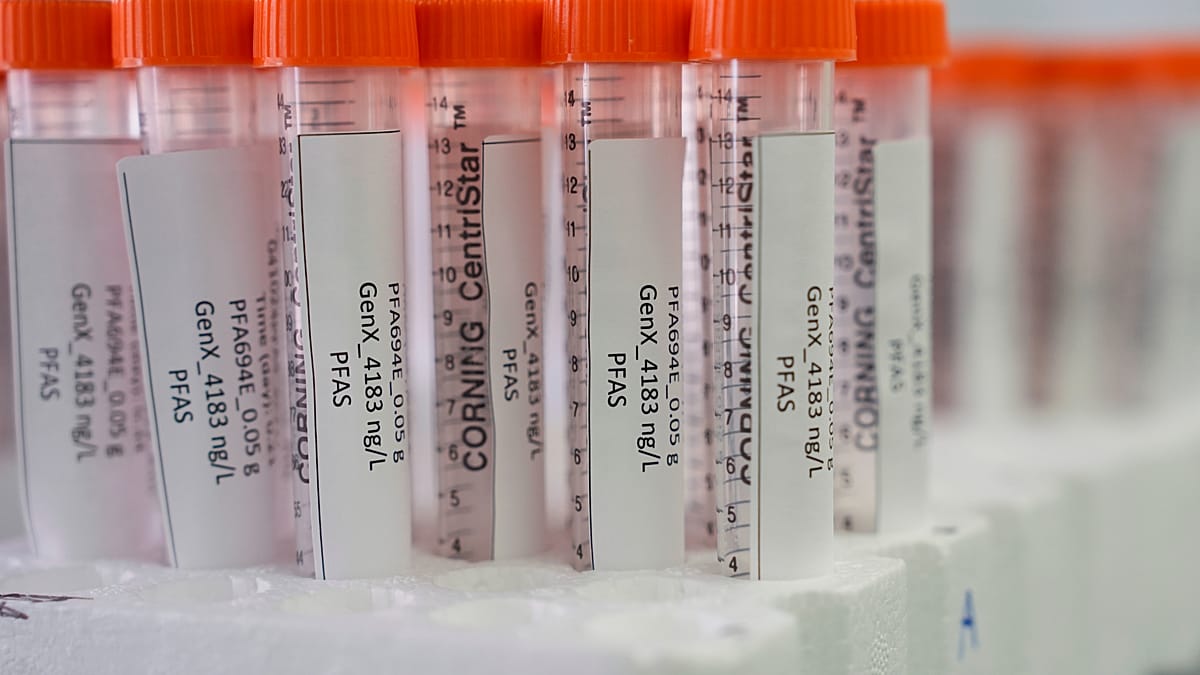
Lawyers have filed a formal complaint against Belgium, accusing the country of failing to protect its citizens from the severe health risks posed by per- and polyfluoroalkyl substances (PFAS), commonly known as forever chemicals. The complaint, submitted by the environmental NGO ClientEarth to the European Committee of Social Rights (ECSR), highlights that Belgium has the highest levels of PFAS pollution in Europe.
“Not only is there contamination for a long time, but we noticed that authorities have had information about this contamination for years, if not decades, and that very little has been done,” said Hélène Duguy, an environmental lawyer at ClientEarth. This marks the first time ClientEarth has brought a case before the ECSR, a monitoring body of the Council of Europe that assesses compliance with the European Social Charter. “We chose it because we know that this committee has a very big enforcement power,” Duguy explained.
Belgium: Europe's PFAS Hotspot
PFAS are a group of over 10,000 synthetic chemicals used in products like non-stick pans, pizza boxes, menstrual pads, and outdoor clothing for their water- and grease-resistant properties. They are linked to cancers, metabolic diseases, and fertility issues. According to The Forever Pollution Project, which mapped contamination across the continent, Belgium has the highest PFAS levels in Europe.
Major contamination sites include Zwijndrecht, near Antwerp, where the multinational 3M plant has been a primary source, and Chièvres, near the French border, linked to a nearby air base. Brussels is also heavily affected, particularly in the Anderlecht and Uccle districts. ClientEarth’s complaint cites Zwijndrecht as a key example: public agencies knew about the PFAS issue years before the scandal erupted in 2021. Members of the Flemish government, including Bart De Wever—then mayor of Antwerp and now Belgium’s Prime Minister—were informed as early as 2017 but took no action. As far back as the early 2000s, 3M and Flemish agencies discussed the pollution but underestimated its extent.
Health Risks and Human Rights
The health impacts of PFAS are well-documented. In 2023, the World Health Organization classified perfluorooctanoic acid (PFOA) as carcinogenic to humans and perfluorooctanesulfonic acid (PFOS) as possibly carcinogenic. Both are banned in the EU but persist in the environment for centuries. “These compounds are associated with various metabolic diseases like diabetes, decreased fertility, obesity,” said Philippe Grandjean, professor of environmental medicine at the National Institute of Public Health in Copenhagen. He stressed that PFAS affect not only current generations but also future ones: “PFAS will affect the health of the father's semen, that is the semen’s quality, and PFAS will increase the risk of infertility or involuntary abortion. PFAS will pass the placenta, and therefore the mother will share her PFAS burden with her foetus, and third thing is that PFAS are excreted in human milk.”
This is not the first time PFAS pollution has been framed as a human rights issue. In 2024, United Nations experts called DuPont and Chemours’ PFAS contamination in North Carolina a human rights violation. Legal actions are also underway across Europe, including a case against France filed in May 2026, with a decision expected in 2027. “We really want to have a complaint that supports and is complementary to those actions,” Duguy said. “PFAS is not only an environmental issue, it’s also very much a human issue and governments and public authorities have a duty to protect those rights.”
ClientEarth’s complaint seeks a ban on all forever chemicals in Belgium and concrete measures for affected communities, such as systemic biomonitoring of vulnerable populations like children and pregnant women, and accelerated decontamination. “Those measures are, for example, making sure there is systemic biomonitoring of people, specifically vulnerable populations like children or pregnant women. But it's also starting to remediate and decontaminate, which is something that's still very slow in Belgium,” Duguy noted. Cleaning up PFAS is notoriously difficult and costly, as the chemicals persist in soil and water for decades.
The ECSR is expected to decide on the admissibility of the complaint in 2027, with a final ruling estimated within two to three years. The case underscores broader European concerns about industrial pollution and public health, as seen in Spain's 2026 wildfire season and the June heatwave linked to a 39% rise in deaths in Belgium.