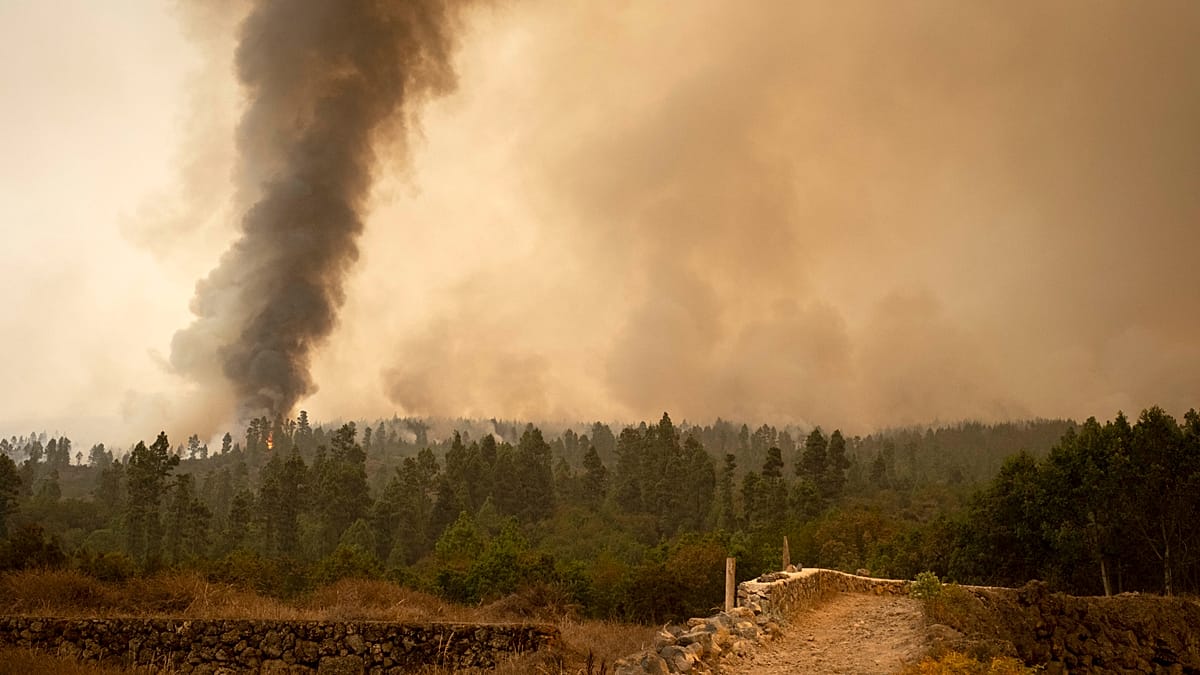
Spain's wildfire season in 2026 is proving severe, with satellite data from the European Forest Fire Information System (EFFIS) indicating that nearly 50,000 hectares have already been consumed by flames. The Ministry for Ecological Transition (Miteco), relying on reports from Spain's autonomous communities, puts the figure at 39,700 hectares as of 21 June. The discrepancy arises from EFFIS's continuous satellite monitoring versus Miteco's official regional tallies, but together they paint a stark picture of the scale of destruction.
June has been the worst month so far, with 15,900 hectares burned — more than any other month in 2026. July, however, began without major incidents, though the traditionally dangerous months of July and August lie ahead.
Cantabria Emerges as Unexpected Epicentre
Province-level data reveals Cantabria as the hardest-hit area, with around 15,500 hectares burned — the highest in the country. This is unusual: historically, the provinces of Ourense, Zamora, and León in the northwest suffer the worst damage due to their vegetation and terrain. But each season has its own logic. Álava, for instance, has seen only about 100 hectares burned, a small absolute figure but well above its historical average for this time of year.
Miteco classifies fires exceeding 500 hectares as major forest fires. Spain has recorded 14 such blazes so far this year. The most recent include a fire on the Costa Brava on 3 July, which confined 12,000 people, as well as fires in San Bartolomé de la Torre and Villanueva de los Castillejos (Huelva), Alcampell (Huesca), Obejo (Córdoba), and Congosto (León). Since the start of the century, Spain has experienced 353 major fires, which, while a small fraction of total blazes, account for most of the damage and leave lasting scars.
European Context: A Continent on Fire
The phenomenon is not limited to Spain. Across the European Union, the area burned has reached approximately 130,400 hectares, 16% above the seasonal average. Several countries are experiencing particularly severe deviations: Slovakia has far exceeded its historical norm; France is battling multiple active fronts; Estonia's burned area is eight times higher than expected; and Portugal has activated the European Civil Protection Mechanism, mobilising over 1,000 firefighters.
The pattern repeats season after season: periods of relative calm punctuated by intense peaks that concentrate annual damage. The question now is whether July and August — traditionally the most dangerous months — will follow the same trend or bring fires of even greater magnitude.