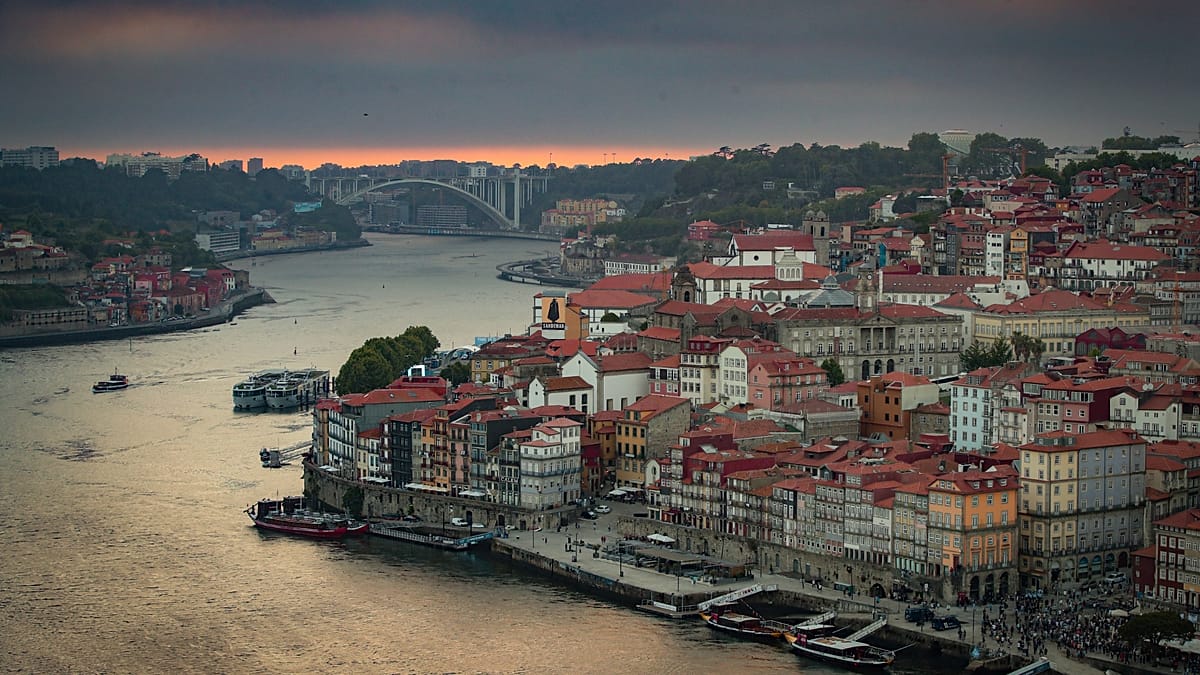
From 24 to 29 June, Porto’s historic centre will be reimagined as a sprawling literary landscape. The BABELL Festival, organised by the Livraria Lello Foundation with backing from Porto City Council, promises to be one of Europe’s most ambitious literary gatherings, drawing internationally renowned authors to Portugal’s second city.
The line-up includes two Nobel Prize in Literature laureates: Poland’s Olga Tokarczuk and Hungary’s László Krasznahorkai. They will be joined by Booker Prize winners Margaret Atwood (Canada), Salman Rushdie (UK/India), and Julian Barnes (UK). Brazilian writers Conceição Evaristo, Milton Hatoum, and Rafal Gallo, along with Colombian author Héctor Abad Faciolince, will also participate in talks and discussions.
Portugal’s own literary scene is strongly represented, with authors such as Lídia Jorge, Gonçalo M. Tavares, Bruno Vieira Amaral, Isabel Rio Novo, Filipa Martins, João de Melo, Dulce Maria Cardoso, Djaimilia Pereira de Almeida, Ana Paula Tavares, and Valter Hugo Mãe taking part. This blend of international and national voices underscores the festival’s aim to bridge global literary currents with local traditions.
An Unconventional Access Model
Unlike typical ticketed events, BABELL employs a unique access system designed to drive foot traffic into Porto’s bookshops. Attendees must purchase a book from one of approximately 50 participating bookstores, second-hand shops, or antiquarian dealers. Each purchase yields a token with a code that can be used to reserve a seat for festival sessions via the official BABELL website, subject to capacity. Additionally, anyone attending a session must carry a book in hand—a symbolic gesture reinforcing the festival’s core mission.
According to the organisers, this model aims to draw thousands of people into the city’s bookshops, promoting both books and reading while supporting local retailers. It is a deliberate departure from conventional festival ticketing, emphasising the physical book as a gateway to cultural participation.
The festival will occupy several of Porto’s most iconic public spaces: Praça dos Leões, Avenida dos Aliados, Praça da Batalha, Ribeira do Porto, and Torre dos Clérigos. Beyond literary conversations, the programme includes exhibitions, film screenings, history classes, children’s sessions, poetry readings in the streets, and concerts.
One of the most anticipated musical moments takes place on 25 June on Avenida dos Aliados, featuring Pedro Abrunhosa and GNR performing new songs inspired by poetry from northern Portugal. A surprise artist—described as one of the biggest names in Portuguese music and closely tied to Porto—will join them. On 26 June, Bárbara Bandeira and Carminho will perform.
Another highlight is contemporary artist Cai Guo-Qiang, known for his work at the Beijing Olympic Games and the Centre Pompidou in Paris. On 27 June, he will present a new piece created especially for BABELL, marking his first such work in Portugal.
The festival’s emphasis on public space and community engagement echoes broader European trends in cultural programming, where cities like The Hague have used events to animate streets and squares. BABELL’s approach, however, is distinctly literary, turning Porto into a living library where books and conversation take centre stage.
For an informed European audience, BABELL represents more than a festival; it is a statement about the enduring relevance of the printed word in an age of digital distraction. By weaving together Nobel laureates, Booker winners, and local voices, it affirms that literature remains a vital force for connecting cultures across the continent and beyond.