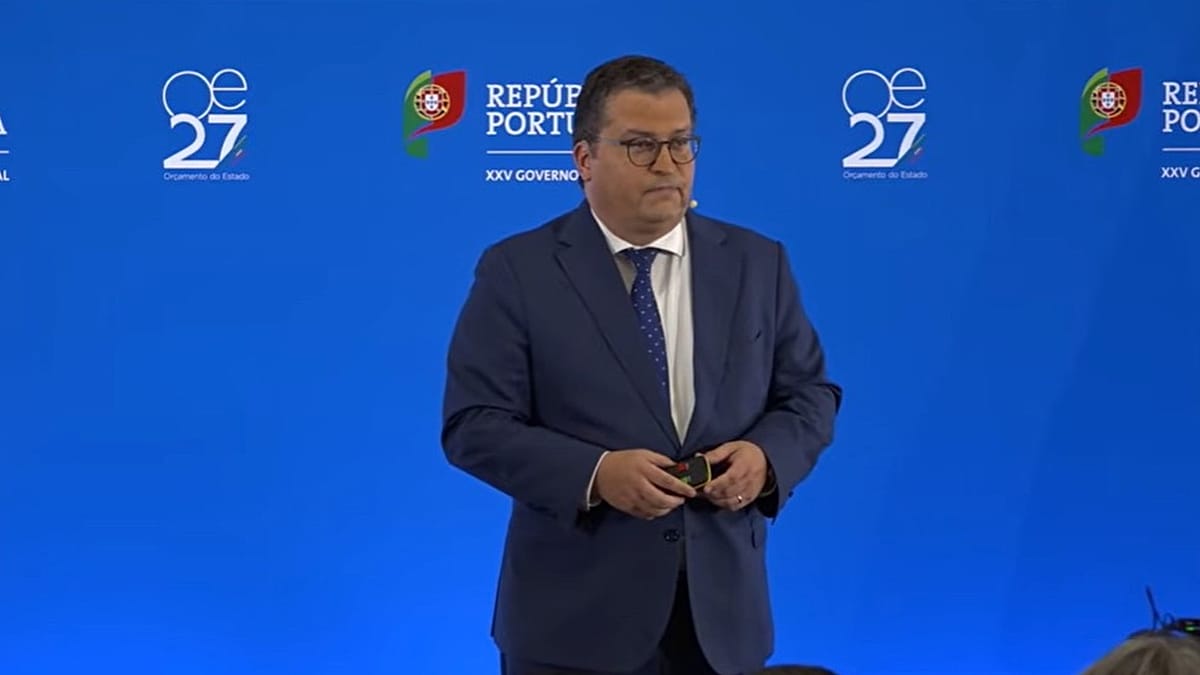
The Portuguese government submitted its draft state budget for 2027 to parliament on Thursday, two days ahead of the legal deadline, after approval in the Council of Ministers earlier in the day. Finance Minister Joaquim Miranda Sarmento handed the document to the President of the Assembly of the Republic, José Pedro Aguiar-Branco.
This is the third budget of Luís Montenegro's government, and its passage is effectively assured thanks to the Socialist Party (PS). Socialist secretary-general José Luís Carneiro announced last week that the PS would abstain in the initial overall vote on 28 October, after Prime Minister Montenegro gave assurances on four conditions: a constitutional review with a central role for both PS and PSD, protection of current and future pensions, funding for investments still pending after the PRR, and support for recovery in municipalities and regions hit by storms.
The detailed committee debate runs from 29 October to 24 November, with the final overall vote scheduled for 24 November. The PCP and the Left Bloc have already said they will vote against, and Chega has threatened to oppose unless the government lowers the retirement age and cuts VAT on fuel and essential foodstuffs—red lines the government has rejected.
President of the Republic António José Seguro said he expects a "fruitful debate" to improve people's lives "at a very difficult time." Finance Minister Miranda Sarmento declined to estimate the room for negotiation.
Macroeconomic outlook and fiscal projections
The government forecasts economic growth of 2% for 2027, a slight slowdown from the 2.3% expected this year. It projects a budget surplus of 0.1% to 0.2% of GDP. Inflation is revised up to 2.9% for 2026 and expected to ease to 2.3% in 2027. Public debt is projected to fall to 84.5% of GDP, down from 87.5% this year.
Debt interest costs will rise sharply, by 23.2% to €8.217 billion, equivalent to 2.4% of GDP, up from 2% in 2025 and 2026. Pensions, public-sector wages, and debt interest are the main spending pressures, alongside tax measures such as updating IRS brackets, cutting the IRC rate, and housing measures.
Defence, youth housing, and AI
Defence spending will reach 2.15% of GDP in 2027, a significant increase reflecting Portugal's commitment to NATO targets. The youth mortgage guarantee scheme, which helps young people buy their first home, will be maintained. The budget also allocates €1 million for artificial intelligence initiatives, a modest but symbolic step to boost technological capacity.
Tax changes: IRS, IRC, IMT
The budget provides for a fresh cut in IRS (personal income tax) rates across the 1st to 6th brackets, by between 0.3 and 0.5 percentage points, with an estimated impact of €400 million. The reduction will be 0.3 points in the 1st bracket, 0.5 points in the 2nd to 5th, and 0.3 points in the 6th. IRS brackets will be updated by 3.88%, below the 4.5% wage increase agreed in the social concertation, which could push some taxpayers into higher brackets.
The minimum subsistence income exempt from IRS will rise to €13,580 annually (€970 per month, matching the projected minimum wage). Productivity bonuses, profit-sharing, and year-end gratuities will be exempt from IRS up to 6% of annual basic pay.
IRC (corporate tax) revenue is expected to fall by €99 million in 2027, a 1% decrease, reflecting the cut in the general rate from 19% to 18%. The impact of that cut is put at €300 million. The government aims to reach 17% by 2028, with a 15% rate for the first €50,000 of profit for SMEs. The IRC benefit for companies raising average wages by at least 4.5% remains.
The budget also updates IMT (property transfer tax) brackets by 2.3%.
The overall impact of measures already adopted is estimated at €4.8 billion for 2027, before new policies are added. The budget's approval is all but certain, but the debate will test the government's ability to balance fiscal prudence with social and economic demands.