Portugal is emerging as a key player in stealth technology, thanks to a graphene-based material developed by GTechPlasma, a spin-off from the Institute for Plasmas and Nuclear Fusion at Instituto Superior Técnico in Lisbon. The material is designed to absorb radar waves, potentially making drones and military aircraft nearly invisible to detection systems.
“At the moment, we are very focused on developing coatings for radar and electromagnetic radiation absorption,” explains Bruno Soares Gonçalves, co-founder of GTechPlasma. The company uses a patented plasma-based system to produce high-quality graphene from precursors such as ethanol or methane, controlling the material at the atomic level.
Stealth Applications and Strategic Advantage
The most immediate applications lie in defence. “Our estimates for our material are that an F-16 would have the radar signature of a bird,” says Gonçalves. “That means a huge reduction in radar signature, making the aircraft invisible and much harder to detect.” In a wartime scenario, such a reduction could provide a decisive strategic edge by delaying detection until it is too late for adversaries to react.
Gonçalves notes that similar solutions are rare and subject to strict export controls. “At present, there is no other such solution in Europe and, even worldwide, it is only found in the United States. But the material that, for example, coats the F-35s is a material that cannot be exported. So we have a ‘made in Portugal’ material with high application potential.”
Beyond radar absorption, the technology could be used for hydrogen storage or the separation of rare earths and uranium, according to the researcher. “There are many other applications where graphene and its derivatives can be used, but for that you need to control the entire process at the atomic level. And that is what we are able to do with our device, which is patented in the United States, Japan and Europe,” adds the president of the Institute for Plasmas and Nuclear Fusion.
Scaling Up Production
GTechPlasma is moving toward industrialisation. Its devices currently produce 40 milligrams of high-quality graphene per minute, but the company aims to increase capacity with the help of an industrial partner, Plasmaphene, based in Vila Viçosa. “Our aim on the factory floor is to have multiple devices, not only for the redundancy this brings, but also for the possibility of producing multiple materials simultaneously in different devices,” says Gonçalves.
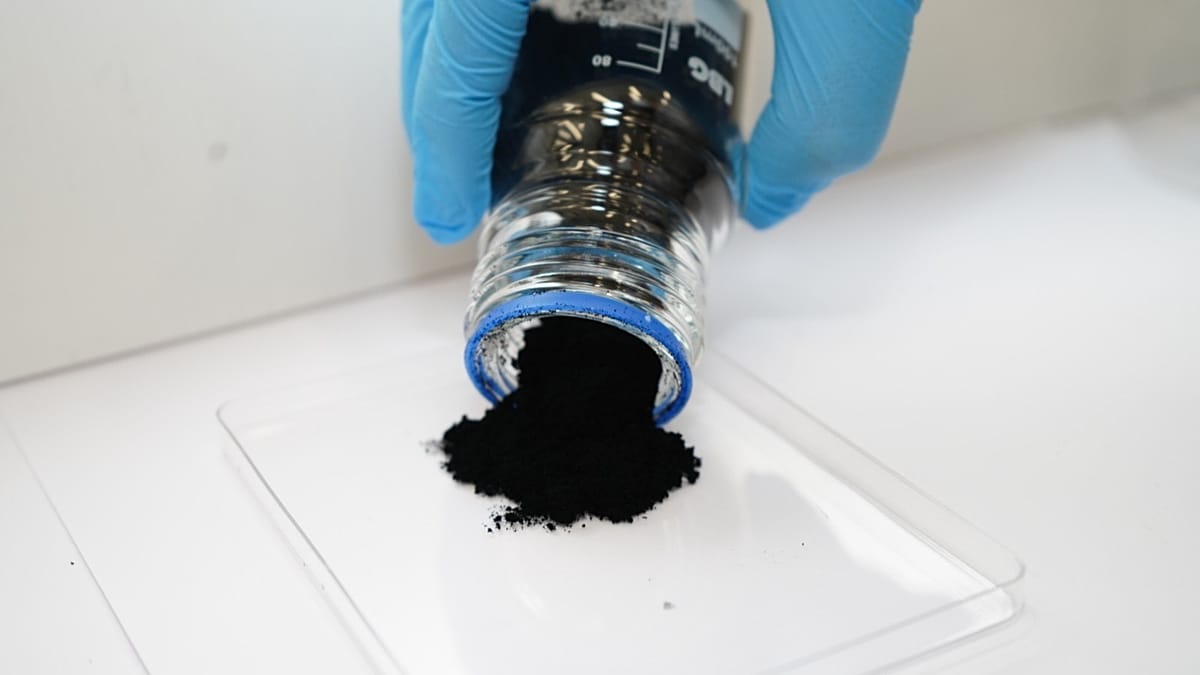
The company has already supplied 260 grams of the radar-absorbing material to a Portuguese drone manufacturer and plans to expand partnerships with defence firms across Europe. Currently, the material is a very light black powder, but the goal is to develop ready-to-use coatings or paints that can be applied directly to surfaces such as drones. “The aim is to supply solutions that are as close as possible to something the client can apply, instead of supplying just a powder and leaving the client to work out how to integrate it,” Gonçalves explains.
This innovation places Portugal at the forefront of graphene-based stealth technologies, with potential applications far beyond defence. As Europe seeks to bolster its defence capabilities, such homegrown solutions could reduce reliance on non-European suppliers and strengthen the continent’s strategic autonomy. For more on Portugal's growing role in technology and defence, see our coverage of Portugal's ultra-wealthy population surge and EU diplomatic service leadership changes.