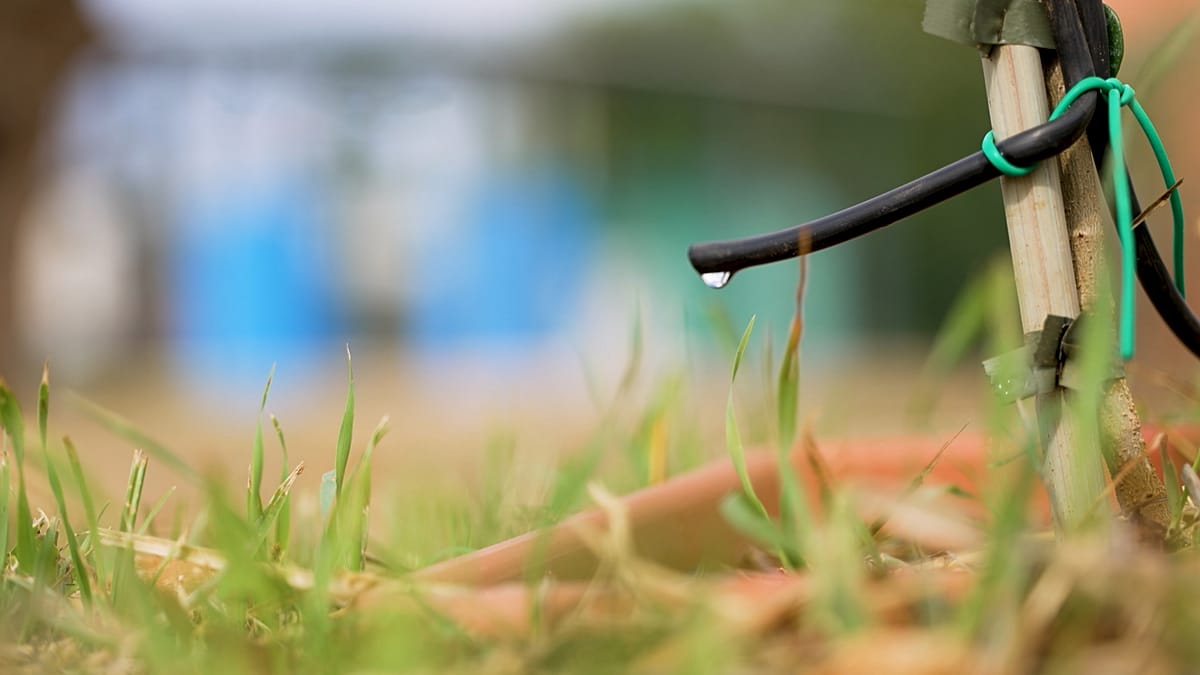
Across southern Europe, farmland is increasingly parched, and the Adriatic basin feels every drop acutely. In Puglia, the heel of Italy's boot, climate change has worsened water scarcity, while the bacterium Xylella fastidiosa has devastated olive groves, threatening a landscape and economy built around the tree.
Now, a European project called ECO FLOW is testing a novel response: irrigating olive trees with treated wastewater that would otherwise flow into the sea. The initiative brings together Greek and Italian experts and focuses on so-called emerging contaminants—chemical, material, or biological substances from industrial, urban, and hospital wastewater that standard treatment may not fully remove.
Three irrigation methods, one goal
The experiment takes place in a field next to the Gallipoli water treatment station in Puglia. Researchers have planted three rows of olive trees resistant to Xylella, and each row receives a different type of water: conventional well water, water from the treatment station, and water subjected to an additional purification step designed to break down pollutants.
Rocco Protopapa, of the Regional Agency for Irrigation and Forestry Activities (ARIF), a public body in Puglia, explains the project's aims: "We want to compare the plants irrigated with well water, those that received treated water, and those that received water treated with hydrogen peroxide. We want to see how much fruit they produce and how they produce it. That way we avoid wasting water that would otherwise end up in the sea."
The Gallipoli station's treated water destined for ECO FLOW is purified even further than the station's regular output, using a patented mini-station technology developed under a previous European project, RE-WATER.
How the extra purification works
Fabrizio Dell'Anna, who coordinates technical development at Acquedotto Pugliese—the body managing the water cycle in Puglia and Campania—describes the process: "The technique is based on the use of hydrogen peroxide combined with ultraviolet radiation generated by a lamp. This combination creates an extremely reactive molecule capable of degrading pollutants. The challenge was significant because the equipment did not exist on the market."
The reactor housing the treated water is thermally insulated to prevent temperature fluctuations that could disrupt the hydrogen peroxide's action. The team also discovered that circulating the water increased the number of reactive molecules available to attack contaminants, so they modified the system accordingly.
ECO FLOW has a budget of over €1.5 million, with 75% financed by European cohesion policy and the rest from Greek and Italian funds. In Greece, researchers developed a physical membrane to better filter wastewater, while in Italy they focused on the chemical solution. The two approaches are complementary, and the partners are sharing their know-how through the pilot.
The Polytechnic University of Bari provides technical and scientific support to Acquedotto Pugliese, the project's main partner. Danilo Spasiano, a professor and researcher at the university, says monitoring has recently begun. The team studies water quality, plant development, soil characteristics, and the accumulation of substances in the soil where two olive varieties—Favolosa and Lecciana, both resistant to Xylella—are being grown.
The pilot will run for two years. Early signs are encouraging. The Francesca Stajano farm, which produces over sixty tons of olives annually, has seen a difference. Owner Antonio Astuto irrigates part of his production with well water and a younger grove with treated water from the Gallipoli station. "We didn't expect four-year-old trees to start producing now," he said. "We were very happy to see that the plants grew faster, probably thanks to the type of water used."
This project is part of a broader European effort to address water scarcity and pollution. Similar initiatives are exploring ways to purge stubborn pollutants from wastewater, and the results from Puglia could inform practices across the Mediterranean. As climate change intensifies, such innovations may become crucial for sustaining agriculture in water-stressed regions.