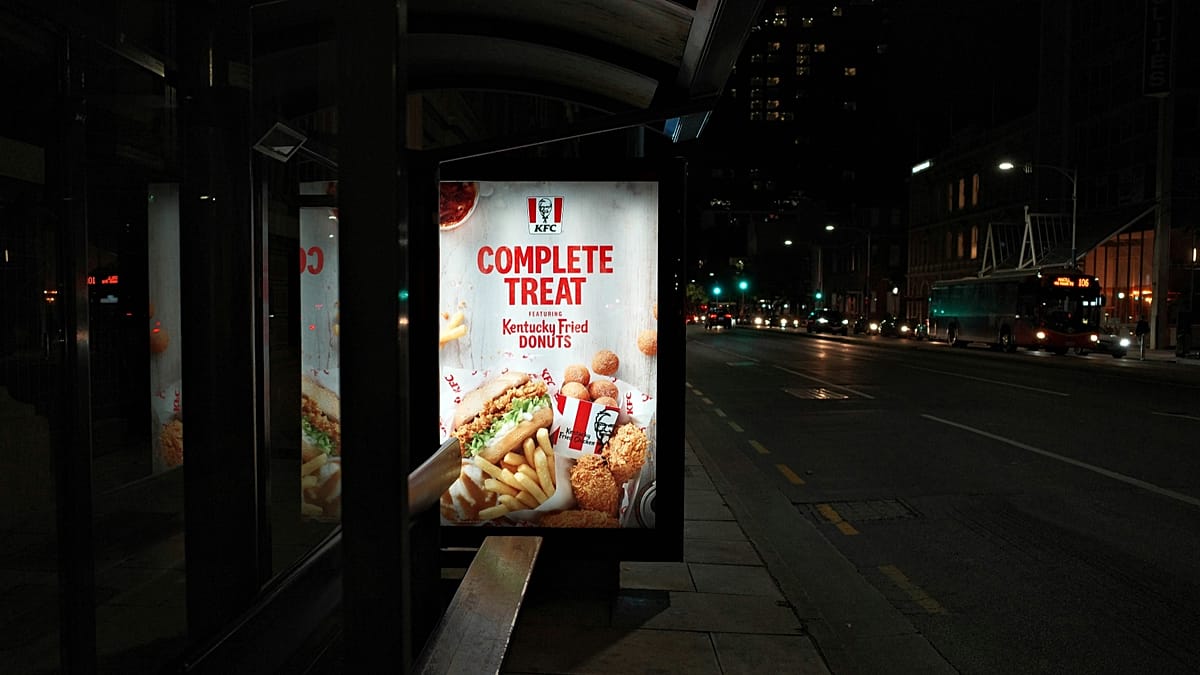
Europe is witnessing a shift in urban advertising as cities increasingly restrict promotions for products that harm the climate. Amsterdam led the way in May, becoming the first capital in the world to ban billboards for fossil fuels and meat, a measure first proposed five years ago. The ban supports the city's goal of carbon neutrality by 2050 and its ambition to halve meat consumption by then. Other Dutch municipalities—Utrecht, The Hague, Zwolle, Delft, and Nijmegen—have enacted similar restrictions, and cities like Helsinki, Stockholm, and Bristol have limited ads for aviation, shipping, fast fashion, and construction, though often excluding meat.
Why target meat advertising?
The climate impact of burning fossil fuels is well understood, but the environmental cost of animal agriculture receives less attention. A recent report by the European non-profit Changing Markets alleges that departments within the UN Food and Agriculture Organisation (FAO) show a “bias in favour of the livestock sector,” with lobbyists working to undermine climate action. This includes FAO officials speaking at the World Meat Congress and industry-affiliated scientists attempting to discredit studies that promote plant-rich diets.
The numbers are stark: food and agriculture contribute about one-third of global greenhouse gas emissions, second only to energy production. In the EU, animal-sourced foods account for an estimated 81–86% of total emissions from food production, yet they provide only about 21% of calories and 64% of protein. Scientists have increasingly called for Western countries, where plant-based alternatives are accessible, to reduce meat consumption. The 2025 EAT-Lancet Commission report, authored by 70 experts from 35 countries, found that a shift to predominantly plant-based diets could prevent around 15 million deaths annually and cut non-CO2 agricultural emissions—such as methane and nitrous oxide—by 15% by 2050. When factoring in reduced deforestation, transportation, and refrigeration, the total emissions drop would be even higher.
How advertising shapes behaviour
Amsterdam's ban sparked criticism on social media, with some dismissing it as “ridiculous” and arguing that billboards don't influence their choices. One Reddit user claimed, “I can't honestly remember the last time I actually purchased something directly because of an advertisement.”
Linda Aspey, a climate psychology specialist and board member of the Climate Psychology Alliance, tells European Pulse that advertising's power lies in “repetition and cueing.” She explains, “One study found that seeing meat imagery (in this case, a Big Mac) increased people's desire to eat it, and its everyday presence likely reinforces meat as an ordinary choice.” This effect may be amplified by cultural identity and livelihood, where eating meat is simply part of daily life.
In the Netherlands, meat consumption has been declining; in 2024, the Dutch ate less meat than at any point in the past two decades, according to Wageningen Social and Economic Research. Aspey notes that for some, there's an “uncomfortable pull between valuing animal welfare or the environment and still eating meat, and advertising may make that pull easier to set aside.” She adds, “What the evidence does show is that advertising typically shapes what feels normal for most of us, to varying degrees, which in turn can shape behaviours.”
Would a ban make a difference?
Amsterdam has not yet released data on the ban's impact, but experts predict a correlation. When Transport for London removed junk food advertising from its network, weekly household purchases of such items fell by nearly 7%, and confectionery by almost a fifth, based on actual shopping data. Aspey cautions, “The effect wasn't dramatic as a ban changes the constant prompts that people see around them day to day, without necessarily changing why people eat what they eat, whether that's habit, taste, livelihood or budget. As with tobacco control, such restrictions tend to work best combined with other measures, not alone.”
Despite the climate link, the EU continues to subsidise high-emitting foods. A report by the charity Foodrise found that in 2020, the Common Agricultural Policy (CAP) directed about 77% of its subsidies—€39 billion out of €51 billion—to animal-sourced foods. Beef and lamb received roughly 580 times more in subsidies than legumes like lentils and beans. Moving from funding these foods to banning their advertising may seem drastic, but experts argue it could be part of a broader strategy to tackle climate change, alongside measures like EU climate plans and carbon market reforms.
As European cities experiment with advertising restrictions, the question remains whether such bans can meaningfully shift consumption patterns. The evidence from tobacco and junk food suggests they can help, but only as part of a comprehensive approach that includes education, pricing, and better alternatives. For now, Amsterdam's bold move has put meat advertising on the agenda, and other cities are watching closely.