The European Union's carbon market has become a flashpoint at the latest summit of EU leaders in Brussels, exposing sharp divisions over how to balance climate commitments with the immediate pain of soaring energy prices. The debate, which stretched late into Thursday night, pitted the Nordic bloc against a coalition of central and southern European states, each side invoking the future of European industry and the credibility of the bloc's green transition.
Finland, Denmark, and Sweden warned that any dilution of the Emissions Trading System (ETS) would undermine the predictability that investors need to pour money into clean technologies. In a joint letter seen by Euronews, the three governments argued that "any weakening of the ETS would undermine the predictability on which investment decisions depend and risk slowing the pace of industrial decarbonisation."
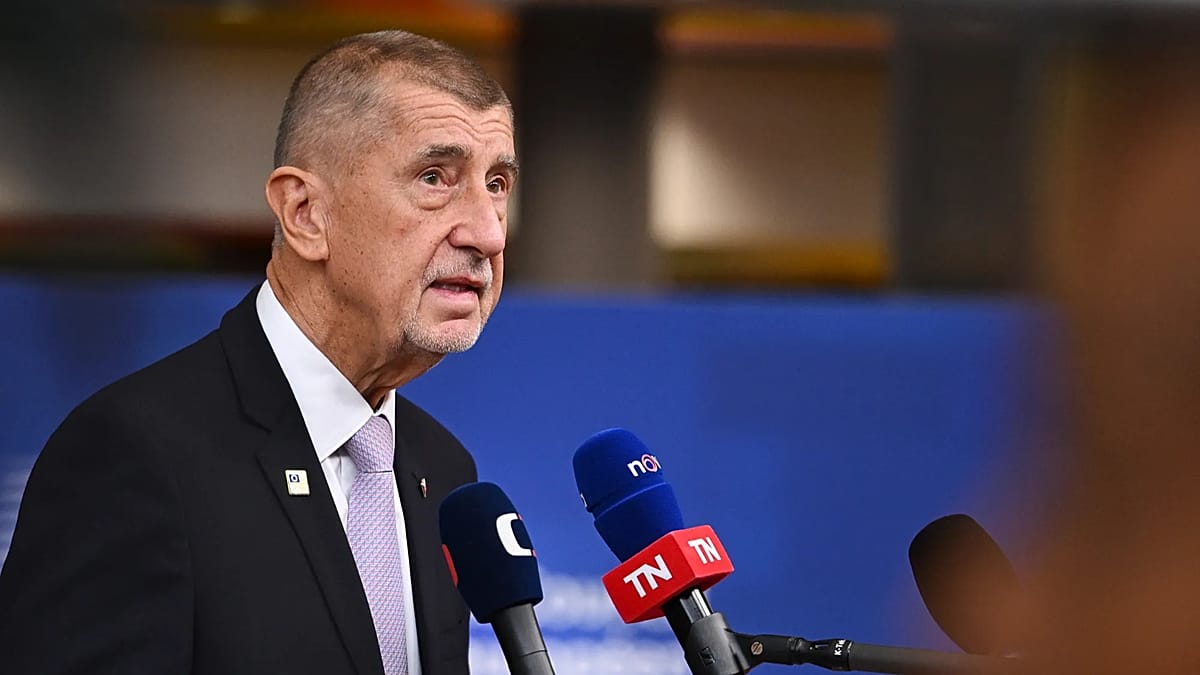
On the other side, the Visegrad Four – Hungary, Slovakia, the Czech Republic, and Poland – backed by Italy and Greece, pressed for immediate relief from carbon costs, which they say are crippling energy-intensive industries and punishing households. Czech Prime Minister Andrej Babis was blunt in his criticism, telling reporters that "someone is making billions at the expense of the European industry, which is in decline and which of course has major problems." He dismissed EU climate policies as "ideological stuff" that ignores economic realities, and argued that carbon allowance prices have soared far beyond original forecasts, rewarding financial speculators while penalising traditional manufacturing and ordinary citizens.
The ETS, launched in 2005, requires companies to pay for their greenhouse gas emissions, with the twin goals of cutting pollution and incentivising investment in cleaner alternatives. According to the European Commission, emissions from covered sectors have fallen by 51% since the scheme began. It currently applies to heavy industry, power plants, airlines, and shipping, with plans to extend it to international aviation, landfills, and incinerators in the upcoming summer review.
Divergent energy mixes drive the clash
The standoff reflects the very different energy realities across the 27 member states. Nations heavily reliant on fossil fuels, such as Poland and the Czech Republic, are pushing for lower carbon price pressures, while greener economies like Sweden and Denmark insist on maintaining a steady transition timeline. The Nordics argue that weakening the ETS would simply "shift the burden of emission reductions to other sectors of the economy" where cutting emissions is often more difficult and politically fraught.
One EU diplomat noted that the current geopolitical shock has given renewed urgency to a long-simmering debate. "This is not a new issue, but the current situation gives renewed urgency to the debate. Leaders shared their expectations in the context of ongoing legislative negotiations," the diplomat said.
Supporters of the ETS see it as a crucial tool for decarbonisation, not only because it raises revenues but because it pushes heavy industry to invest in green technologies to avoid higher costs. "The ETS has played an important role in decarbonisation. We must now maintain the price signal and ensure the scheme continues to function by implementing corrective measures," a second EU diplomat said. "We must preserve the structural mechanisms whilst providing short-term flexibility for the member states most affected."
EU leaders have asked the European Commission to examine further short-term interventions and urged lawmakers to accelerate work on the Market Stability Reserve, the mechanism that regulates the supply of allowances to curb price volatility.
Battle over ETS2
A more contentious proposal from the Visegrad Four, backed by Italy and Greece, sought to delay the introduction of the new carbon market, known as ETS2, until 2030. That plan hit a wall late Thursday. The six countries argued that households and small businesses would inevitably face higher costs, noting that "price differences between the EU regions and EU countries are enormous," particularly in Eastern Europe.
ETS2 is designed to cover fuels used in road transport and buildings, with a start date of 2029. It has already been postponed once over concerns about its social impact on the most vulnerable, as it will inevitably push up energy bills further despite EU efforts to regulate price spikes.
Despite the support from six member states, EU diplomats expressed little chance of success. "There is little support for it and they know it. That's why they try it at the European Council instead of the Environment Council because there's no majority there for this," one diplomat said. Another added that the proposed amendments "would never get the required unanimity."
The clash comes as EU leaders also grapple with a joint response to the energy price surge, a challenge that has already tested the bloc's unity. The outcome of this week's summit will shape not only the future of carbon pricing but also the credibility of Europe's climate goals in the eyes of investors and citizens alike.