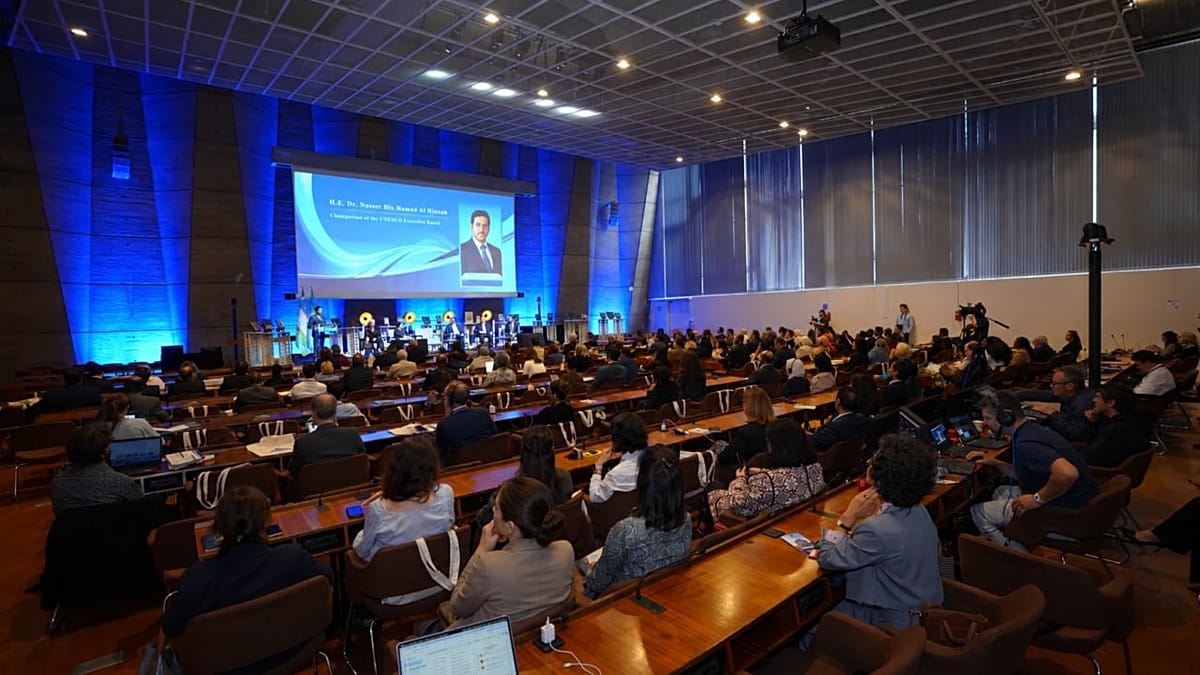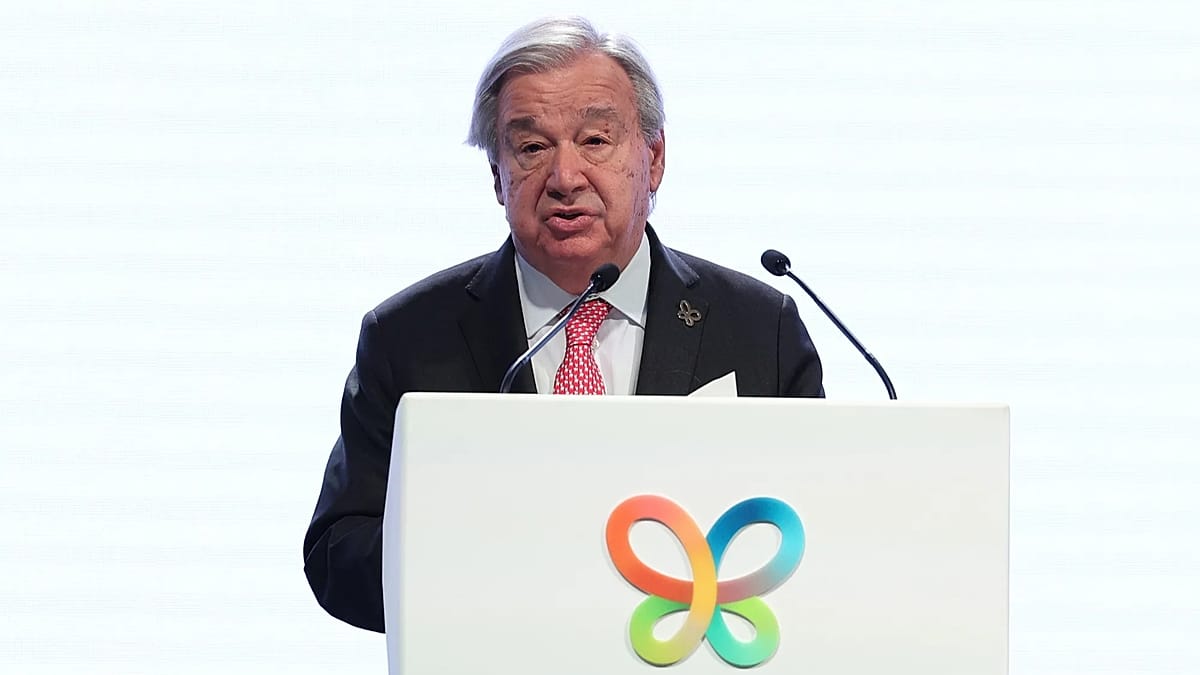
Speaking in Yerevan on 16 October, UN Secretary-General António Guterres delivered a stark warning to world leaders: continuing to subsidise fossil fuels is tantamount to self-destruction. His remarks came just days before the opening of the UN biodiversity summit, COP17, and were aimed at galvanising action on the intertwined crises of climate change and nature loss.
“Subsidising fossil fuels is subsidising suicide,” Guterres told an audience in the Armenian capital. He criticised governments for “spending money on the wrong things” and singled out the billions of dollars still flowing into incentives for coal, oil, and gas production. He urged leaders to “end these handouts once and for all” and to redirect the savings towards protecting the planet and supporting vulnerable communities.
The UN chief’s call echoes a recent statement from EU finance ministers, who earlier this month backed a phaseout of fossil fuel subsidies ahead of the COP31 climate talks scheduled for November. Yet despite repeated pledges, progress remains painfully slow. In 2022, nearly 200 countries committed to reducing harmful subsidies by $500 billion (€447 billion) annually by 2030, but a new UN report shows that little has been achieved.
Nature’s funding gap
Guterres was in Yerevan to launch a report assessing global progress towards the 2030 biodiversity targets, often referred to as the Paris Agreement for Nature. The findings are sobering: for every dollar invested in protecting or restoring ecosystems, roughly $30 (€27) still goes into activities that degrade them, including mining, intensive agriculture, and fossil fuel extraction. Public subsidies that harm nature and climate are estimated at $2.6 trillion (€2.3 trillion) per year.
“Nature won’t thrive on good intentions,” Guterres said, underscoring the gap between rhetoric and reality. The report highlights that current government policies would protect only 27% of land and inland waters by 2030, falling short of the 30x30 target agreed in the Kunming-Montreal Global Biodiversity Framework. For oceans, the figure drops to just 12%.
“Biodiversity is in crisis. Species are disappearing and ecosystems are collapsing,” said Sue Lieberman of the Wildlife Conservation Society. “Governments and all stakeholders must see that investing in nature is not a luxury, it is the very key to our survival.”
Guterres also pointed to the outsized influence of certain industries over policymaking. “Some sectors have too much power over governments,” he said, citing industrial fishing, fossil fuels, and logging as prime examples.
COP31 hosts under fire
A report released this week by Global Witness, using data from Rystad Energy, reveals that the two hosts of next month’s COP31 climate summit—Türkiye and Australia—are actively expanding their fossil fuel production. Turkish state-owned TPAO is set to nearly triple its gas output, while Australian firms Woodside and Santos are projected to significantly increase liquefied natural gas and crude oil production by the early 2030s.
These plans clash with the summit’s stated goals. Türkiye has proposed a global target to raise the share of electricity in final energy demand to 35% by 2035, but critics note that the proposal does not specify how that electricity should be generated, potentially allowing gas-fired power to count as progress.
Efforts to reach a consensus on phasing out fossil fuels have stalled within the UN framework, and the issue is not an official agenda item at COP31. In response, around 60 nations have formed a breakaway coalition to push for faster action, while some European countries—including Germany, France, and the Netherlands—have released voluntary national roadmaps for subsidy phaseouts.
As the world’s biodiversity and climate conferences approach, Guterres’ message is clear: the era of propping up polluting industries must end. “The war on nature has not yet ended,” he warned. Whether governments heed his call remains to be seen, but the stakes could not be higher.