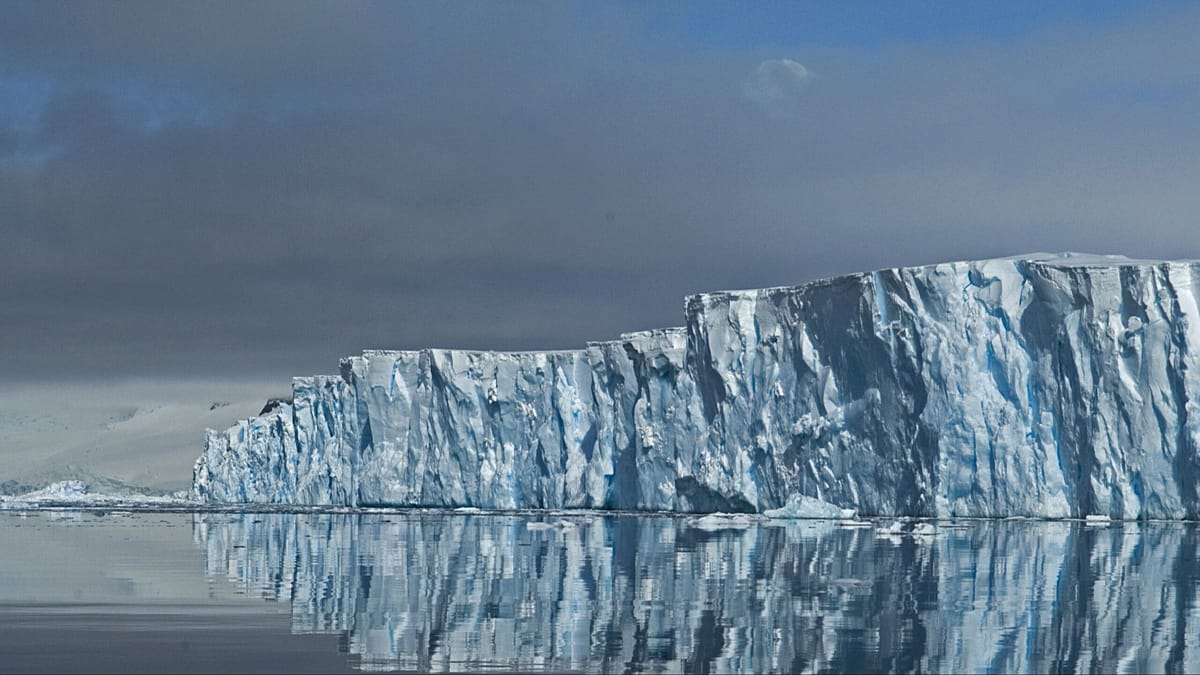
Thwaites Glacier in West Antarctica, often dubbed the 'Doomsday Glacier', will continue to shed ice for at least the next 150 years even if the world's oceans cool dramatically, according to new research from the British Antarctic Survey (BAS). The study, published in Geophysical Research Letters, warns that past ocean warming has already locked in significant future ice loss.
The world's oceans hit a record average surface temperature of 21.1°C on 22 August this year, excluding polar regions. With El Niño still strengthening in the Pacific, a rapid cooldown is unlikely. But even under the most extreme cooling scenario imaginable, the glacier's retreat cannot be halted, the researchers found.
Unavoidable retreat for Thwaites, but not for its neighbour
The BAS team ran computer models for Thwaites and its neighbour Pine Island Glacier, which together are the largest contributors to ice loss from this part of Antarctica. They switched off all ocean-driven melting beneath both glaciers in three independent simulations.
The results showed a striking contrast. Pine Island Glacier responded as expected: without melting, it stopped losing ice and began to thicken, advancing back toward its position from the early 20th century. Thwaites, however, kept retreating even with zero ocean melting, though the rate of loss slowed as the glacier thinned.
"These results show that past changes in ocean-driven melting have now committed us to unavoidable future ice loss from Thwaites Glacier," said Dr Rosie Williams, a glaciologist at BAS and lead author of the paper. "This ice loss cannot be undone or prevented by simply cooling the ocean."
The total collapse of Thwaites would contribute an estimated 65 centimetres to global sea level rise. To put that in perspective, every centimetre of sea level rise exposes an additional six million people to coastal flooding. The implications for European coastal cities from Lisbon to Hamburg are significant, though the effects will be felt worldwide.
Why cutting emissions still matters
The study's authors stress that a zero-melting scenario would never occur in nature, since seawater beneath glacier ice always causes some melting. Thwaites began its retreat in the 1940s, with warming oceans becoming a major driver, according to co-author Professor Paul Holland, an ocean modeller at BAS.
While the historical melting has committed future generations to sea level rise, the researchers emphasise that reducing greenhouse gas emissions—and ideally reversing them—remains essential. Without action, the ice loss will accelerate further.
"We don't yet know if Antarctica's other major glaciers are moving into a state of committed change," Holland said. "We urgently need to take action to modify the human activities that are driving changes in ocean melting of these glaciers."
The findings echo broader concerns about climate damage already locked in, but they also highlight that every fraction of a degree of warming avoided reduces future risks. The study serves as a stark reminder that even if we manage to cool the oceans, the damage done to Thwaites may be irreversible.
For Europe, the news adds urgency to climate policy. As France's emissions fall and other nations grapple with energy transitions, the long-term stakes are clear. Meanwhile, Swiss glaciers are melting at alarming rates, underscoring that ice loss is not just an Antarctic problem.
The research also raises questions about other major glaciers in Antarctica. If they too are entering a state of committed change, the sea level rise could be far greater than current projections. Scientists say more studies are needed to understand these tipping points.
"This is a wake-up call," Williams added. "We must act now to prevent further damage, even if we cannot undo what has already been set in motion."