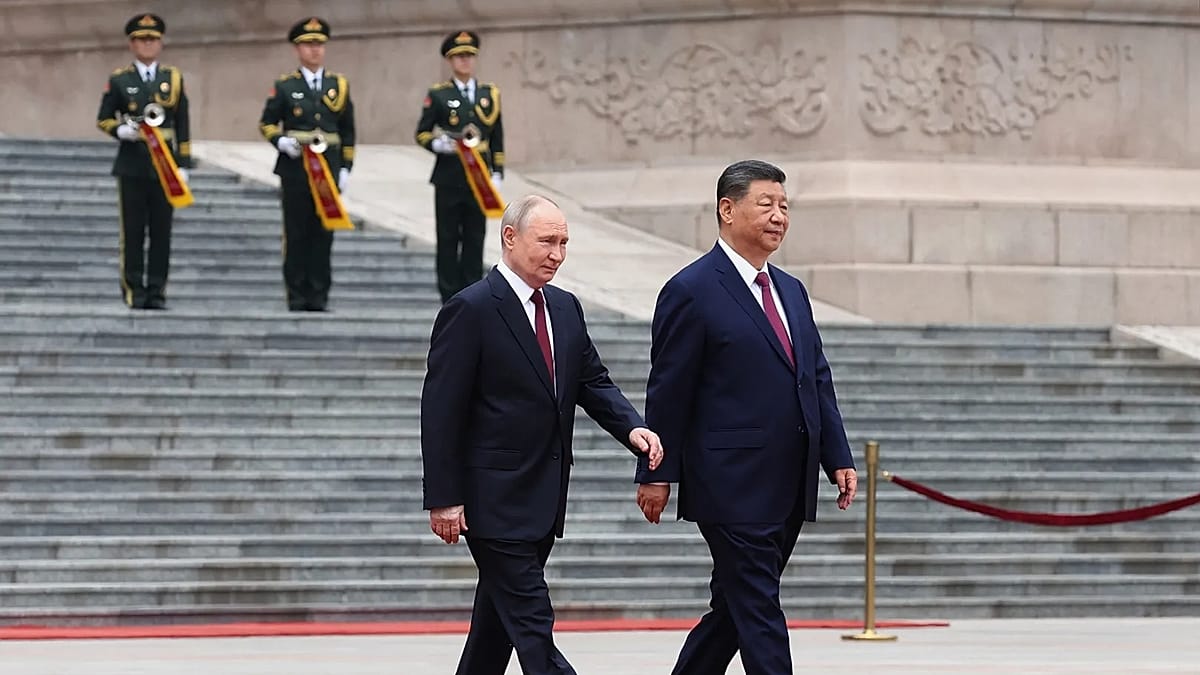
When Vladimir Putin touched down in Beijing on Tuesday evening, the Russian president was greeted by China's foreign minister, Wang Yi, a guard of honour, and youths waving flags and chanting “Welcome, welcome, warmly welcome!” The reception, reserved for a “dear friend” as Xi Jinping later called him, set the tone for a visit that has left European capitals reassessing their strategy on Ukraine.
On Wednesday, Putin and Xi signed a joint statement in the Great Hall of the People that included an agreement to increase cooperation between their armed forces. The Kremlin has denied any link between Putin's trip and that of US President Donald Trump just days earlier, but the timing has raised eyebrows across Europe, where fears of being sidelined in global affairs are mounting.
Unyielding Ties
If European and American policymakers had hoped that Beijing might be persuaded to reduce its support for Moscow, this visit offered little encouragement. Since Russia launched its full-scale invasion of Ukraine in February 2022, China is believed to have provided critical economic, military and diplomatic backing, enabling Putin to sustain his war effort despite mounting losses and rising costs. The US and Europe had hoped that by splitting Russia from Chinese aid, they could alter the course of the war. On Wednesday, that prospect appeared all but dashed.
The joint statement, which aims at deepening “good-neighborliness and friendly cooperation,” also heralded the “unyielding” bond between the two countries. Beijing has generally sought to maintain a neutral position on Ukraine, but it is likely invested in the outcome and wants its strategic ally to ultimately triumph. For Europe, this means that sanctions designed to hurt Russia's energy, financial, technology and export markets may continue to be blunted by Chinese trade.
One key deal that remains unfinished is the planned Power of Siberia 2 gas pipeline, a 2,600-kilometre project that could send up to 50 billion cubic metres of gas annually to China if completed. Such a pipeline would provide a crucial source of income for the Kremlin, compensating for lost sales to Europe. No final details were announced during the visit, leaving the EU to watch closely as Beijing seeks to diversify its energy sources and avoid strategic maritime chokepoints.
Calls for Middle East Ceasefire
Also on the agenda was the situation in Iran and its knock-on effect on global energy markets, which spiralled after Tehran decided to effectively close the Strait of Hormuz in response to Trump's military action. During their talks, Xi told Putin that any further fighting must be avoided and called for continued negotiations to broker a peace deal. “I have put forward four propositions on safeguarding and promoting peace and stability in the Middle East to further build international consensus, and help deescalate the situation, end hostilities and promote peace,” Xi said, according to state news agency Xinhua.
Oil markets fell slightly on Wednesday following reports that tankers were moving through the Strait of Hormuz, but prices remain elevated. Trump said earlier this week that he had instructed Secretary of War Pete Hegseth to call off a scheduled attack on Iran, but that he should be prepared “to go forward with a full, large scale assault of Iran” if no acceptable peace deal emerges.
For Europe, the implications are twofold: the continent remains vulnerable to energy price shocks from Middle East instability, and the deepening Russia-China axis threatens to undermine the EU's broader geopolitical strategy. As the EU Parliament reaches a deal on a US trade pact, the challenge of maintaining transatlantic unity while countering the Moscow-Beijing partnership grows more acute.