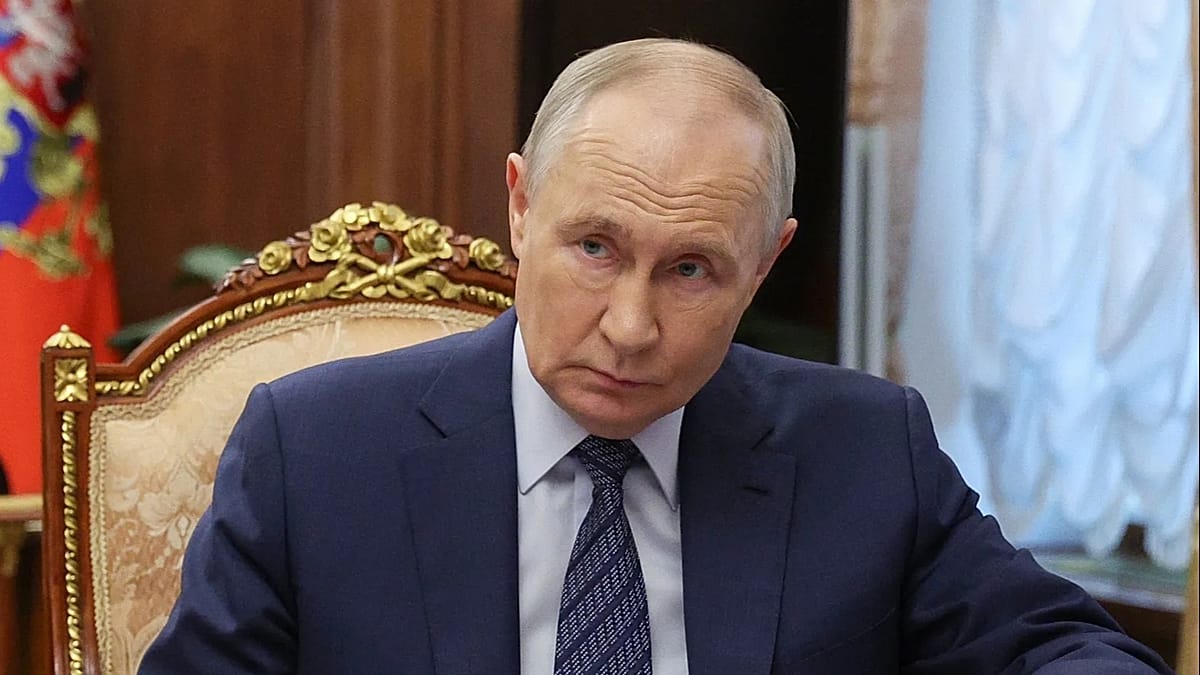
Leaders from across Southeast Asia are gathering in Kazan, Russia, on Wednesday for the ASEAN-Russia summit, hosted by President Vladimir Putin. The meeting brings together representatives from 11 member states of the Association of Southeast Asian Nations, including Cambodia, Thailand, Vietnam, and Singapore, to discuss strategic partnerships and potential new areas of cooperation in politics, economics, and humanitarian affairs.
ASEAN, founded in Bangkok in 1967, aims to promote regional peace and accelerate economic growth. Its other members include Myanmar, the Philippines, Timor-Leste, Laos, Malaysia, Indonesia, and Brunei.
In a greeting message to the assembled leaders, Putin highlighted the 35th anniversary of ASEAN-Russia relations and outlined key priorities. “Today, we are facing a new set of tasks,” Putin said. “These include the rapid adoption of artificial intelligence-based digital solutions and the development of resilient digital platforms.” He added that “significant potential also exists in the fields of energy and food security, the exchange of advanced technologies, and cooperation in the peaceful use of nuclear energy, as well as in transport and logistics.”
The summit in Kazan coincides with the G7 meeting in Évian-les-Bains, France, where leaders from Canada, France, Germany, Italy, Japan, the UK, and the US are discussing international peace and security, migration, and technology. In a joint statement, the G7 pledged “unwavering” support for Ukraine as it continues to repel Russia’s full-scale invasion, launched in February 2022.
“We will strengthen our sanctions, including those on the oil and gas sectors,” the G7 statement said. The leaders also noted that “we consider this the right moment to proceed with additional measures, as President Trump has delivered a deal that we support in reopening the Strait of Hormuz.” The deal, touted by US President Donald Trump, is set to be signed in Switzerland on Friday.
Ukrainian President Volodymyr Zelenskyy met with G7 counterparts in France to renew his appeals for more air defense missiles, a winter support package, and increased pressure on Moscow. Zelenskyy said on Wednesday that they had agreed on the “additional strengthening of Ukraine’s air defense” and new measures against Russia. This comes amid ongoing Russian drone and missile attacks on Ukrainian cities, including recent strikes on Kyiv, Mykolaiv, and Kharkiv.
European Implications
The dual summits underscore the geopolitical divide between Russia and the West. While Putin seeks to bolster ties with Asian partners, the G7’s unified stance on Ukraine signals continued European and transatlantic commitment to Kyiv. The EU has also taken steps to counter Russian disinformation, recently sanctioning an influencer, PR specialist, and bishop for spreading Kremlin narratives.
For European readers, the ASEAN-Russia summit highlights Moscow’s efforts to diversify its diplomatic and economic relationships amid Western sanctions. Meanwhile, the G7’s pledges on Ukraine—including additional weapons and sanctions on Russian energy revenue—directly affect European security and energy markets. The situation remains fluid, with further developments expected as both summits conclude.