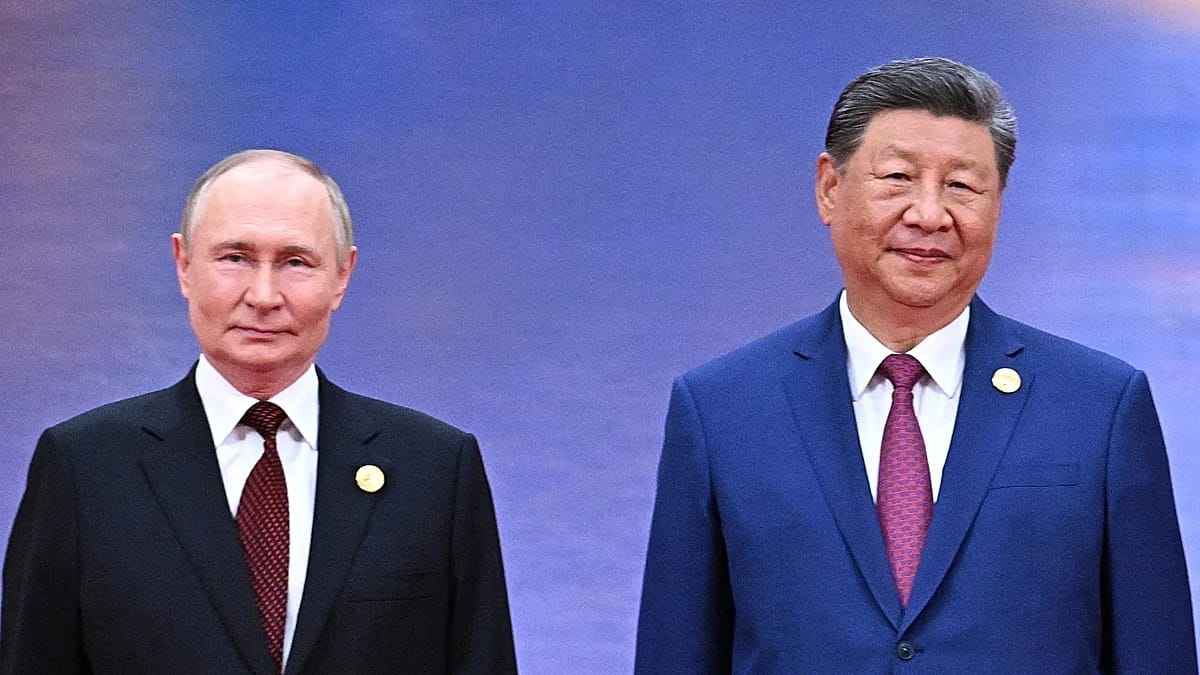
Russian President Vladimir Putin is set to visit Beijing from 19 to 20 May, a trip that comes shortly after US President Donald Trump concluded his own state visit to the Chinese capital. The Kremlin confirmed the timing on Telegram, noting that Putin will travel at the invitation of Chinese President Xi Jinping.
The visit is intended to mark the 25th anniversary of the Treaty of Good-Neighborliness and Friendly Cooperation between Russia and China, a foundational document that has underpinned their increasingly close relationship. According to Russia's Ministry of Foreign Affairs, the two leaders will discuss ways to deepen their countries' 'comprehensive partnership and strategic cooperation' and exchange views on 'key international and regional issues.'
Following the talks, the Kremlin expects the two sides to sign a Joint Statement at the highest level, along with a number of bilateral intergovernmental, interdepartmental, and other documents. Putin is also scheduled to meet with Chinese Premier Li Qiang to discuss economic and trade cooperation.
Strategic Timing and European Implications
The timing of Putin's visit—so soon after Trump's—underscores the intensifying competition for influence in Eurasia. For European capitals, the sequence of high-level meetings in Beijing raises questions about the continent's position in a world increasingly shaped by US-China rivalry and Russia's alignment with Beijing. The visit comes as 36 nations have joined a special tribunal to prosecute Putin for aggression against Ukraine, a move that highlights the legal and diplomatic pressure on Moscow from Europe and its allies.
European diplomats in Brussels and national capitals are closely watching the outcome of the Putin-Xi talks, particularly any joint statements on Ukraine, Taiwan, or global governance. China has positioned itself as a potential mediator in the Strait of Hormuz crisis and has warned the US on Taiwan during Trump's visit, signaling its willingness to shape regional security dynamics.
For Europe, the deepening Russia-China partnership poses both economic and security challenges. The European Union has sought to maintain a balanced approach, engaging Beijing on trade while imposing sanctions on Moscow over the war in Ukraine. The Kremlin's announcement of this visit suggests that Russia is doubling down on its pivot to Asia, a strategy that has accelerated since the invasion of Ukraine in 2022.
Putin's trip also comes amid a period of political turbulence in Europe. Latvia's government collapsed after a drone incursion, and German Chancellor Friedrich Merz has admitted coalition failures while criticizing the US, before holding a call with Trump. These developments underscore the fragmented political landscape in Europe, which Moscow may seek to exploit.
The joint statement expected from the Putin-Xi summit is likely to reaffirm their opposition to Western-led sanctions and NATO expansion, themes that resonate with many in the Global South. For European readers, the key question is whether the two powers will coordinate more closely on issues like energy markets, technology standards, and financial systems—areas where Europe has significant exposure.
As the world's attention shifts from Trump's Beijing visit to Putin's, European policymakers will be weighing the implications for transatlantic unity and the continent's own strategic autonomy. The visit is a reminder that Europe cannot afford to be a bystander in the reshaping of global alliances.