At the Hili Forum in Abu Dhabi, senior officials from Qatar and the United Arab Emirates delivered a coordinated message: the Gulf can no longer depend solely on the United States for its security. In separate addresses on Monday, they called for a more self-reliant regional defence posture and a pragmatic approach to dealing with Iran, even as they acknowledged the deep mistrust that persists.
Dr Majed Al Ansari, Qatar's foreign ministry spokesperson, argued that while the strategic alliance with Washington remains crucial, it is not enough. "We need to realise in the Gulf that having international forces in the region, having a strategic alliance with the US is very important, but is not enough," he told the forum. "Self-sufficiency when it comes to security is the only way forward. Yes, we need our partners. Yes, we need our allies. But we cannot depend on them alone for our security."
Qatar hosts the largest US military base in the Middle East, a fact that has not shielded it from Iranian attacks. Tehran has insisted that its strikes were aimed at US interests, a claim Doha has consistently rejected, maintaining that the attacks hit civilian and economic targets on Qatari soil.
Trust as the central obstacle
Anwar Gargash, diplomatic adviser to the UAE president, echoed the sentiment, telling the forum that geography leaves the region "no alternative to engagement" with Iran. However, he cautioned that rebuilding trust would be far more difficult than establishing a functional relationship. "Trust is the mountain we will have to climb," Gargash said. "We must distinguish clearly between rebuilding a necessary and functional relationship with Iran and rebuilding the trust that has been broken. The first is necessary. The second will be far more difficult."
Gargash was blunt about Iran's actions, describing the attacks on Gulf states that "had not attacked it" as a "premeditated war of choice" and a direct violation of international law. He stressed that the decision was not impulsive but calculated, and that the Gulf states should have presented a more united front in confronting the threat.
Both officials agreed that the partnership with Washington remains essential, but the war has exposed the limits of that reliance. "Our security is our first priority. When we depend entirely on others, we cannot always assume it will be their priority," Gargash said, underscoring the need for firm guarantees that Iran will not strike again.
Strait of Hormuz and economic resilience
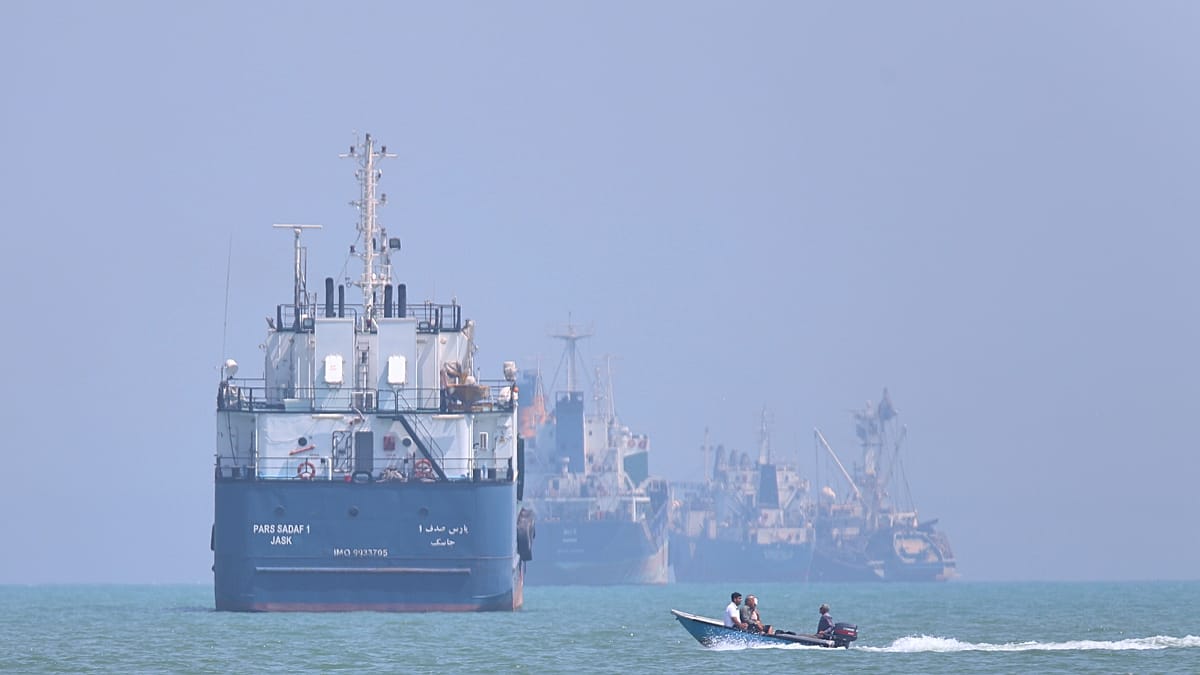
The two countries also aligned on the critical issue of the Strait of Hormuz, through which a significant share of the world's oil and gas passes. Gargash made clear that the UAE would not accept any single state's control over the waterway, nor tolerate threats to oil tankers in transit. "Our energy exports will not be held hostage, nor will our trade and economic activity," he declared, adding that navigation "cannot be subject to coercion."
To reduce vulnerability, the UAE is expanding ports on its eastern coast and developing pipelines, railways, and alternative export routes. "Freedom of navigation is not a concession to be granted, nor a principle to be renegotiated under pressure," Gargash said. Qatar's Al Ansari echoed the point, insisting that "the security of the Gulf is inseparable from global energy security, trade and maritime navigation."
The two officials also stressed the importance of strengthening the Gulf Cooperation Council (GCC) and building a more resilient regional security architecture. Al Ansari called for a framework grounded in "collective security, diplomacy and deeper economic interdependence."
The remarks come as Gulf states explore alternative measures to safeguard their exports. Reports of ship-to-ship transfers to bypass the Hormuz blockade have surfaced, highlighting the lengths to which these countries are willing to go to maintain economic stability.
The broader implications of this shift extend beyond the Gulf. European capitals, which rely heavily on Gulf energy supplies and maritime routes, are watching closely. The push for Gulf self-reliance could reshape security dynamics in a region that remains central to global energy security. As the European security landscape evolves, the Gulf's quest for autonomy may offer lessons—or warnings—for other regions grappling with similar dependencies.
For now, Qatar and the UAE have made their position clear: the era of relying on a single external guarantor is over. The path forward, they argue, lies in a stronger, more united Gulf that can defend its own interests while maintaining essential partnerships.