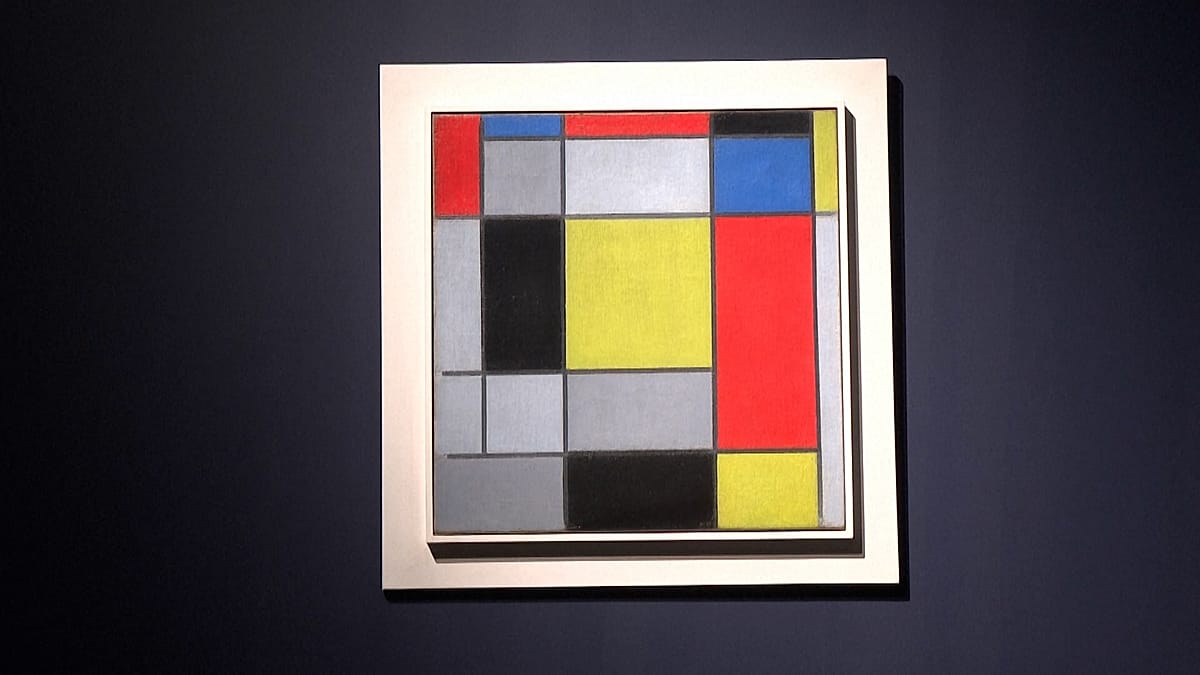
A significant Piet Mondrian painting that has not been shown publicly for a quarter of a century is set to go under the hammer in Paris. The work, which dates from the Dutch artist's most celebrated period, is expected to draw intense interest from collectors and institutions alike.
A rediscovered grid
The canvas, titled Composition No. II, was painted in 1930, at the height of Mondrian's involvement with the De Stijl movement. It features the bold black lines and primary-colour blocks that have become synonymous with his name. The painting has been in a private European collection since the 1970s and has only rarely been exhibited.
According to the auction house, the work is being sold by the family of a Swiss collector who acquired it decades ago. They have decided to part with it now, with the proceeds going to fund a new art foundation in Geneva.
Mondrian's grid paintings are among the most recognisable images in modern art, and examples from this exact period are scarce on the market. The last comparable work to appear at auction was sold in 2015 for more than $50 million, setting a record for the artist.
Experts say the Paris sale could surpass that figure, given the current strength of the market for blue-chip modern art. The painting will be on public view in Paris, London, and New York before the auction, giving potential buyers a rare chance to see it in person.
“This is a masterpiece of geometric abstraction,” said Claire Durand, head of modern art at the auction house. “It captures the moment when Mondrian distilled his vision to its purest form. To have it on the market is a once-in-a-generation opportunity.”
The auction will take place at the Hôtel Drouot in Paris on 15 March. The pre-sale estimate is between €40 million and €60 million.
Mondrian, who was born in the Netherlands in 1872, spent much of his later life in Paris, London, and New York. His influence extends far beyond painting, shaping architecture, design, and even fashion. The upcoming sale is a reminder of the enduring appeal of his radical simplification of form.
For European collectors, the auction is also a chance to acquire a piece of the continent's cultural heritage. The painting's journey from a Swiss private collection to the Paris saleroom reflects the fluid movement of art across borders within Europe.
As the art world watches, the sale will be a test of whether the appetite for modernist masterpieces remains as strong as ever. With the global market for top-tier works showing no signs of cooling, the outcome could set a new benchmark for Mondrian's work.