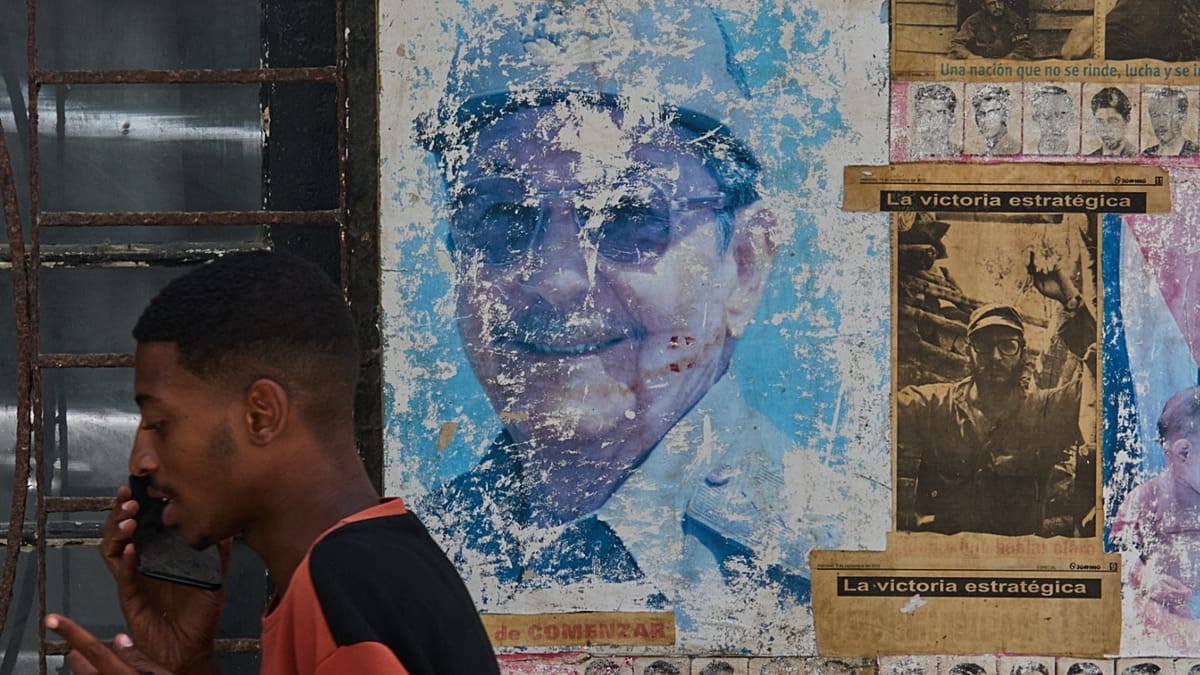
The recent indictment by the United States against former Cuban president Raúl Castro has thrust the 94-year-old revolutionary back into the international spotlight. The charges relate to his alleged role in the 1996 downing of two civilian aircraft operated by the Miami-based group Brothers to the Rescue, an incident that occurred when he served as defence minister under his brother Fidel. This legal move is the latest in a series of pressures applied by the Trump administration against the island's communist government.
To understand Raúl Castro is to understand the architecture of power in Cuba. Born in Birán, in eastern Cuba, to a Galician landowner, Raúl was always the organisational and military complement to his brother's ideological and political leadership. Together, they led the 1953 attack on the Moncada barracks, a failed uprising against dictator Fulgencio Batista that landed them in prison and later in exile in Mexico. From there, they regrouped and, in 1956, returned to Cuba aboard the yacht Granma with a small band of insurgents, including the Argentine revolutionary Ernesto 'Che' Guevara. After heavy losses, the survivors retreated to the Sierra Maestra, where they waged a guerrilla war that gradually gained popular support, culminating in Batista's flight on 1 January 1959.
From Defence Minister to President
After the revolution's victory, Fidel Castro monopolised political leadership, while Raúl was placed in charge of the Revolutionary Armed Forces. As defence minister for nearly half a century, he built Cuba's military and intelligence apparatus and became the regime's second most powerful figure. When Fidel's health declined in 2006, Raúl took over the presidency, formally assuming the role in 2008. Although he kept the one-party system intact, he introduced limited economic reforms: opening space for small private businesses, relaxing travel restrictions, and expanding access to the internet and mobile phones.
One of the defining moments of his presidency came in 2014, when he and then-US president Barack Obama orchestrated a historic diplomatic thaw. Embassies reopened, and relations were restored after more than five decades of hostility. However, the rapprochement was short-lived. Donald Trump reversed much of that progress, tightening economic sanctions and returning Cuba to the centre of regional ideological confrontation.
In 2018, Raúl Castro formally handed the presidency to Miguel Díaz-Canel, an electronics engineer and Communist Party official who became the first Cuban head of state from outside the Castro family since 1959. The transition was carefully managed by the old guard. Díaz-Canel's leadership has been marked by ideological continuity, with the Communist Party retaining its central role and no opening to political pluralism. Raúl remained first secretary of the party until 2021, the post with the greatest real influence in the Cuban system.
For European observers, the fate of Cuba is not a distant concern. The island's economic ties with the European Union, its role in Latin American geopolitics, and the human rights situation of its people are all matters of interest. The US indictment, while a domestic legal action, has implications for international relations and the ongoing debate over sanctions and engagement. As the pressure on Havana mounts, the question remains: how much longer will the shadow of the Castro brothers shape Cuba's future?