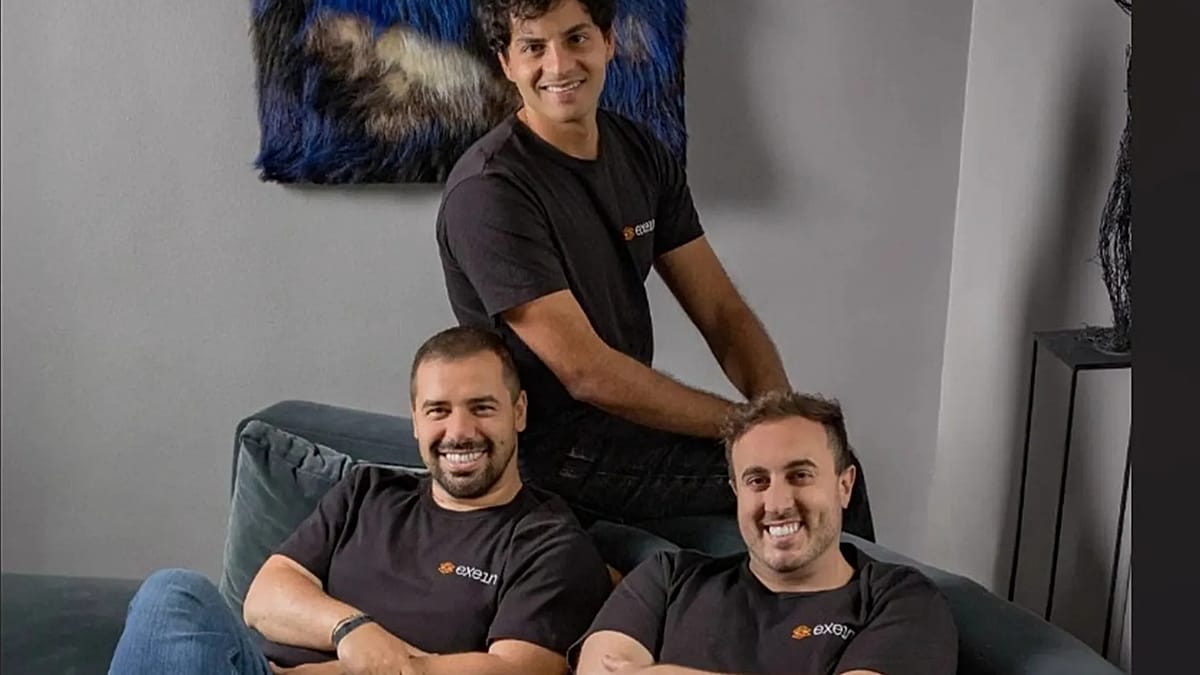
Rome-based cybersecurity startup Exein has joined the unicorn club after closing a $270 million funding round, giving the company a valuation of $1.7 billion. The round was led by global venture capital firm Headline, with participation from the European Investment Bank (EIB) and other institutional investors, the company announced on Tuesday.
Founded in 2018 by Gianni Cuozzo, Exein specializes in embedded security for industrial devices, robots, and other hardware that increasingly relies on artificial intelligence. In just two years, its valuation has grown thirtyfold, making it Europe's most valuable hardware cybersecurity firm.
“Devices are no longer just connected; they are becoming intelligent. They run models, make decisions and act in the physical world,” reads the company's website. CEO Gianni Cuozzo told TechCrunch: “The core idea is that every device should be able to defend itself autonomously, regardless of the security of the network it is connected to.”
Securing the physical world
Exein focuses on what it calls Physical AI: autonomous systems that interact with the real world, such as industrial robots, self-driving vehicles, drones, medical devices, and energy infrastructure. In these domains, a cyberattack on firmware can cause physical damage, not just data loss. The company's technology operates directly on the device, providing ultra-low-latency protection that can neutralize threats before they execute.
With AI-generated attacks now unfolding in milliseconds, having a defense system embedded in the machine is critical. Cuozzo points to open-source AI models that run without protection mechanisms, making it easier and cheaper for hackers to target physical devices in new ways.
Exein's approach differs from traditional cybersecurity firms like Palo Alto Networks or Microsoft Defender for IoT, which analyze threats from outside. Instead, Exein works at the operating system level, specifically in the kernel—the core that controls all hardware and software—before malicious code can run. This is similar to other startups like Sternum IoT and Drivesec, but Exein claims to be the only one operating directly in the kernel.
The company has developed two main products: Pulsar, a Linux-based defense tool that uses eBPF technology and the Rust programming language to monitor and protect devices in real time with minimal resource consumption; and Photon, a preventive platform for Physical AI that blocks malicious execution paths in kernel space.
According to Exein, its technology protects more than 1.5 billion devices worldwide every day, covering everything from cloud workloads to edge systems—machines and robots that process data locally to reduce response times.
The new capital will fuel expansion in the US and Asia-Pacific markets, which already generate 50% of its revenues, and strengthen its operations in Italy and abroad. The company has offices in Germany, the United States, and Taiwan, with around forty employees.
Exein's growth is also supported by regulatory tailwinds, particularly the EU's Cyber Resilience Act, which mandates strict security-by-design standards for hardware and IoT products sold in the European single market. This aligns with broader European efforts to bolster cybersecurity, as seen in recent moves like the EU cybersecurity agency gaining access to advanced AI models. The company's success also underscores the continent's growing role in tech innovation, a theme echoed in other European startups such as German AI firm Langdock, which recently relocated its parent company to Berlin.
As Europe grapples with rising security concerns—from orbital weapons to drone incidents near the Baltic—Exein's embedded security approach offers a proactive defense for the physical infrastructure that underpins modern life.