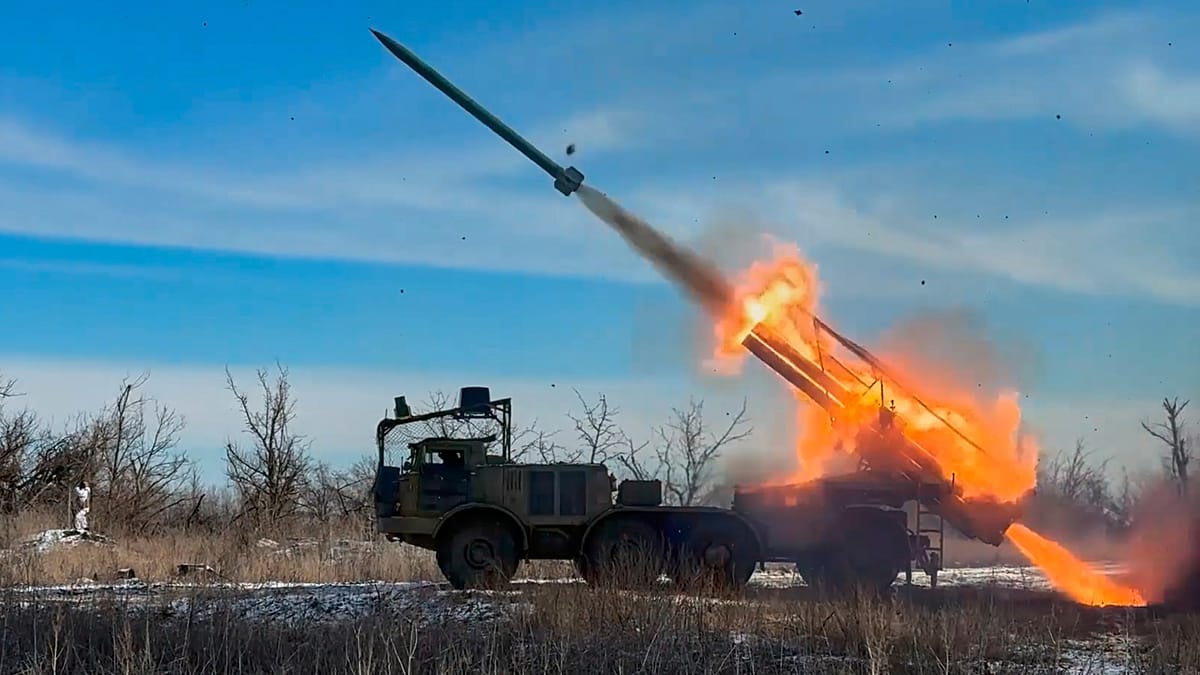
Russia resumed its aerial and artillery assault on Ukraine early Tuesday, just hours after a three-day ceasefire brokered by the United States came to an end. The strikes targeted several regions in the east and the capital, Kyiv, killing at least one civilian and wounding several others.
Oleksandr Ganzha, head of the Dnipropetrovsk regional military administration, reported that Russian forces attacked five districts of the region more than twenty times using drones, artillery, and aerial bombs. The attacks killed a man and injured at least four people, according to his statement on Telegram.
In Kyiv, a 20-storey residential building was struck, Ukrainian media reported, citing local officials. The Fastiv region, just outside the capital, also came under fire. Governor Mykola Kalashnyk wrote on Telegram that a kindergarten, a four-storey residential building, and two private homes were damaged in the strikes.
Ceasefire Ends, Violence Resumes
The renewed violence followed the expiration of a 72-hour truce announced by former US President Donald Trump on Friday, which was set to begin on 9 May. While Moscow and Kyiv accused each other of violating the ceasefire, no major offensives were reported during the three-day period, though drone activity and civilian casualties continued on both sides.
Ukrainian President Volodymyr Zelenskyy said on Sunday that Ukraine had deliberately refrained from conducting long-range retaliatory strikes during the truce, but warned that Kyiv would respond if Russia chose to return to a full-scale war. “Ukraine refrained from long-range actions in response to the absence of Russian massive attacks,” Zelenskyy stated in his evening address.
The timing of the strikes underscores the fragility of any temporary halt in hostilities, as both sides remain deeply entrenched in a conflict that shows no signs of de-escalation. The European Union has been closely monitoring the situation, with member states divided over how to engage with Moscow. EU foreign ministers remain split over direct talks with Putin, reflecting the broader strategic uncertainty across the continent.
Meanwhile, the humanitarian toll continues to mount. The Dnipropetrovsk region, a key industrial and logistical hub in eastern Ukraine, has been a frequent target of Russian strikes. The attack on a kindergarten in Fastiv highlights the indiscriminate nature of the bombardments, which have repeatedly struck civilian infrastructure.
European leaders have condemned the renewed attacks. The EU has already imposed multiple sanctions packages on Russia, including measures targeting officials involved in the forced deportation of Ukrainian children. The bloc recently expanded its sanctions list to include more individuals responsible for these actions.
As the war enters its third year, Ukraine continues to rely on Western military and financial aid. The EU has set a July deadline for opening accession clusters with Ukraine, a process that Kyiv sees as crucial for its long-term security and integration with Europe. EU Enlargement Commissioner Olivér Várhelyi has confirmed the timeline, though progress depends on continued reforms in Ukraine.
Zelenskyy’s warning of retaliation if Russia escalates reflects a broader strategy of deterrence. Ukraine has developed its own long-range drone and missile capabilities, which it has used to strike targets inside Russia, including oil refineries and military installations. However, during the truce, Kyiv held back to test Moscow’s commitment to de-escalation.
The international community remains watchful. The United Nations has reported that civilian deaths from drone strikes globally have surged, with Sudan seeing 880 such deaths in early 2025. In Ukraine, the pattern of aerial attacks continues to cause casualties and damage, with no end in sight to the conflict.