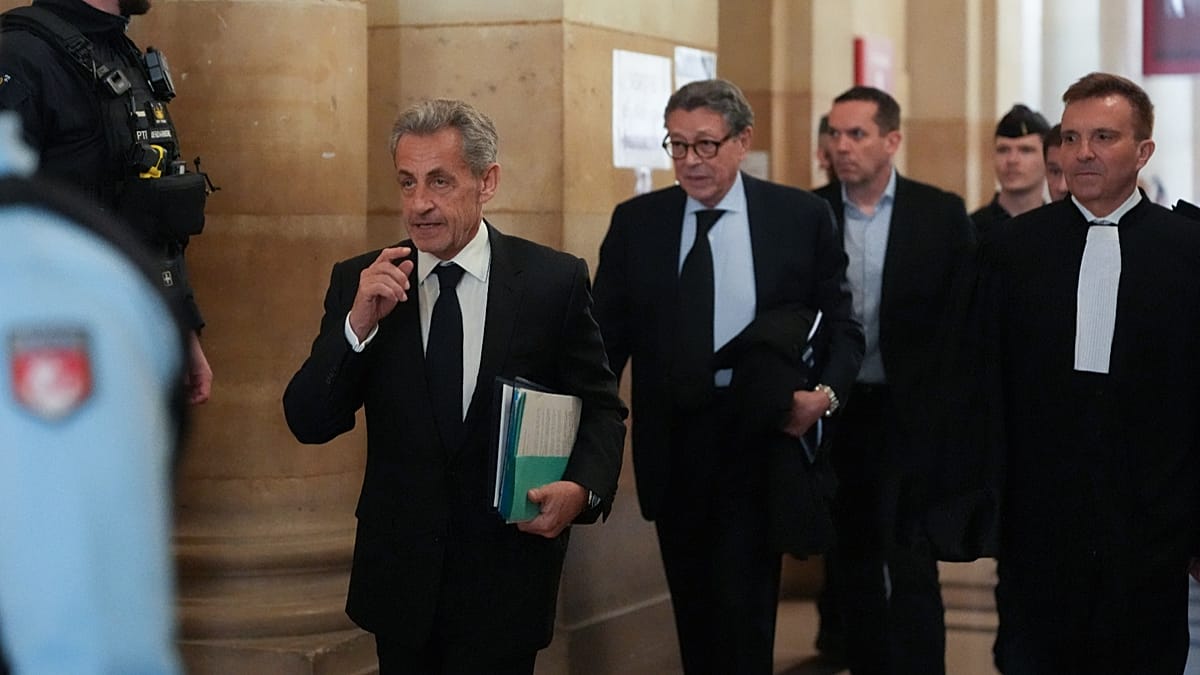
Former French President Nicolas Sarkozy used his final statement before the Paris Court of Appeal on Wednesday to insist he had not betrayed the trust of the French people, as the retrial over alleged Libyan campaign financing draws to a close. The 71-year-old, who served 20 days in La Santé prison last year after being convicted of criminal conspiracy, faces renewed calls from prosecutors for a seven-year sentence and a €300,000 fine.
“This case of alleged Libyan financing of my campaign began with lies and with a conspiracy; it must end in truth and transparency,” Sarkozy told the three-judge panel. “I will never be able to confess to something I did not do; that is not the performance I have been giving in front of you.”
Prosecutors Seek Tougher Sentence
On 13 May, prosecutors asked the appeal court to find Sarkozy guilty of corruption, illegal campaign financing, and concealing the embezzlement of Libyan public funds—three charges of which he was cleared at his first trial. They described Sarkozy as the “instigator” of the alleged deal, going further than the original verdict, which had convicted him only of criminal conspiracy for allowing aides to approach the Gaddafi regime on his behalf.
The first court cleared him of corruption on technical grounds, ruling that as a presidential candidate he lacked the “public authority” status required by France’s anti-corruption law. Sarkozy’s appeal, combined with the prosecution’s cross-appeal, has reopened the full case.
The allegations carry immense political and symbolic weight, suggesting that a foreign dictatorship helped bring a French president to power. Sarkozy, who led France from 2007 to 2012, has faced multiple corruption cases in recent years, but the Libya affair remains the most damaging.
Co-Defendants and Broader Context
Several members of Sarkozy’s inner circle also face charges in the case, including former chief of staff Claude Guéant, former Interior Minister Brice Hortefeux, longtime fixer Alexandre Djouhri, and 2007 campaign treasurer Éric Woerth. Their trials are intertwined with Sarkozy’s, and the appeal court’s decision will affect them as well.
The case has drawn attention beyond France, as it touches on broader issues of campaign finance integrity and foreign interference in European democracies. Similar concerns have emerged in other EU member states, with investigations into illicit funding and external influence becoming more common.
The Paris Court of Appeal has reserved its decision, which is expected on 30 November. Until then, Sarkozy remains under court supervision, his political legacy hanging in the balance.