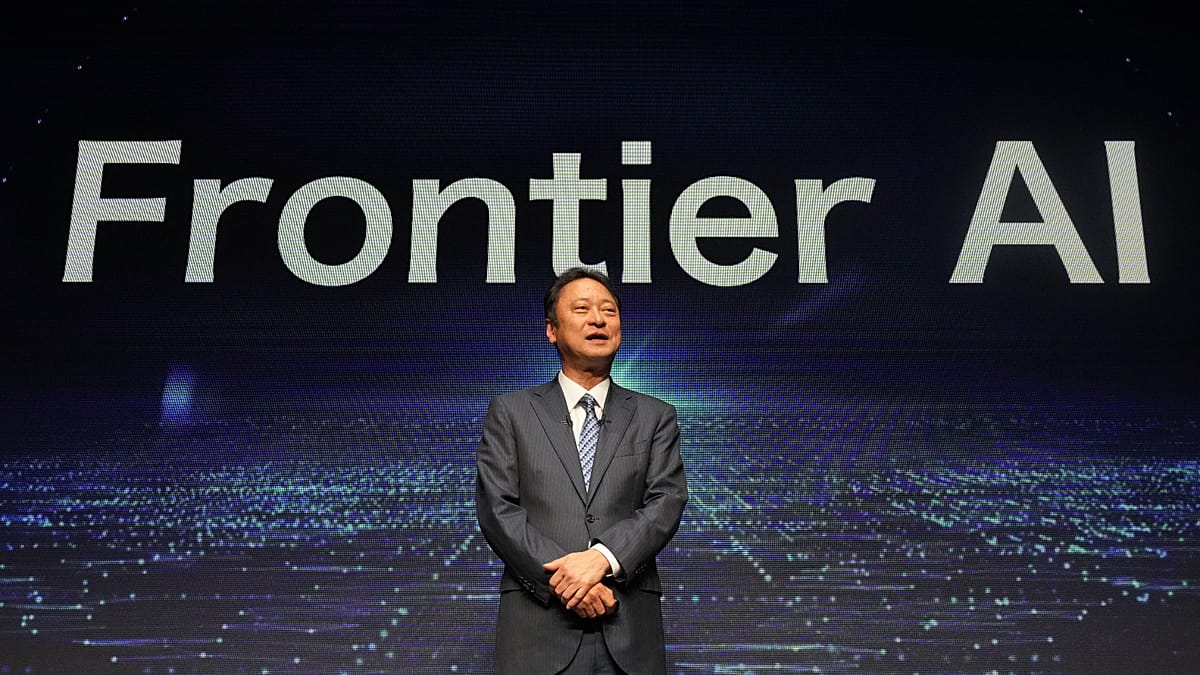
Shares in SoftBank Group, the Japanese conglomerate with a major stake in OpenAI, fell by more than 10% on Monday, leading a broader sell-off in technology stocks. The drop followed weekend statements from senior figures in the artificial intelligence industry who called for a more cautious approach to developing advanced models.
Dario Amodei, chief executive of Anthropic, used the phrase “caution over speed and prudence over profit” to argue that AI labs should deliberately slow the pace of frontier research. In a public statement on Saturday, he proposed a coordinated slowdown to allow more time to understand and manage the risks associated with increasingly powerful systems.
Amodei singled out “recursive self-improvement” as a particular concern—the process by which AI systems help design the next generation of models. “Left unchecked, it could outrun our ability to understand and control these systems, and so must be pursued very carefully, if at all,” he wrote.
His warning was publicly endorsed by Sam Altman, chief executive of OpenAI, and Elon Musk, who leads xAI. Musk said simply: “Dario is right.” Altman also told Fortune in an interview published on Saturday that OpenAI would not pursue an initial public offering this year, citing a focus on safety.
The comments came shortly after the resignation of Jacob Coxon, a researcher at Anthropic, who warned that the technology could escape human control. Another Anthropic researcher, Evan Hubinger, who remains at the company, wrote on social media: “We really do earnestly believe AI could kill all humans!” He estimated the probability of such an outcome at greater than 10% within the next decade.
Investor reaction and market impact
Despite the warnings, US President Donald Trump dismissed the concerns on Sunday, describing AI critics as “very negative forces” and insisting that the scenarios they raised would not happen. House Speaker Mike Johnson also urged the public not to panic.
Investors, however, took a different view. SoftBank’s decline “probably reflects the possibility that AI development may be slowed by regulators to try to avoid the worst-case outcomes that Anthropic and OpenAI have discussed,” said Dan Baker, an analyst at Morningstar. He added that further examples of loss of control of newer AI models could also slow development.
The sell-off extended across Asia. South Korea’s SK Hynix, a leading memory-chip maker, fell 5.3%, while Samsung Electronics dropped 2.8%. In Japan, Tokyo Electron lost 0.9% and Kioxia Holdings sank 6%.
The market reaction underscores the growing tension between the commercial momentum behind AI and the safety concerns raised by some of its most prominent developers. For European investors and policymakers, the episode highlights the continent’s dependence on AI infrastructure supplied by Asian and American firms, and the potential fragility of that supply chain.
Amodei also called for tighter restrictions on China’s access to advanced AI chips and semiconductor-manufacturing equipment, arguing that chips would largely determine the country’s AI capabilities. However, he acknowledged to CBS News that the “toughest dilemma” was that China might not join a coordinated slowdown.
The debate comes as Nvidia's acquisition of Hugging Face signals a push to consolidate control over AI development, while European governments are increasingly discussing how to regulate the technology. The European Union’s AI Act, which entered into force earlier this year, is the world’s first comprehensive legal framework for AI, but its implementation remains a work in progress.
For now, the industry is left to grapple with the question of whether safety can be ensured without sacrificing innovation—and whether a voluntary slowdown is realistic in a competitive global landscape. As Amodei’s comments suggest, the answer may depend on international cooperation, which remains uncertain.