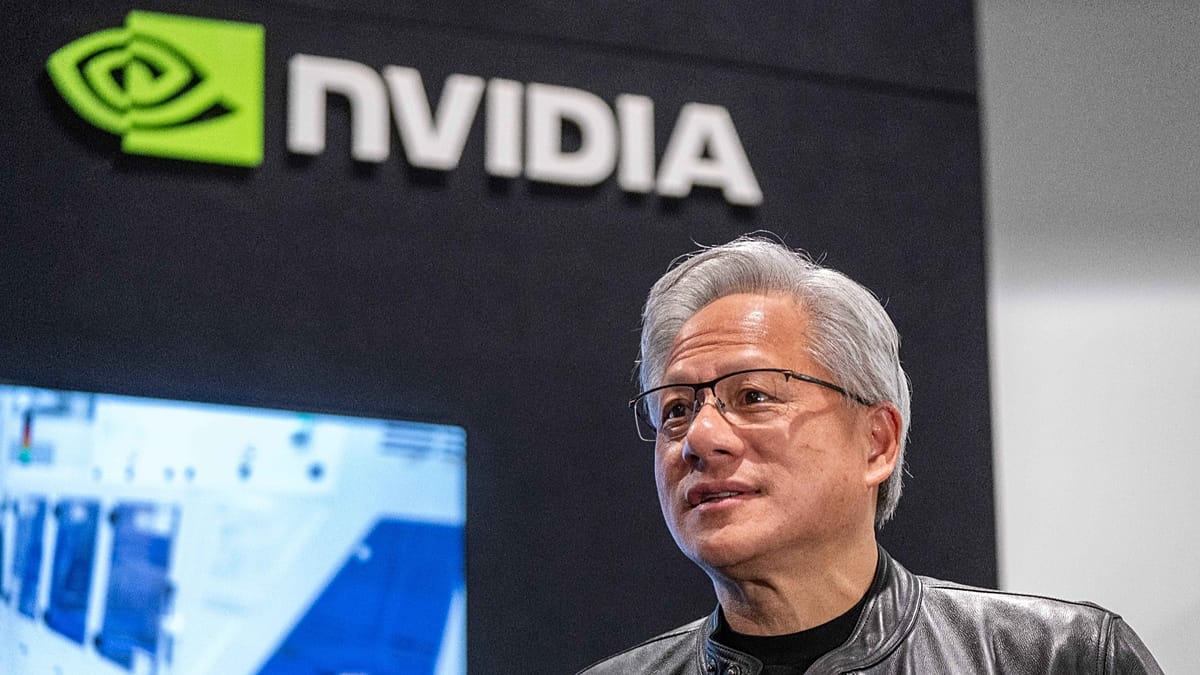
Nvidia has announced its acquisition of Hugging Face, the platform that has become the default home for open-source artificial intelligence development, for $12.93bn (€11.1bn). The deal, confirmed by chief executive Jensen Huang on Wednesday, marks Nvidia's second-largest acquisition ever and signals a strategic shift toward controlling the software ecosystem that runs on its chips.
Hugging Face, founded in 2016 by Clément Delangue and based in New York, has grown into a critical infrastructure provider for the AI community. It hosts more than three million models, 500,000 datasets, and one million applications, serving over 18 million developers and 200,000 companies. Unlike Nvidia, which dominates the hardware side of AI, Hugging Face has built its reputation on neutrality—allowing developers to use any model, cloud provider, or chip, regardless of who makes it.
For Nvidia, the acquisition is about more than just adding a popular platform to its portfolio. It gives the chipmaker a direct relationship with the developers who decide what gets built and how, a foothold that could prove difficult for competitors to bypass. As OpenAI, Google, and Anthropic develop their own custom silicon to reduce reliance on Nvidia hardware, owning the platform where millions of developers work daily offers Nvidia a strategic advantage that goes beyond raw processing power.
Openness under scrutiny
In a blog post, Huang sought to reassure the AI community that Hugging Face would continue to operate as an open platform. "NVIDIA compute will not be required to build on or deploy through Hugging Face," he wrote, adding that the platform would keep supporting open-weight models and multi-cloud deployment "from every model builder."
Delangue echoed that sentiment in an interview with CNBC, saying he approached Huang about a deal over the summer because open-source AI "needed more resources, more scale, more visibility." He has long argued that open models are essential to prevent the benefits of AI from being concentrated among a handful of large corporations.
Yet the acquisition raises questions about whether Hugging Face can maintain its neutrality under Nvidia's ownership. Some developers have already expressed concerns that the platform could gradually favor Nvidia's hardware, despite assurances to the contrary. The company's track record—Nvidia previously invested $235m in Hugging Face's 2023 funding round, when the startup was valued at $4.5bn—suggests a deepening relationship that may blur the lines between hardware vendor and software host.
The deal also marks a return to cloud computing for Nvidia, which scaled back its own cloud unit roughly a year ago. Hugging Face already provides developers with rented computing power to run models, giving Nvidia a ready-made route back into that business without building it from scratch.
Nvidia's acquisition comes at a time of intense competition in the AI chip market. The company's dominance has been challenged by the rise of custom silicon from major tech firms, as well as by European initiatives to boost homegrown AI capabilities. In Brussels, policymakers have been debating how to regulate open-source AI models, with some arguing that they pose risks while others see them as a way to foster innovation and reduce dependence on US tech giants.
The deal is likely to face regulatory scrutiny in both the US and Europe. European Union competition authorities have become increasingly vigilant about big tech acquisitions that could stifle competition in emerging markets. Hugging Face's role as a neutral hub for AI development could make it a particularly sensitive asset, and regulators may examine whether Nvidia's ownership would give it undue influence over the direction of open-source AI.
For now, both companies are presenting the deal as a win for the AI community. Huang has been a vocal advocate for open-weight models, co-signing a letter with Microsoft and Meta that argued open models "broaden access to AI" and prevent its benefits from being concentrated among a few firms. Delangue has similarly warned that Chinese labs like Moonshot AI are closing the gap with leading US models at a fraction of the cost, a concern that resonates in Washington and Brussels alike.
The acquisition is Nvidia's second-largest to date, behind its roughly $20bn purchase of assets from rival chipmaker Groq late last year. It also surpasses the near-$7bn acquisition of Israeli chipmaker Mellanox in 2019, underscoring the scale of Nvidia's ambitions in the AI space.
As the AI industry continues to evolve, the question of who controls the platforms that developers rely on is becoming as important as who makes the chips. With this deal, Nvidia is betting that owning both will secure its position at the center of the AI revolution. For Europe, which is seeking to build its own AI ecosystem, the acquisition serves as a reminder of the growing concentration of power in the hands of a few American companies—and the challenges that poses for the continent's digital sovereignty.