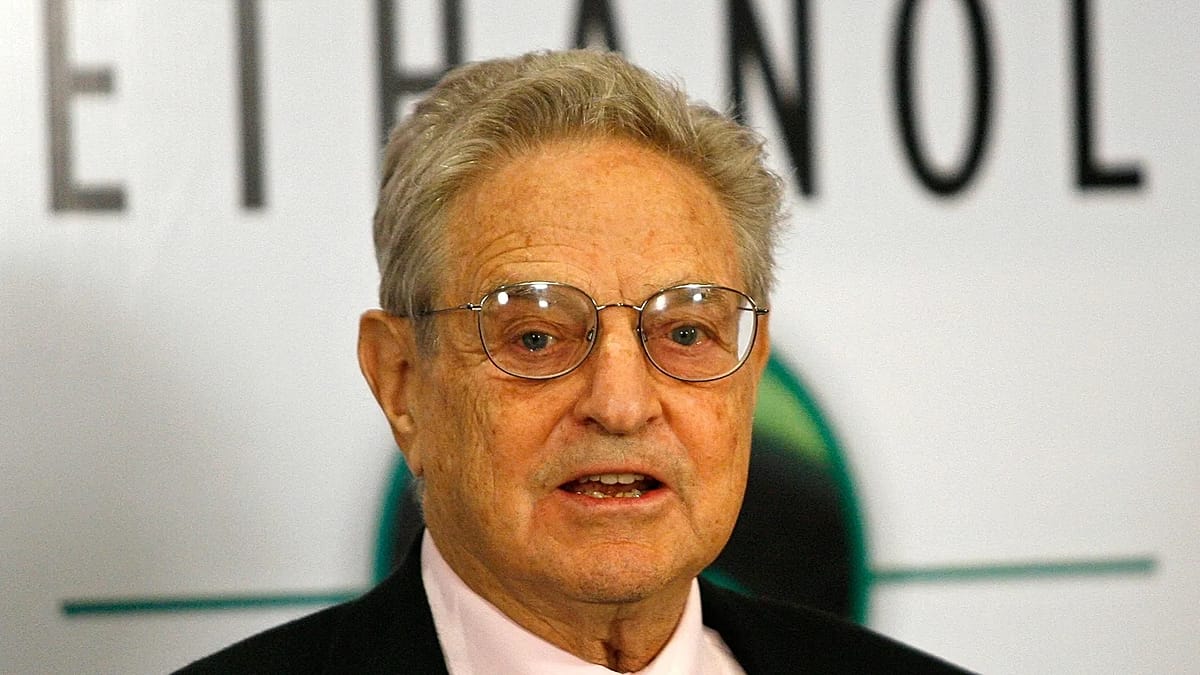
The Open Society Foundations (OSF), the philanthropic network founded by Hungarian-American billionaire George Soros, has committed $300 million (€259 million) over the next five years to strengthen democratic institutions and economic security in the United States. The announcement, made public on Tuesday, signals a direct challenge to the political pressure exerted by the Trump administration on non-profit organisations.
Under President Donald Trump, conservative allies in Congress and the administration have escalated investigations into progressive groups, accusing them of supporting illegal immigration, climate activism, or far-left movements. In late 2025, then-Attorney General Pam Bondi directed law enforcement to probe non-profits allegedly linked to antifa. When asked about potential inquiries into OSF, a Department of Justice spokesperson declined to comment.
“We are continuing our work unabated. We will not be intimidated into silence,” said Laleh Ispahani, managing director for the US at OSF, in a statement. The funding represents the first major US-focused initiative approved under the leadership of Alex Soros, who took over as chair of the foundations after a significant internal restructuring.
A European Perspective on US Democracy
For European observers, the Soros foundation’s move underscores the fragility of democratic norms even in established Western democracies. The Open Society Foundations, which have long supported civil society in Central and Eastern Europe—from Hungary to the Balkans—now find themselves defending similar principles on American soil. The €259 million pledge is a fraction of OSF’s global spending, but it highlights a growing concern: that political polarisation and executive overreach are not confined to Europe.
The five-year strategy aims to address civil rights and economic insecurity as interconnected challenges. OSF plans to fund legal advocacy, community organising, and policy research to counter what it sees as threats to voting rights, press freedom, and the rule of law. The initiative also includes support for economic security programmes, such as job training and affordable housing, to address the root causes of democratic erosion.
Critics, however, argue that Soros’ philanthropy is itself a form of political interference. Conservative media outlets have long portrayed the financier as a puppet master of global liberal causes. Yet OSF’s track record in Europe—funding human rights groups in Poland, independent media in Hungary, and anti-corruption initiatives in Ukraine—suggests a consistent, if controversial, commitment to open societies.
The timing of the pledge is notable. As the Trump administration continues to pressure non-profits, the European Union has also faced challenges to its democratic fabric. In Latvia, a government collapsed after a drone incursion, highlighting the security vulnerabilities that can destabilise democratic institutions. Meanwhile, the EU’s own budget overhaul has struggled to meet defence, climate, and enlargement pressures, as reported in our analysis.
Alex Soros, who has steered the foundation toward a more activist stance, emphasised that the US initiative is not a departure from OSF’s global mission. “Democracy is under threat everywhere, from Budapest to Washington,” he said in a recent interview. “We must defend it wherever it is challenged.”
The $300 million pledge is likely to fuel further debate about the role of private wealth in public life. But for now, OSF is betting that its investment in American democracy will yield dividends—not just for the US, but for the broader transatlantic alliance that depends on a stable, democratic America.