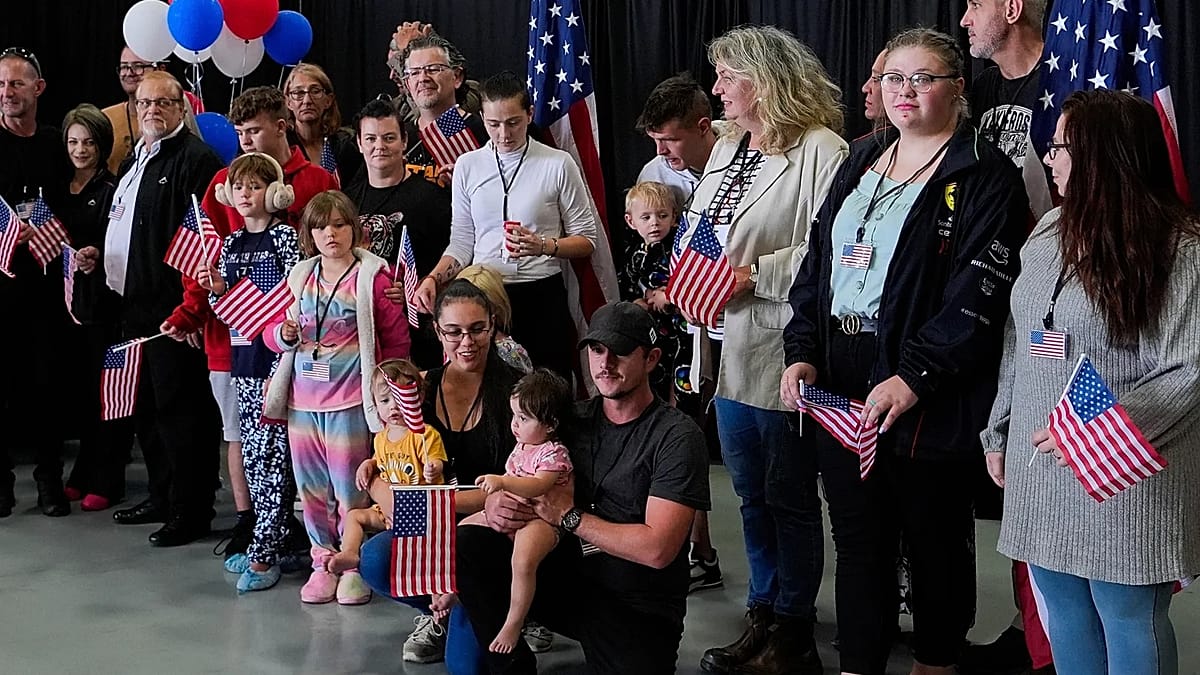
The South African government and organisations representing the country's Afrikaner minority have firmly dismissed the Trump administration's assertion that white South Africans face a humanitarian emergency. The claim, made by President Donald Trump, served as the basis for a decision to admit an additional 10,000 white Afrikaners as refugees into the United States this year, while effectively blocking other nationalities from the programme.
On Tuesday, the US administration announced it would increase its annual refugee quota specifically for white South Africans, citing what Trump described as “an unforeseen emergency refugee situation.” He blamed the South African government for “recent increases in the incitement of racially motivated violence,” though no specific evidence was provided.
South African Officials and Afrikaner Groups Push Back
Chrispin Phiri, a spokesperson for South Africa's foreign ministry, called the accusations of systemic persecution unfounded. He noted that some beneficiaries of the programme have already chosen to return to South Africa, undermining the narrative of a dire crisis.
Afrikaner trade union Solidariteit also rejected the premise. Spokesperson Jaco Kleynhans stated that refugee status is not a viable solution for Afrikaners, who should instead thrive in their home country. “The union is in no way aware of anything that the Trump administration could be referring to,” Kleynhans said, while respecting the autonomy of US refugee policy.
AfriForum, a lobbying group with over 300,000 members representing the white Afrikaner minority, echoed this sentiment. CEO Kallie Kriel said the organisation “does not have information” regarding the specific claim of an emergency refugee situation. “Our focus is fighting to create the circumstances in South Africa where there is no need for Afrikaners to leave,” Kriel added.
According to US government data, around 6,000 South Africans have moved to the United States since the Afrikaner programme began last year.
Selective Humanitarianism Under Scrutiny
The decision has drawn sharp criticism from refugee advocacy groups, who question why white Afrikaners are being prioritised over people fleeing war, natural disasters, and other crises worldwide. Vetting for refugee status in the US typically takes years, and the programme's focus on one group has left many with few alternatives.
Bryony Fox, a social justice researcher at Stellenbosch University in South Africa, described the policy as a case of selective humanitarianism. “This risks politicising refugee protection in a way that may ultimately weaken the legitimacy and universality of the refugee regime itself,” she said.
The Trump administration suspended the US refugee programme on his first day in office and has since repurposed it to allow Afrikaners—white South Africans descended primarily from Dutch settlers—into the country. Critics argue that this approach raises questions about inconsistent refugee protection and favouring privileged groups while ignoring others facing severe hardships.
As the debate continues, the South African government and Afrikaner groups remain united in rejecting the notion of a humanitarian crisis, insisting that the country's white minority can and should prosper within South Africa's borders.