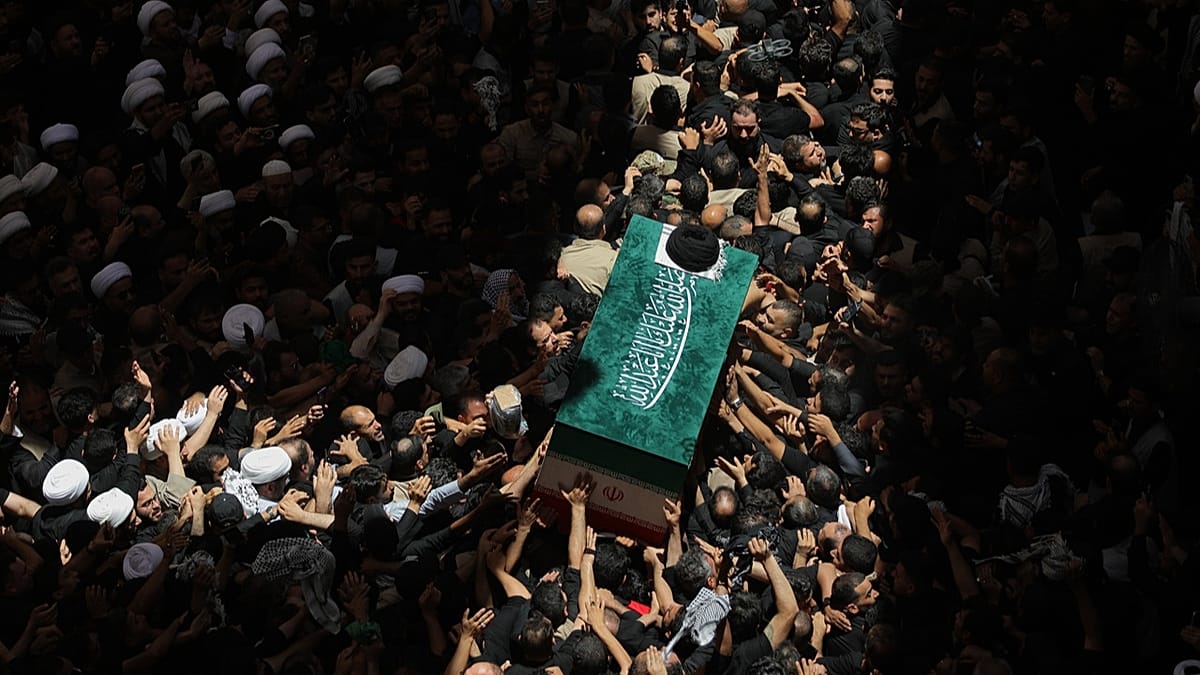
Iran laid former Supreme Leader Ayatollah Ali Khamenei to rest on Friday in his home city of Mashhad, concluding six days of elaborate funeral ceremonies. The burial took place at the shrine of Imam Reza, where a flag-draped coffin was carried through crowds of mourners. State broadcaster IRIB confirmed the interment in the memorial hall of the shrine.
The funeral unfolded against a backdrop of renewed hostilities between Washington and Tehran. Over the past two days, US strikes reportedly killed 17 people in Iran, including one that targeted a railway line between Tehran and Mashhad, according to Iranian state media. In response, Iran launched attacks on US assets in Kuwait, Bahrain, and Qatar, while Jordanian military officials said they intercepted eight missiles fired from Iran.
The violence has raised fears of a return to all-out war, just as negotiators were preparing to discuss a final ceasefire deal. Former US President Donald Trump declared the interim agreement “over” on Wednesday, though he allowed that talks could continue. European capitals, already strained by the conflict’s impact on energy markets and regional security, are watching the situation with concern. The surge in oil prices and tumble in European markets following Trump’s statement underscored the continent’s vulnerability to instability in the Gulf.
Succession Questions Linger
Khamenei, who ruled Iran for nearly 37 years, was killed alongside close family members in the initial US-Israeli airstrikes on 28 February. His burial in Mashhad was closely watched for signs of his designated successor, Mojtaba Khamenei, who has not appeared in public since his appointment. Reports suggest he was wounded in the same strikes that killed his father. At the shrine, senior figures including parliament speaker Mohammad Bagher Ghalibaf, chief justice Gholamhossein Mohseni Ejei, and Khamenei’s eldest son Mostafa Khamenei were present, with some weeping over the coffin. Mojtaba Khamenei has communicated only through written statements so far.
The absence of the new leader from public view adds uncertainty to Iran’s political future at a critical moment. Negotiations to reach a final ceasefire deal, which were due to start after the funeral, are expected to address the toughest issues: reopening the Strait of Hormuz and rolling back Tehran’s disputed nuclear programme. European diplomats have been involved in backchannel efforts, but the renewed fighting complicates any diplomatic progress.
The funeral processions began last Saturday, with authorities shutting down streets, airspace, and daily life in Tehran and other cities. Throngs of mourners commemorated a leader who held an iron grip on Iran for decades while confronting the West. At one ceremony, a eulogist urged the killing of Trump, reflecting the deep animosity that persists.
For Europe, the crisis carries multiple dimensions. The EU has already faced internal divisions over its stance on Iran, and the renewed conflict threatens to exacerbate tensions. The EU trade ban on Israeli settlements has tested bloc unity, and the Iran situation adds another layer of complexity. Meanwhile, the war has drawn in regional players, with Jordan intercepting missiles and Gulf states hosting US assets. European leaders are likely to push for de-escalation at upcoming NATO and EU summits, but the path forward remains uncertain.