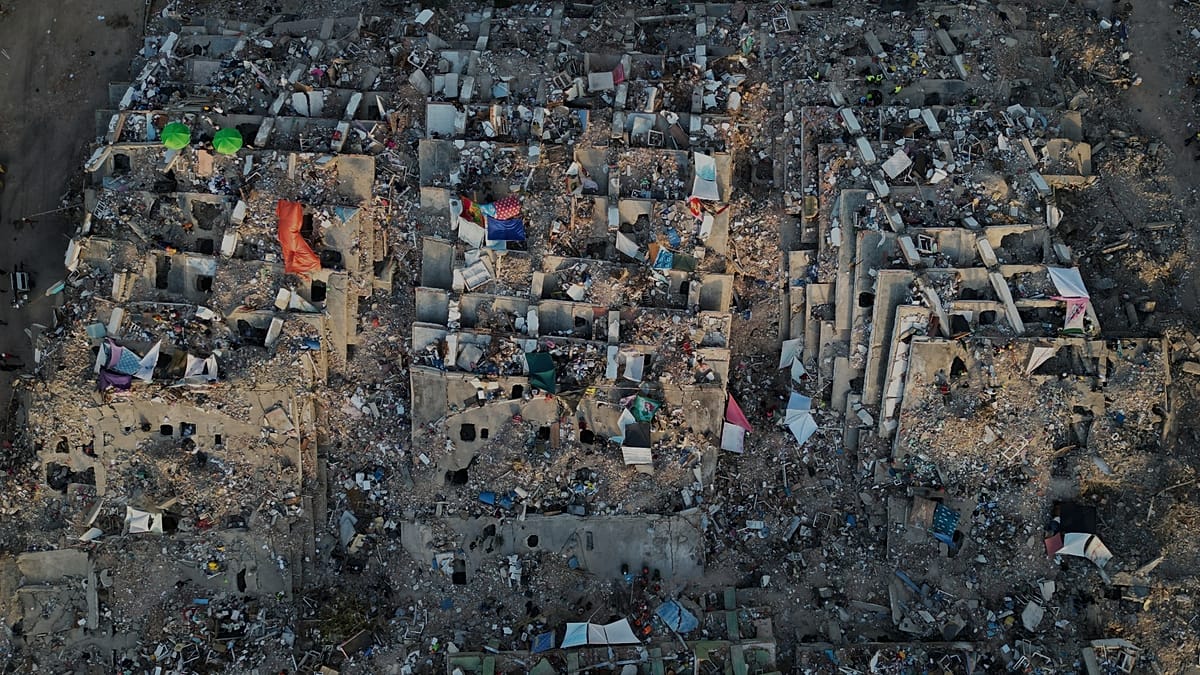
Venezuela's government has formally requested the release of frozen state assets held abroad to finance recovery efforts following the devastating twin earthquakes that struck last month, killing at least 3,685 people and injuring nearly 17,000.
Foreign Minister Yvan Gil Pinto made the appeal during a meeting with United Nations officials and partner organisations in Caracas on Wednesday. He specifically referenced gold reserves held by the United Kingdom and financial assets frozen by the United States, which he described as the result of "illegal sanctions."
"We call upon all countries currently holding blocked funds belonging to Venezuela to initiate a plan to release these funds so that they can be used for recovery efforts," Gil said. "There are accounts belonging to the Venezuelan state in various parts of the world that have been frozen as a result of illegal sanctions."
The United States, which imposed sweeping economic sanctions on Venezuela from 2019 onwards under the administration of President Donald Trump, has already lifted a number of those measures for a four-month period to facilitate relief operations. Washington had previously sought to pressure the leftist government of Nicolás Maduro, whom it considered illegitimate. Since US forces toppled Maduro in January, ties between Washington and Caracas have improved, with the Trump administration supporting interim President Delcy Rodríguez and gradually easing sanctions, particularly to allow development of Venezuela's vast oil reserves.
Humanitarian Crisis Deepens
Nearly two weeks after the 7.3 and 7.5 magnitude earthquakes, international rescue teams are winding down their search for survivors. Families continue to dig through rubble in the badly damaged coastal city of La Guaira, where thousands remain missing and many homes have collapsed. The government updated the death toll on Tuesday, confirming 3,685 fatalities and nearly 17,000 injured.
The disaster has left tens of thousands homeless, with the UN describing it as one of Latin America's worst earthquake disasters. The scale of destruction has prompted an urgent international response, though funding gaps remain significant.
On Wednesday, the United Nations launched an urgent appeal to raise €259 million ($296 million) for relief operations. UN humanitarian chief Tom Fletcher acknowledged that donors have already contributed substantially, but stressed the need for further support.
"Donors are already stepping up and I pay tribute to them and I thank them," Fletcher said during the meeting. "Already, based on the tracking system, the Venezuela response has received $300 million (€263 million) and I appreciate every single dollar of that support, including $115 million (€100 million) received before the earthquake. This leaves us now with a $627 million (€549 million) funding gap to address those urgent needs."
Fletcher outlined a clear six-month plan: "$296 million needed to reach 1.3 million in socioeconomic need right now over six months. It's a time-bound plan."
The disaster has also affected European nationals. Portugal's death toll in the earthquakes has risen to 96, including 17 children, highlighting the human cost for European diaspora communities in Venezuela.
Interim President Delcy Rodríguez has defended her government's response to the crisis, as criticism mounts over the pace of relief efforts. She earlier insisted that the administration is doing everything possible to assist affected communities, even as rescue teams face logistical challenges in reaching remote areas.
The international community's response will be closely watched, particularly as Venezuela's request for the release of frozen assets raises broader questions about the use of sanctions as a diplomatic tool. For European nations holding Venezuelan state funds, the decision to release them could set a precedent for future humanitarian crises.