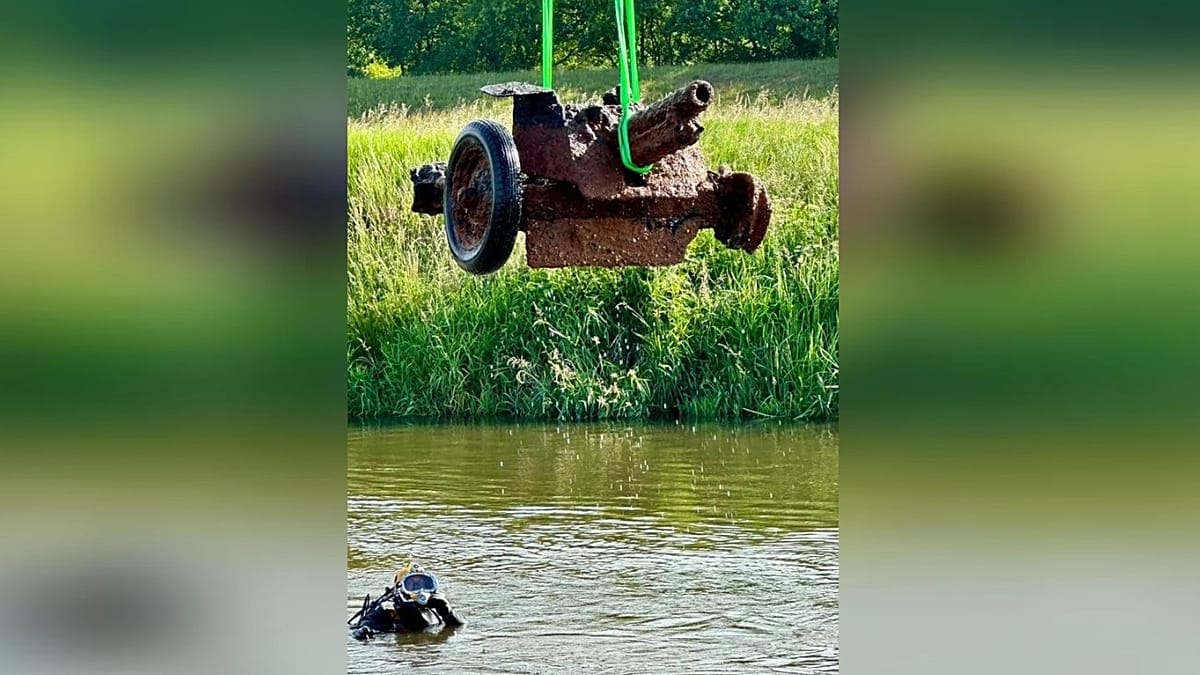
German ordnance disposal specialists have retrieved a Soviet Second World War artillery piece from the Neisse river near the town of Forst in Lusatia, a region that saw some of the fiercest combat of the war's final weeks.
The 76 mm infantry gun, model M1943, was discovered during maintenance work on the waterway, which forms part of the border between Germany and Poland, roughly 20 kilometres from Cottbus. The weapon, used extensively by the Red Army, was heavily rusted but otherwise remarkably intact, according to Enrico Schnick of the Explosive Ordnance Disposal Service (KMBD).
“That is because it was preserved in the mud and sand of the Neisse. I cannot recall a similar find in our region,” Schnick told broadcaster RBB.
Historical Context: The Battle for Forst
The town of Forst in Lower Lusatia was almost completely obliterated during intense fighting between the German Wehrmacht and the Red Army in April 1945. Today, the municipality, located in the Spree-Neisse district, has a population of around 17,000. The recovery of the gun serves as a tangible reminder of the violence that swept through this area eight decades ago.
According to the Berliner Morgenpost, more than 5,000 units of the M1943 model were produced in the Soviet Union, primarily during the Second World War. The weapon was designed to provide direct fire support for infantry and was known for its relatively light weight and effectiveness in close combat.
Despite its historical significance, the gun is not destined for a museum. Schnick confirmed that it is now at the KMBD’s dismantling facility in Kummersdorf and will likely be “properly disposed of.”
Discoveries of Second World War munitions and equipment are not uncommon across Europe. In Germany alone, bomb disposal units handle thousands of such finds each year, often from construction sites or riverbeds. The Neisse river, which saw heavy fighting in 1945, has yielded several similar artifacts over the decades.
Local news outlet Niederlausitz Aktuell published videos of the recovery operation, showing the rusted barrel being carefully lifted from the riverbed. The find has drawn attention to the region’s wartime history and the ongoing work of ordnance disposal teams.
For residents of Forst and the surrounding area, the recovery is a stark reminder of the past. The town has since rebuilt, but the scars of war remain visible in the landscape and in occasional discoveries like this one.