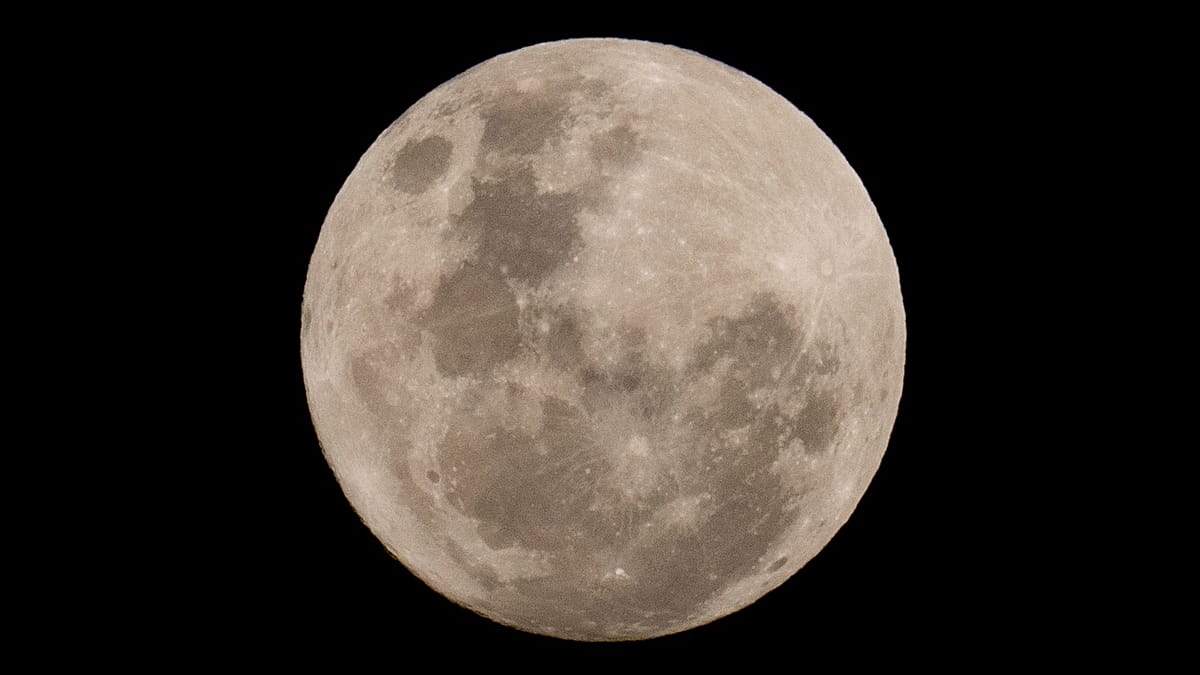
An upper stage of a SpaceX Falcon 9 rocket, launched in January 2025, is on a collision course with the Moon. NASA scientists and independent astronomer Bill Gray have calculated that the four-tonne piece of space debris will impact the lunar surface on 5 August.
The rocket component was originally part of a mission that sent two landers toward the Moon. Now, its trajectory has brought it back into the Moon's path. Gray, who runs the Project Pluto software that tracks near-Earth objects, first flagged the potential impact in September 2025. Earlier projections had suggested a possible collision as early as March 2026, but refined calculations now point to August.
Will the Impact Be Visible from Earth?
Experts are divided on whether the collision will be observable from Earth. The debris is expected to hit near the edge of the lunar disc. If the Sun illuminates the resulting dust cloud, it might become briefly visible. However, NASA's William Cooke told dpa: "I think it will be very, very hard to see, if not impossible."
The impact speed is estimated at more than two kilometres per second. Despite the force, the Moon's lack of atmosphere means no fireball will form—only a spray of dust and rock.
Lunar observer Brian Day, speaking during a NASA SSERVI panel discussion in early July, noted that the Moon is a dynamic environment. "Changes and impacts do occur," he said, adding that such events are part of the natural lunar cycle.
This is not the first unplanned collision with the Moon. In 2022, the Lunar Reconnaissance Orbiter captured evidence of a debris strike, which NASA attributed to an old Chinese rocket stage—a claim Beijing denied. Planned impacts, used for scientific research, happen regularly, but accidental ones are rarer.
The incident underscores the growing problem of space debris. As more rockets and satellites are launched—many by private companies like SpaceX—the risk of unintended collisions increases. While the Moon is far from Earth's orbital traffic, the event serves as a reminder that even discarded hardware can have consequences.
For European space agencies and companies, the issue is particularly relevant. The European Space Agency (ESA) has long advocated for debris mitigation measures, including the development of robotic rescue missions to prevent crashes. The upcoming impact may fuel calls for stricter international guidelines on end-of-life disposal of rocket stages.
Gray emphasized that the collision poses no danger to Earth or ongoing lunar missions. Still, the event highlights the need for better tracking and coordination among spacefaring nations and private operators.