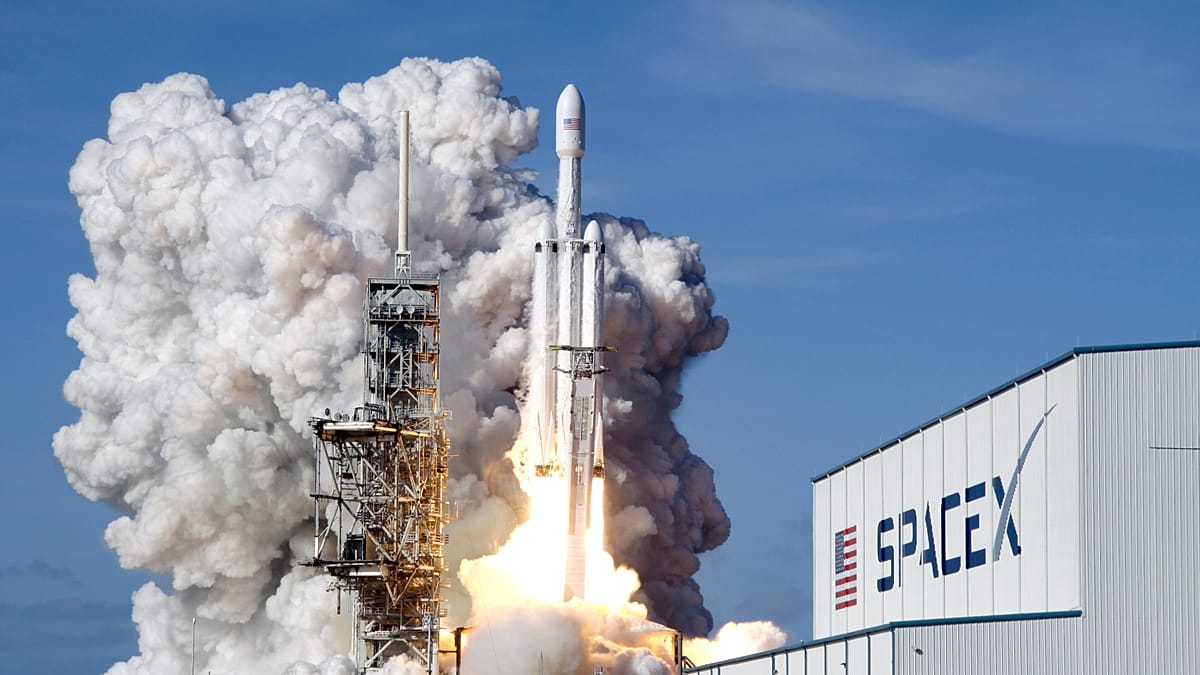
Space Exploration Technologies Corp., better known as SpaceX, has announced plans to list its shares at $135 each in what would become the largest initial public offering on record. The company aims to raise up to $75 billion (€66 billion), surpassing the $26 billion raised by Saudi Aramco in 2019.
The offering values SpaceX at approximately $1.77 trillion (€1.56 trillion), placing it among the world's most valuable publicly traded companies. Only a handful of firms, such as Nvidia with a market capitalisation of around $5.2 trillion, currently exceed that valuation.
Musk's Control and Wealth
The IPO would significantly boost the wealth of founder Elon Musk. According to Forbes calculations, the value of his stake in SpaceX could increase by an estimated $223 billion (€196 billion), potentially pushing his net worth above $1 trillion on paper. However, much of his fortune remains tied to company stock.
Despite the public offering, Musk's control over SpaceX remains intact. Through his holdings of Class B shares, which carry ten votes each, the chief executive would retain roughly 82.4% of voting power after the listing.
Financial Losses Persist
Despite its lofty valuation, SpaceX continues to operate at a loss. Regulatory filings show the company posted an operating loss of $2.6 billion (€2.3 billion) last year on revenue of $18.7 billion (€16.5 billion), with losses extending into early 2026.
The IPO prospectus outlines ambitious growth plans, including funding missions to the Moon and Mars and expanding the Starlink satellite network. The document reiterates Musk's long-standing goal of establishing a permanent human settlement on Mars with at least one million inhabitants, citing existential threats that could consign humanity to the same fate as the dinosaurs.
AI Ambitions Take Centre Stage
Artificial intelligence features prominently in SpaceX's growth strategy. In its IPO filing, the company estimates the global AI market could be worth up to $26.5 trillion (€23.4 trillion), though some of its plans—including space-based data centres—remain technologically unproven.
Analysts say AI will be crucial not only for SpaceX but also for Musk's broader business empire, including electric vehicle maker Tesla. Wedbush Securities analyst Dan Ives has even suggested a future merger between the two companies.
However, SpaceX's AI credentials face scrutiny. Musk's AI venture, xAI, has struggled to keep pace with rivals such as OpenAI and Anthropic, according to industry analysts. IDC analyst Arnal Dayaratna said that xAI's main product, the chatbot Grok, is less impressive than anything we see from any other major player in the space, including OpenAI, Anthropic, or Google's Gemini.
Dayaratna noted that this does not mean SpaceX lacks potential as a major AI player, thanks in part to its computing partnership with Anthropic and Musk's recent deal that gave SpaceX the rights to buy AI coding tool Cursor for $60 billion (€53 billion) later this year. That move could help SpaceX compete for enterprise customers currently using products from OpenAI and Anthropic.
SpaceX plans to use the net proceeds from the IPO to fund the expansion of infrastructure for its AI and rocket businesses, and to beef up the constellation of satellites that power Starlink Mobile, among other investments.
The company plans to list on the Nasdaq under the symbol SPCX and could begin trading as soon as the end of next week. SpaceX is not the only colossal market debut investors are bracing for. Earlier this week, Anthropic submitted a confidential filing with the US Securities and Exchange Commission to officially start its own IPO process. OpenAI has not yet reported filing initial SEC paperwork, but an IPO from the ChatGPT maker is widely expected.