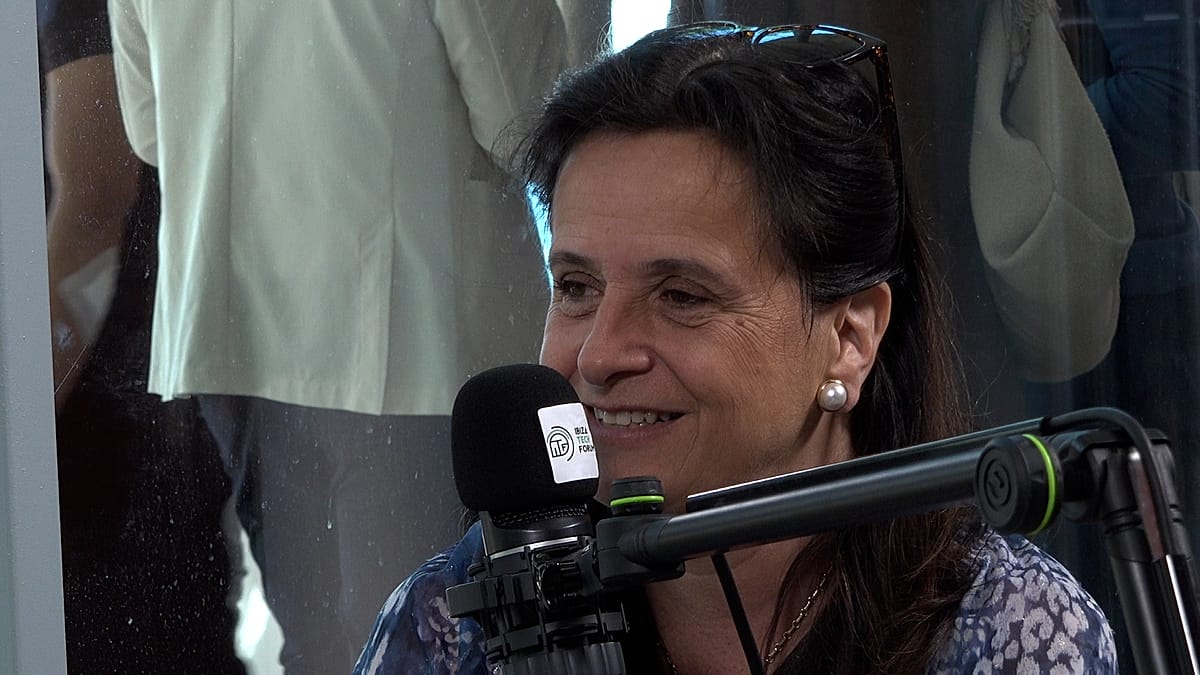
At the Ibiza Tech Forum 2026, the conversation around Spain's startup ecosystem took a sobering turn. Beyond the buzz of innovation and disruption, the event's key message was clear: talent alone is not enough. Without robust financial architecture, a clear path to scale, and a functioning exit market, even the most promising ideas risk stagnation.
Pilar Carrato, Chief Financial Officer of the Centre for the Development of Technology and Innovation (CDTI), delivered a sharp analysis of the sector's strengths and weaknesses. Speaking to Euronews, she dissected what it takes for Spanish startups to compete internationally, drawing on the CDTI's track record of investing €3 billion over the past two years across 150 companies and 40 funds.
Speaking the Investor's Language
Carrato identified a common misstep: founders often approach investors without understanding their own stage of development. “They need to know what stage they are at and who they should be approaching, otherwise they are going to waste a lot of time,” she said. Private investors, she stressed, are not merely looking for a profitable business; they want a scalable model that can trace the coveted J-shaped curve—an initial dip in cash flow followed by exponential revenue growth without a proportional rise in operating costs.
To win over backers, Carrato highlighted three non-negotiable ingredients: a multidisciplinary team (with clear roles for technology, strategy, sales, and finance), a market-oriented approach, and a thorough understanding of the competition. “There are some brilliant ideas out there, but if they don’t solve a real market need, the startup will fall by the wayside,” she warned. She urged founders to let go of their idealized product vision: “Your product is like your child and you think it’s beautiful, but if the market wants it to be different, you will have to change it through constant dialogue with your customers.”
The Exit Bottleneck
Comparing Spain to major international hubs, Carrato pinpointed a core problem: a logjam in exits. Investors enter the market but find themselves stuck with no way out, a situation she linked to a cultural shortfall among Spanish companies. Over the past two decades, fewer than ten startups have been acquired by major domestic corporations. Unlike in other markets, neither corporate giants nor Spanish pension funds are buying local technology, which “dries up” private investors who cannot exit and recycle capital. To fix this market failure, Carrato called for streamlined regulation, tax incentives, and easier access to secondary markets.
This challenge is not unique to Spain. Across the EU, similar bottlenecks have prompted initiatives like the voluntary cross-border banking regime proposed by France, Italy, and Spain to tackle fragmentation. Meanwhile, the EU's tech sovereignty plan aims to reduce dependence on US and Chinese players, but Spain's domestic exit gap remains a stubborn obstacle.
Financial Discipline as a Lifeline
From her vantage point as CFO, Carrato argued that financial discipline from day one is decisive. Poorly planned milestones condemn founders to lurch from one funding round to the next, instead of focusing on the product. A badly designed initial corporate structure can destroy value: “I know companies with good CFOs that have tripled their sales, and equally good products that disappear because they were financed the wrong way and their founders signed up to things they shouldn’t have.”
Public–Private Partnerships as a Lever
Given that Spain lacks the powerful private financial muscle seen in other countries, Carrato championed blending resources. The CDTI steps in to mitigate risk: “We provide a leverage effect. If you need 2 million euros and the private investor is only willing to put up one, the public sector can cover the rest.” Her final recommendation for founders seeking funding this year is to carefully study the full range of options—from CDTI grants and Enisa’s participatory loans to long-term backing through instruments such as ICO or Cofides. With one caveat: “You need to be absolutely sure who you are marrying. Bringing a fund on board is a long-term marriage.”
Spain's startup scene is brimming with talent, but as Carrato made clear, turning ideas into success requires more than a great concept. It demands strategic funding, rigorous financial planning, and a functioning ecosystem that allows investors to exit and reinvest. Without those pieces, the continent's potential will remain just that—potential.