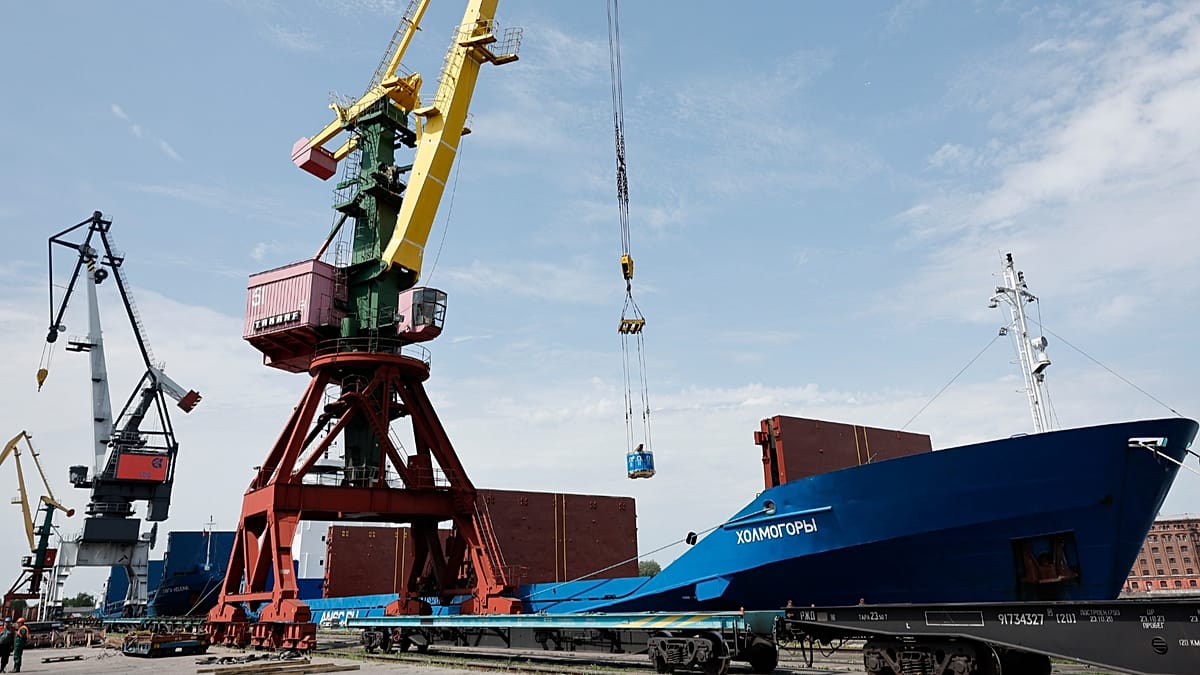
Spanish investigators have uncovered that the Russian cargo ship Ursa Major, which sank in the Mediterranean Sea between Spain and Algeria in December 2024, was carrying components for two submarine nuclear reactors destined for North Korea. The vessel, operated by Oboronlogistika—a company owned by the Russian Ministry of Defence—went down after explosions in its engine room, killing two crew members and leaving 14 survivors rescued and brought to Spain.
The ship's captain later told Spanish authorities that items declared on the manifest as "non-dangerous merchandise"—two large hatch covers—were actually reactor components similar to those used in submarines. He also revealed he believed the ship would eventually be diverted to the North Korean port of Rason to deliver the reactors, though he declined to discuss the cargo further due to safety concerns.
Deliberate Sinking Suspected
According to details of the Spanish probe obtained by CNN, investigators now believe the Ursa Major may have been deliberately sunk by a Western military using a rare supercavitating torpedo to prevent Russia from transferring advanced nuclear technology to North Korea. The Russian Foreign Ministry initially attributed the sinking to an "explosion in the engine room" but offered no explanation for the blast.
The vessel, previously known as Sparta III and constructed in 2009, was officially traveling from St Petersburg to Vladivostok carrying two large cranes, 129 empty containers, and hatch covers. Investigators have questioned why Moscow would send such cargo by sea around the world rather than using Russia's extensive rail network, suggesting the cranes were intended to assist with delivering the sensitive nuclear cargo upon arrival in North Korea.
The sinking occurred just two months after North Korean leader Kim Jong-un sent some 10,000 troops to support Russia's full-scale invasion of Ukraine—an exchange that investigators believe may have prompted the Kremlin to transfer nuclear technology to Pyongyang in return. Russia and North Korea also have a mutual military aid deal in place since late 2024.
Military Activity Around Wreck Site
In the months following the sinking, significant military activity has been detected around the wreck site, which lies at a depth of approximately 2,500 meters. One week after the incident, the Russian spy vessel Yantar—later detected near UK waters in early 2025, prompting stern warnings from the British government—spent five days positioned over the Ursa Major wreckage. Meanwhile, US nuclear "sniffer" aircraft have flown over the sunken ship twice in the past year, according to public flight data.
Spanish authorities have stated that recovery of the ship's data recorder was impossible without incurring major costs and risks. Experts have questioned why this would be the case if no radioactive material were involved.
The Ursa Major had been under US and UK sanctions since Russia's full-scale invasion of Ukraine in 2022, due to its owner's role in supplying cargo to the Kremlin's military. The vessel had also been used for years as part of Russia's "Syrian Express"—a supply route transporting military equipment and weapons to Russian forces in Syria. Ukrainian military intelligence (HUR) had previously reported that the ship was headed to Syria to assist with evacuating Russian military equipment from the country's bases at Tartus and Khmeimim, following the fall of Bashar al-Assad's regime. However, the Spanish probe concluded that indications the ship would go to Syria were likely a distraction from the trip's true purpose.
Following pressure from opposition lawmakers, the Spanish government issued a brief statement in February confirming the captain's testimony about the components for two nuclear reactors similar to those used in submarines. South Korean intelligence reported in September 2025 that Moscow had already handed Pyongyang one nuclear reactor, and multiple South Korean government sources have expressed alarm over the potential proliferation of nuclear technology.
North Korea released photographs in December 2025 of Kim Jong-un's visit showing what appeared to be a largely completed nuclear-powered submarine hull under construction in an assembly hall. Pyongyang has indicated it plans to arm the submarine with nuclear weapons, calling it a "strategic guided missile submarine" or a "strategic nuclear attack submarine." While questions persisted about whether North Korea, a heavily sanctioned country, could obtain resources and technology to build nuclear-powered submarines, experts initially believed it was more likely Pyongyang designed its own reactor with Moscow's expertise, rather than acquiring a decommissioned Russian one.
This incident highlights the growing security concerns across Europe, particularly in light of recent Russian diplomatic activities in Vienna raising espionage concerns and the broader implications of Moscow's military cooperation with Pyongyang. The European Union has also taken steps to target Russian officials over human rights violations, underscoring the continent's vigilance against Kremlin-linked operations.