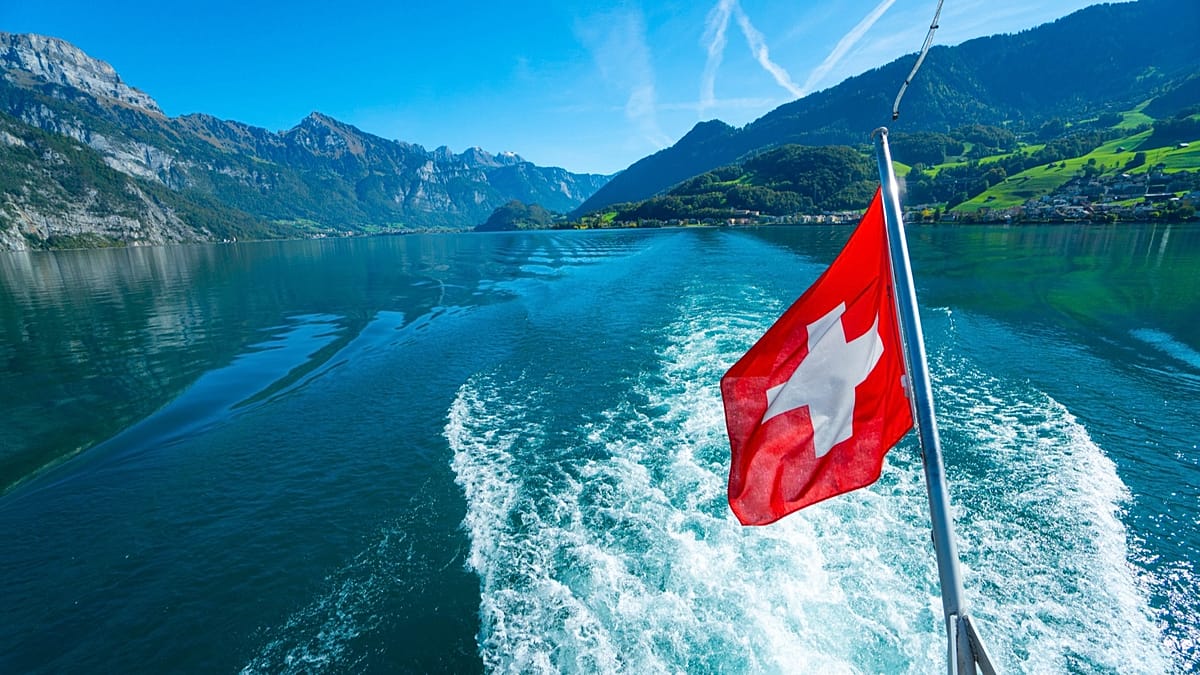
On Sunday, Swiss citizens head to the polls to decide whether to anchor a stricter form of neutrality in their constitution. Opinion surveys published in the final stretch of the campaign suggest a clear majority — above 60 percent — will follow the government's advice and vote no.
The proposal, brought forward by the sovereignty-focused group Pro Switzerland, would have defined neutrality as "armed and perpetual" and prohibited the country from joining any military alliance except in the event of an attack. It would also have barred Bern from imposing sanctions unless they were explicitly ordered by the United Nations.
Switzerland's neutrality dates back to 1516 and has been internationally recognised since 1815. But Russia's full-scale invasion of Ukraine has reopened a fierce debate about what that neutrality should mean in practice. Bern's decision to align with European Union sanctions against Moscow angered both the Kremlin and domestic critics who argue the country has drifted from its traditional role as an impartial mediator.
A question of identity
For many Swiss, the vote felt like a referendum on national identity. "We have lost our way in recent years by taking very strong stances against Russia, while conversely adopting extremely weak positions regarding Israel," said Jean-Daniel Ruch, a former Swiss diplomat, at a rally in support of the initiative. "This is an opportunity to restore the credibility of our neutrality."
Opponents, however, warn that a yes vote would play directly into Moscow's hands. "Vladimir Putin would rub his hands together with glee if we accepted this initiative," said Samuel Bendahan, a Socialist member of parliament, during a televised debate.
The Swiss government and parliament have both rejected the proposal, arguing that a rigid constitutional clause would tie the country's hands at a time of soaring geopolitical tensions. Foreign Minister Ignazio Cassis insisted that "neutrality has always been applied with a degree of flexibility." While Bern has no plans to lift its ban on arms exports to conflict zones, Cassis stressed that "neutrality does not mean indifference" and that Switzerland would "not look away when we see violations of the very international rules that allow us to live in peace."
Nearly all major political parties oppose the initiative, with the exception of the populist right-wing Swiss People's Party (SVP), which has championed it from the start. Yet the proposal has also drawn support from figures outside the party, including Samuel Sommaruga, a doctor with no political affiliation but a family steeped in Swiss public life — his father is a prominent Socialist senator and his grandfather served as president of the International Committee of the Red Cross.
Sommaruga fears that without a strict definition, Switzerland will be seen internationally as having "renounced its neutrality" altogether. He warned that the country could be sucked into NATO and lose its privileged status as a host for international organisations and peace negotiations. "I think that if we vote no, we risk losing that," he told AFP.
The debate has also exposed a generational and regional split. Urban centres like Zurich and Geneva, home to many international institutions, tend to favour a more flexible approach, while rural and conservative areas lean toward a stricter reading of neutrality. The outcome will be closely watched across Europe, particularly in Brussels and Berlin, where officials have been wary of any move that could weaken the EU's sanctions regime against Russia. The EU has already faced internal friction over sanctions, as seen in the recent stalled renewal when Latvia rejected a French compromise.
Sunday's ballot also includes a separate initiative on food self-sufficiency, which polls suggest will be rejected. That proposal sought to raise the country's domestic food production rate to 70 percent, up from 42 percent in 2024.
For now, the expected no vote is likely to be interpreted not as a rejection of neutrality itself, but as a rejection of a rigid, dogmatic interpretation. As Cassis put it, neutrality has always been a tool for engagement, not a shield for indifference. The challenge for Bern will be to maintain that balance in a world where the lines between conflict and cooperation are increasingly blurred.