Syria's General Intelligence Directorate has detained Ali Kayali, a 70-year-old militia commander linked to the 2013 massacres in the coastal towns of Bayda and Baniyas, according to the state-run news agency SANA. Kayali, who also went by the alias Mihrac Ural, was reportedly captured as he tried to leave the country.
Kayali is accused of leading armed groups that, alongside forces loyal to ousted president Bashar al-Assad, carried out summary executions and widespread violence in the Tartus province and in rural areas of Latakia, Aleppo, and Idlib. The Syrian Observatory for Human Rights, citing unnamed sources, said Kayali was actually seized from his home in the Mansourieh area of Lebanon, not at a border crossing. According to those sources, armed men with Lebanese accents entered the property, detained his wife and brother-in-law, and took him away. Lebanese authorities have not commented on the report.
A dark chapter in Syria's coastal war
The events in Bayda and Baniyas in May 2013 remain among the most harrowing episodes of Syria's civil war. Regime forces and allied militias stormed residential areas, conducting door-to-door raids and executing civilians. The Syrian Network for Human Rights documented 264 deaths in Bayda, including 36 children and 28 women, and 195 in Ras al-Nabeh, including 56 children and 43 women. A Human Rights Watch report published in September 2013 confirmed at least 248 deaths across the two locations, noting that the true toll was likely higher.
Witness accounts describe bodies left in streets, shops, and basements, with executions carried out using firearms and bladed weapons. Homes were set alight with the dead still inside. These atrocities have left deep scars on the coastal communities, many of whom still seek justice.
Who is Ali Kayali?
Born in the Turkish city of Antakya in 1956, Kayali was active in armed organisations, including the Popular Salvation Front and the Front for the Liberation of the Iskenderun Brigade, both designated terrorist groups by Ankara. He fled to Syria in 1982, obtained Syrian citizenship, and changed his name. He reportedly cultivated close ties to the al-Assad family through his wife.
When the uprising against Assad began in 2011, Kayali took command of the Popular Front for the Liberation of the Iskenderun Brigade, which fought alongside regime forces, primarily along Syria's coast. His arrest follows that of Jamal Trabelsi, described as his deputy, who was detained by Syria's Internal Security Forces on 4 October. Turkish authorities also announced the separate arrest of Omar al-Khatib earlier this month as he attempted to reach Europe by sea; media reports link him to the 2013 Reyhanli bombing and coordination with Assad-era intelligence.
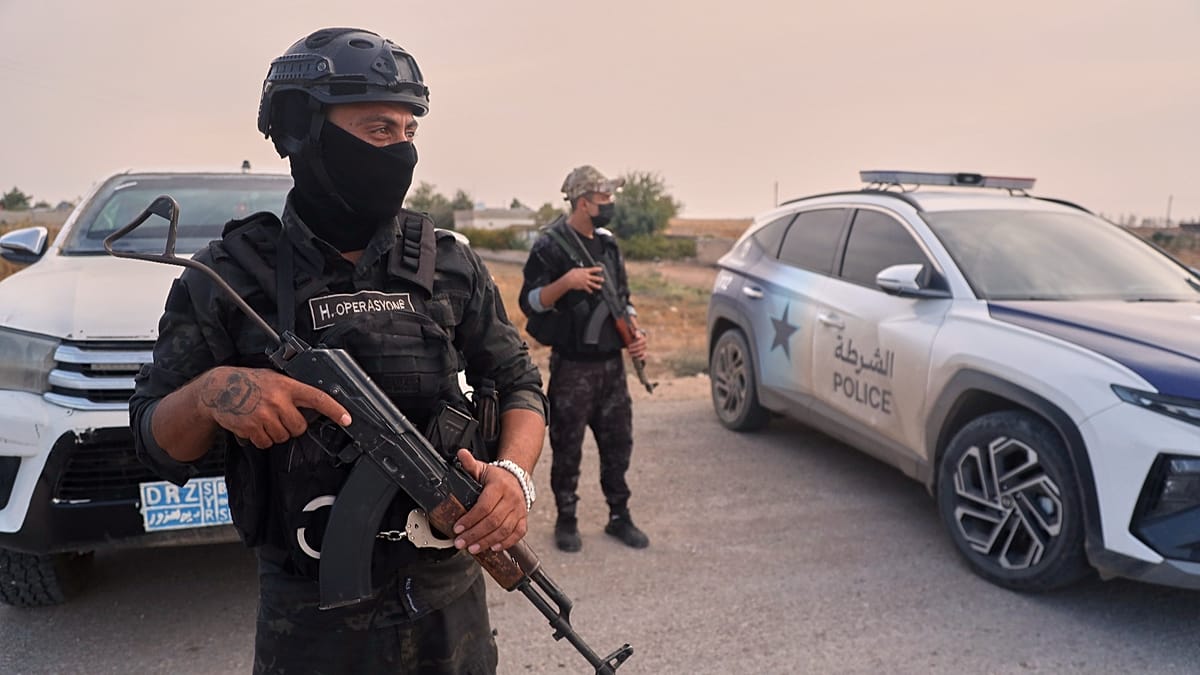
Syria's Interior Ministry has said it is continuing to pursue individuals accused of abuses under the former regime as part of its efforts to achieve transitional justice. Damascus has stepped up attempts to restore trust in its government and services after a 13-year war that killed hundreds of thousands and displaced millions. The arrest of Kayali is a significant step, though many Syrians remain sceptical about the depth of the new authorities' commitment to accountability.
For Europe, which has absorbed a large share of Syrian refugees, the pursuit of justice for such crimes resonates strongly. The continent's courts have also been active in prosecuting Syrian officials under universal jurisdiction, a trend that may now intersect with Damascus's own efforts. As Syria's new leadership seeks international recognition, its handling of these cases will be closely watched in Brussels and other European capitals.