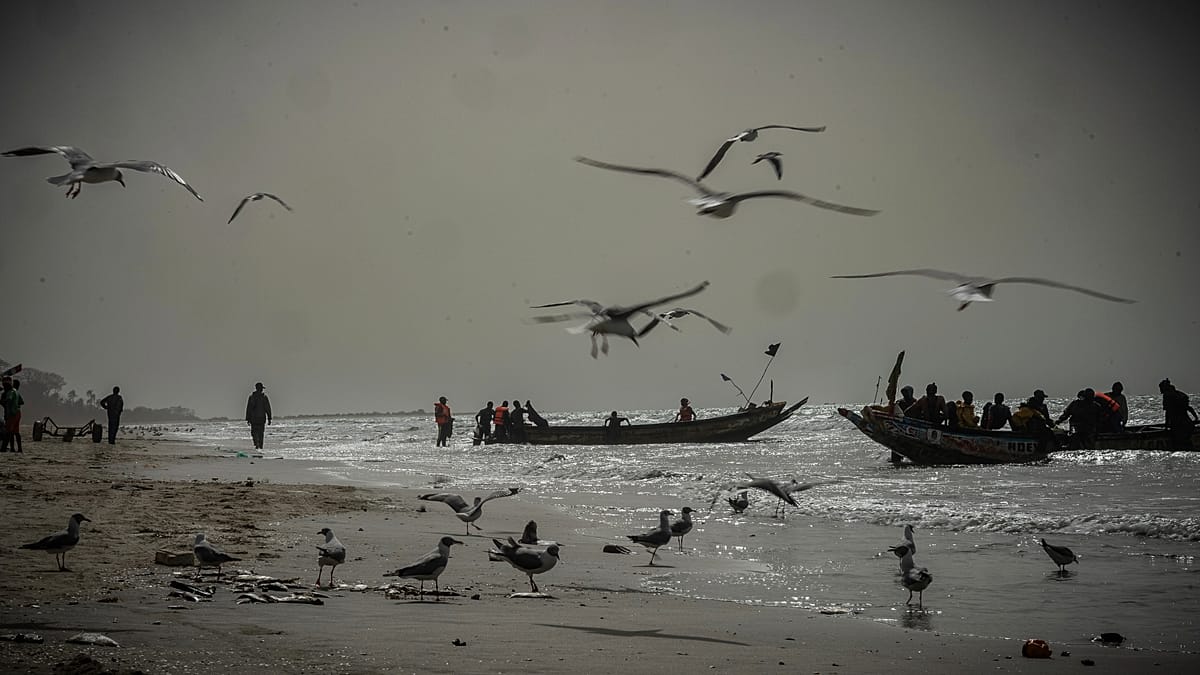
At least 12 people have died after a boat carrying migrants sank off the coast of Gambia, according to the Gambia Red Cross Society (GRCS). The vessel went down near Jinack Kajata in the country's North Bank region on Thursday, with the migrants reportedly aiming to reach Europe via the West African Atlantic route.
The GRCS said in a statement that the number of missing remains uncertain and that it is working with authorities and response partners as rescue efforts continue. Local media report that Jinack Kajata, on Jinack Island, has become an increasingly popular launch point for migrants attempting the perilous crossing to Spain's Canary Islands.
A route growing more dangerous
The United Nations' International Organization for Migration (IOM) has long warned that the West African Atlantic route is a key pathway for migrants from the region, despite its mounting dangers. New data released this week show that while arrivals to the Canary Islands fell sharply from the 2024 peak—down 62 percent in 2025—recorded deaths and disappearances remained almost unchanged, dropping only 4 percent from 1,215 to 1,172. That means the route has become significantly more lethal for those who attempt it.
The IOM attributes the shift to tighter controls in traditional departure points such as Morocco, Mauritania, and Senegal. These measures have pushed migrants further south, toward countries like Gambia. The agency notes that these alternative departure points can add up to 750 kilometers to the crossing, stretching some journeys to roughly 2,200 kilometers. That exposes people to longer periods at sea, more remote and less monitored coastlines, and greater risks of shipwreck, dehydration, and disappearance.
The tragedy off Gambia echoes a similar disaster earlier this year in the Red Sea, where a shipwreck off Djibouti killed at least 139 migrants bound for Yemen, according to the UN. That incident underscored the broader dangers facing migrants across multiple routes.
European policymakers have been grappling with how to respond to migration pressures. The EU has recently tightened border controls and accelerated migrant returns, while individual member states have taken their own measures. Latvia, for example, is seeking broader border guard powers after armed migrant incursions, and the UK has ended a Channel migrant returns pilot with France. These efforts, however, do little to address the root causes that drive people to undertake such dangerous journeys.
The IOM's data highlight a troubling paradox: as Europe fortifies its external borders, the routes migrants use become longer and more hazardous. The shift southward along the West African coast is a direct consequence of increased surveillance and patrols in the north, pushing departures to less monitored areas like Gambia's coast.
For the families of those lost off Jinack Kajata, the wait for news is agonizing. The GRCS has promised further updates as the response continues, but the full scale of the tragedy may not be known for days. What is clear is that the Atlantic route, already one of the world's deadliest migration corridors, is becoming even more unforgiving.