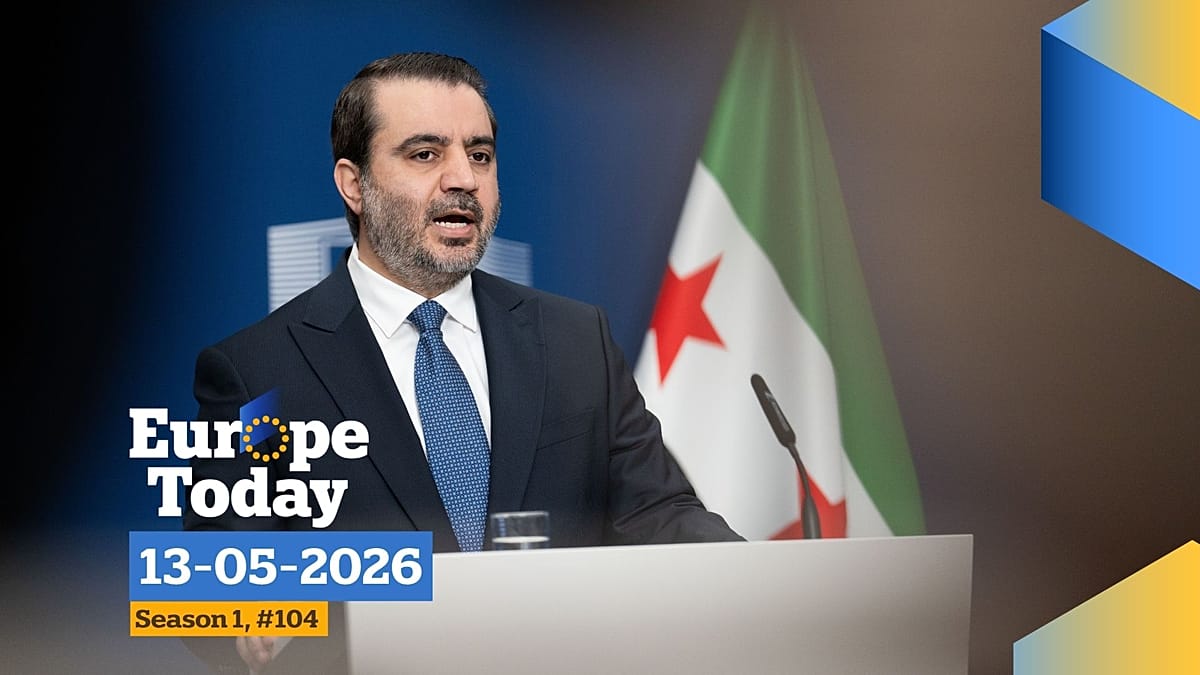
In an exclusive interview with Euronews, Syrian Foreign Minister Asaad Hassan al-Shaibani addressed the implications of this week's landmark EU-Syria talks, which culminated in the full restoration of the Cooperation Agreement between the two sides. The development marks a significant shift in European diplomacy toward Damascus after years of strained relations.
The interview, conducted by Europe Editor Maria Tadeo, comes as the European Union seeks to recalibrate its approach to Syria amid broader geopolitical realignments. The restored agreement covers areas including economic cooperation, political dialogue, and technical assistance, though specific terms remain under negotiation.
Broader European Security and Diplomatic Landscape
The EU's renewed engagement with Syria is part of a wider pattern of diplomatic activity across the continent. In a separate interview on the same program, Estonia's Defence Minister Hanno Pevkur discussed Baltic security concerns and NATO's eastern flank. Pevkur's remarks come as EU member states remain divided over direct talks with Russia on the Ukraine war, a topic that has exposed fissures among foreign ministers.
Australia's ambassador to Belgium and NATO, Angus Campbell, also appeared on the show, highlighting the growing importance of Indo-Pacific partnerships for European security. The EU's foreign policy chief, Kaja Kallas, has recently rejected former German Chancellor Gerhard Schröder as a potential mediator in Ukraine peace talks, underscoring the bloc's insistence on maintaining a unified stance.
Meanwhile, the EU's budget negotiations are intensifying, with defence spending surging while farmers and regions face potential cuts in the bloc's €2 trillion framework. These internal debates are shaping the Union's ability to project power externally.
Hungary's New Government and Transatlantic Dynamics
Euronews correspondent Zoltán Siposhegyi provided analysis on the key figures shaping Hungary's new government under Prime Minister Viktor Orbán. Budapest's stance on Ukraine accession talks has been a point of contention, with Ireland reportedly eyeing a shift in Hungary's position to unblock negotiations. The EU remains split over whether to pursue direct talks with Russian President Vladimir Putin on a peace settlement, a debate that continues to test the bloc's cohesion.
On the transatlantic front, former U.S. President Donald Trump's upcoming visit to Beijing for talks on Iran and trade has drawn attention. Jakub Janas offered an explainer on the cards Trump holds in these negotiations, which could have ripple effects for European trade and security interests, particularly regarding Iran's nuclear program and the Strait of Hormuz.
Health and Science: Hantavirus in Focus
Professor Luke O'Neill from Trinity College Dublin addressed the recent hantavirus outbreak, cautioning against direct comparisons to COVID-19. While hantavirus infections can be severe, O'Neill emphasized that the transmission dynamics and public health response differ fundamentally from the coronavirus pandemic. The outbreak has raised questions about zoonotic disease surveillance in Europe, though experts stress that the risk of a widespread epidemic remains low.
The episode of Europe Today also covered the diminishing Jewish community in Syria, as reflected in the struggle to maintain kosher practices in Damascus. This cultural angle underscores the human dimension of Syria's long conflict and the challenges of rebuilding a pluralistic society.
As the EU navigates these complex issues—from Syria to Ukraine, from budget battles to health threats—the continent's ability to act cohesively will be tested. The exclusive interview with Syria's foreign minister is a reminder that diplomacy, even with former adversaries, remains a tool the EU is willing to deploy.