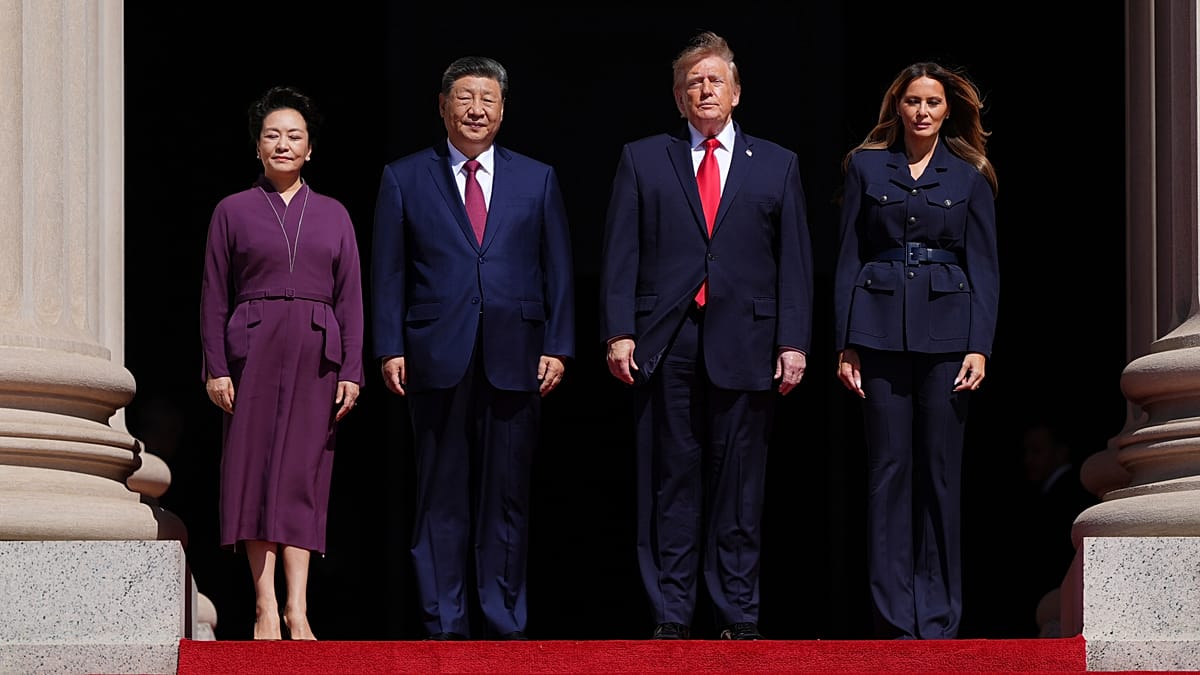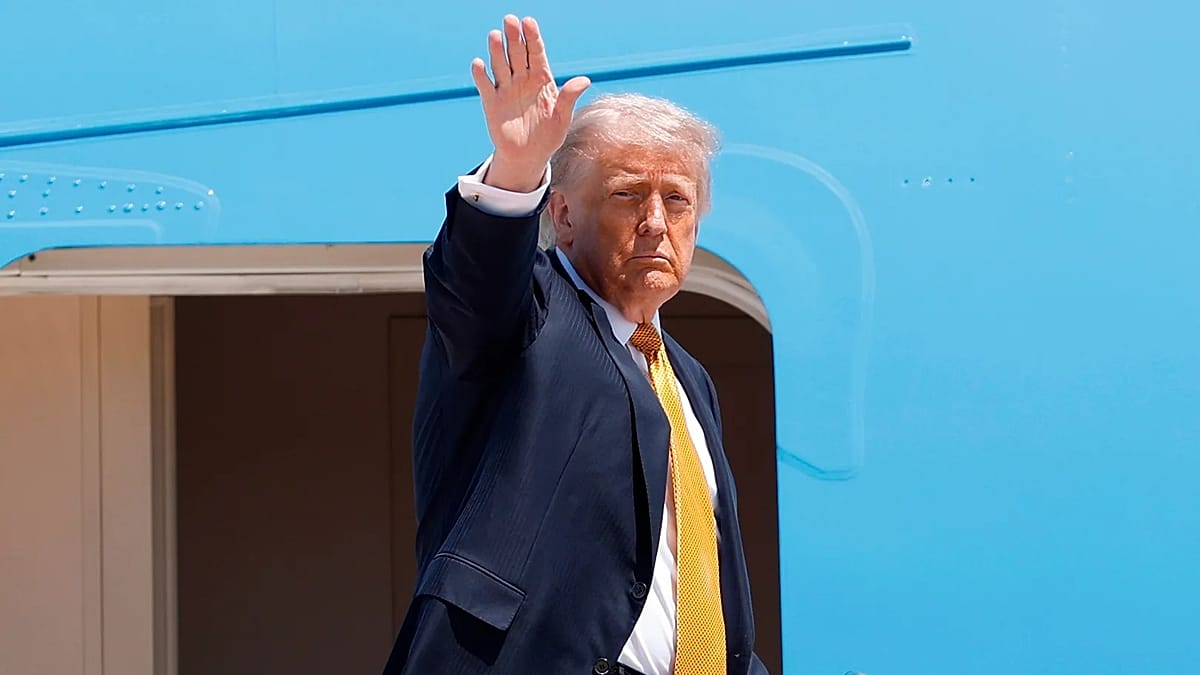
US President Donald Trump is en route to Beijing for a two-day summit with Chinese President Xi Jinping, his first visit to China since 2017. The talks, scheduled for Thursday and Friday, are expected to cover trade liberalisation, the ongoing conflict in Iran, and the status of Taiwan. Trump has signalled he will press Xi to open China's markets further to American firms, a message underscored by the presence of several high-profile US business leaders on his plane.
Among those travelling with Trump are Nvidia CEO Jensen Huang and Tesla's Elon Musk, who boarded Air Force One during a stopover in Alaska. Apple's Tim Cook and other top executives are also expected in Beijing for the summit. In a post on Truth Social after departing Washington, Trump wrote: "I will be asking President Xi, a Leader of extraordinary distinction, to 'open up' China so that these brilliant people can work their magic, and help bring the People's Republic to an even higher level!"
Iran and Taiwan Loom Over Trade Agenda
While Trump's primary focus appears to be economic, political tensions threaten to overshadow the talks. The US president has said he expects a "long talk" with Xi about Iran, which remains a major buyer of Iranian oil despite US sanctions. However, Trump downplayed the need for Chinese mediation, telling reporters that "I don't think we need any help with Iran" and that Xi had been "relatively good" on the issue. Beijing, for its part, is growing impatient for a resolution; China's foreign minister urged his Pakistani counterpart on Tuesday to step up mediation efforts between Tehran and Washington.
On Taiwan, Trump has taken a notably different stance from previous US administrations. He indicated on Monday that he would discuss US arms sales to the self-governing island with Xi, a departure from the long-standing US policy of not consulting Beijing on such matters. Trump has repeatedly touted his personal rapport with Xi, insisting it would prevent a Chinese invasion of Taiwan. "I think we'll be fine. I have a very good relationship with President Xi. He knows I don't want that to happen," he said.
The summit's agenda also includes extending a one-year truce in the US-China tariff war, which Trump and Xi agreed to during their last meeting in Seoul in October. Other topics likely to be raised include China's controls on rare earth exports, artificial intelligence rivalry, and the broader trade imbalance between the world's two largest economies.
Beijing's Security Presence and European Implications
The tense atmosphere surrounding the summit was already visible in Beijing, where police were monitoring major intersections and checking metro passengers' ID cards, according to journalists on the ground. Wen Wen, a 24-year-old traveller from Nanjing, told AFP: "It's definitely a big deal. Some progress will certainly be made," adding that she hopes for "lasting peace" despite global instability.
For Europe, the outcome of the Trump-Xi meeting carries significant strategic weight. A potential US-China deal could reshape trade dynamics and affect European interests in sectors from technology to defence. As analysts have noted, any agreement between Washington and Beijing may alter the competitive landscape for European firms and influence EU policy on issues like rare earth supply chains and AI regulation. Meanwhile, middle powers are forging new alliances in response to the superpower rivalry, a trend that could reshape Europe's diplomatic calculus.
Trump's weakened position—embroiled in a costly Iran war and facing domestic political headwinds—may also affect his leverage in Beijing. Since his 2017 visit, China has grown more assertive on the global stage, and the US president is under pressure to secure tangible outcomes. The summit's packed itinerary includes a state banquet at the Great Hall of the People and a tea reception, but the real test will be whether the two leaders can bridge deep-seated differences on trade, security, and regional stability.