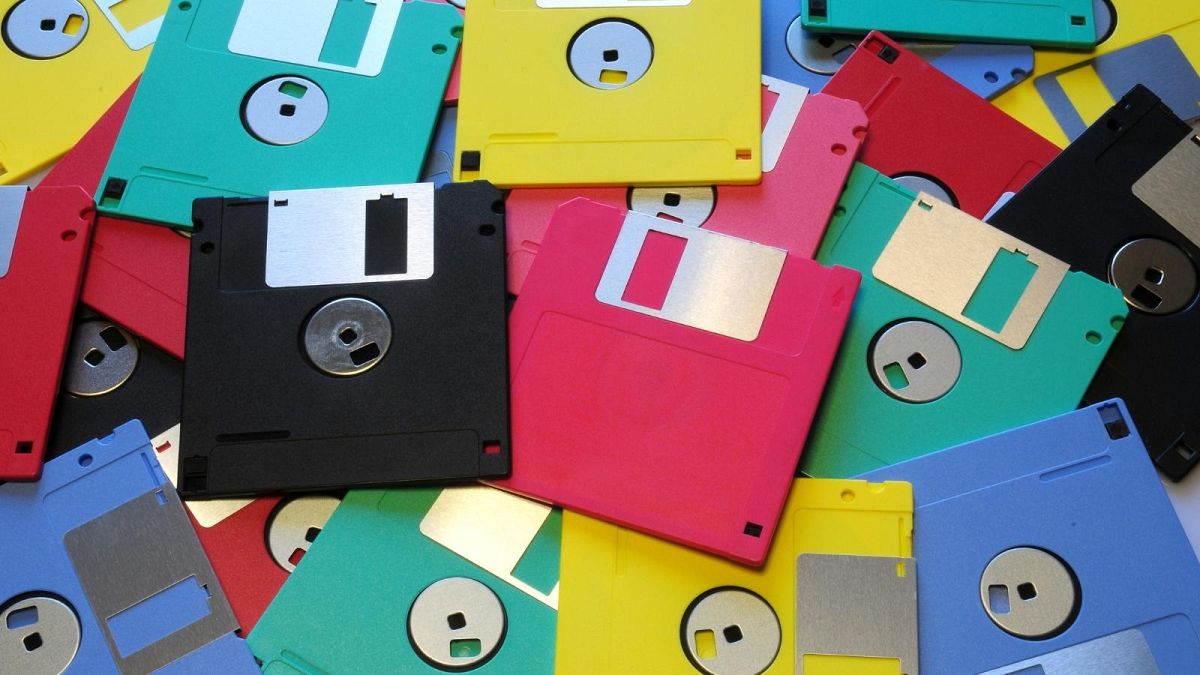
For most people under 30, the floppy disk is a pixelated icon on a screen, a relic of the 1990s that survives only as a metaphor for saving files. But in a nondescript warehouse in California, Tom Persky is keeping the format alive, selling thousands of disks a week to industries that have yet to move on.
Persky, a 73-year-old former software developer, runs what is arguably the world's last bulk supplier of floppy disks. His customers range from embroidery shops to airlines, all of whom rely on the 3.5-inch magnetic squares for machinery that was designed decades ago and has never been upgraded.
“The joke is that when a six-year-old girl runs up to her father with a floppy disk that she found somewhere, she said, 'Oh, look, Daddy, somebody 3D-printed the save icon,'” Persky told European Pulse, laughing. The anecdote captures the generational gap, but it also underscores the quiet persistence of a technology that many assumed was dead.
Why floppy disks refuse to die
Persky receives new and used disks from around the world. Each one is inspected, and if used, it is wiped clean with a degausser—a machine that uses a powerful magnet to erase all data. The disks are then relabeled and repackaged for resale.
“Floppy disks are very reliable, very stable, a very well-understood way to get information in and out of a machine. Plus, they have the additional feature of not being very hackable,” he said. That combination of reliability and security is why some sectors have stuck with the format long after the rest of the world moved to USB drives and cloud storage.
His biggest clients include embroidery businesses, which use floppy disks to load patterns into industrial sewing machines, and the aviation industry, which still relies on them for certain avionics systems. Tool and die manufacturers also depend on the disks to program CNC machines.
Persky's warehouse is a museum of computing history. He pulls out an 8-inch floppy disk from the 1970s, a true relic that is nearly the size of a dinner plate. “We have literally thousands and thousands of these,” he says, holding it next to the more familiar 3.5-inch version for comparison.
The demand is not what it once was—Persky used to sell 500 disks a day—but it remains steady enough to keep the business viable. He is under no illusion that this will last forever. “I'll be here for as long as people continue to want to have these disks. But it's not forever,” he said.
For now, the floppy disk's resilience is a reminder that technological progress is rarely linear. While Europe pushes ahead with digital innovation, from record-breaking gaming conventions in Cologne to ambitious AI regulations, some corners of the economy still run on hardware that predates the internet.
Persky's operation is a niche, but it serves a real need. As long as there are machines that only speak floppy, there will be someone like him to supply the disks. And when the last one is sold, the format will finally join the punch card and the cassette tape in the dustbin of history.