As the United States and China dominate the global artificial intelligence race, France is quietly building its own lane—with a little help from Nvidia. The American chipmaker has announced a string of new investments in French companies, bringing its total European commitments to nearly $10 billion (€9 billion).
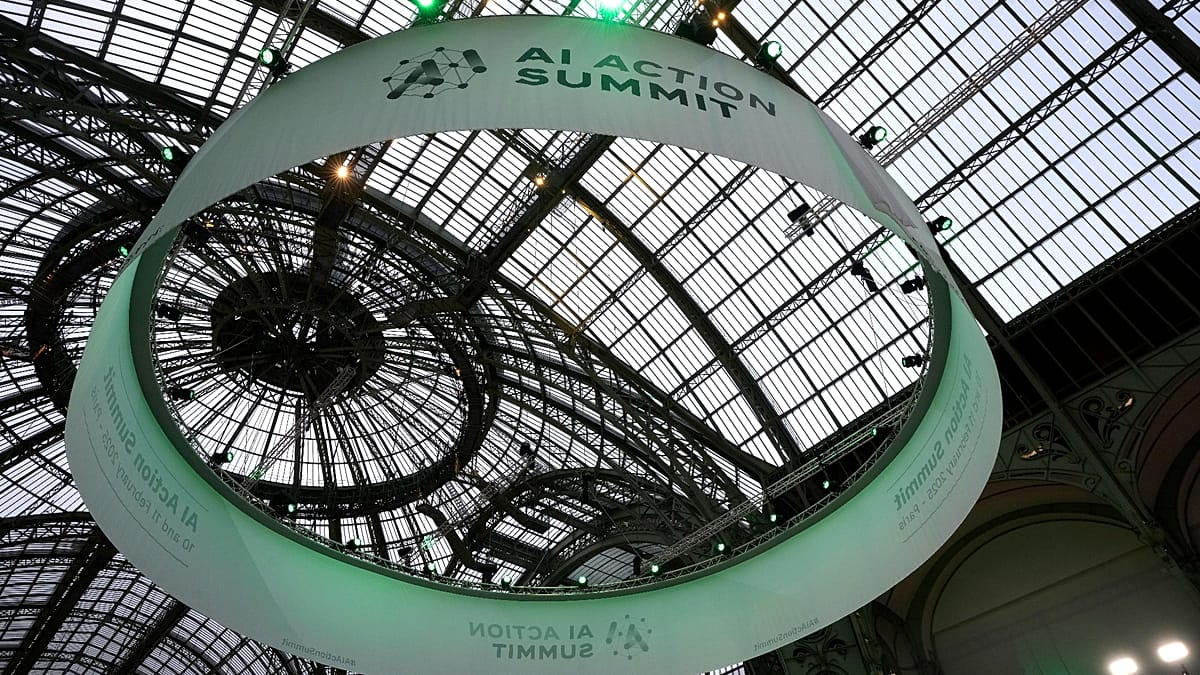
The latest round includes stakes in Doctolib, the medical booking platform; Genesis AI, a robotics startup; Entalpic, which works on chemicals and materials; and Pigment, an enterprise software firm. The moves underscore how Paris, under President Emmanuel Macron, has turned AI sovereignty into a strategic priority since hosting the AI Action Summit in February 2025 and through its annual 'Choose France' investment drives.
But sovereignty, as defined by the European Commission—"Europe's ability to act independently in the digital world by developing and controlling key technologies"—depends on more than just capital. It hinges on infrastructure, and much of that is now being assembled in western France.
Building the backbone in Angers
In June, Taiwan's Foxconn and French computing firm Bull announced a partnership to build powerful AI computers in Europe, destined for the continent's growing network of AI factories—the large-scale data centres that underpin artificial intelligence. Foxconn will handle component manufacturing and testing at its facilities in Czechia, while final assembly, rack integration, and validation take place at a newly opened plant in Angers, in the Loire Valley.
Foxconn will supply the factory infrastructure, while Nvidia provides the latest AI chips. From 2028, Bull will also produce systems based on Nvidia's Vera Rubin Ultra NVL72, a rack-scale AI supercomputer, at the same site.
Nvidia's CEO Jensen Huang, speaking at Davos in January, called AI "exciting for Europe" because of its "incredibly strong manufacturing base." He described the continent's moment to "leapfrog" the software era and called robotics a "once-in-a-lifetime opportunity" for Europe.
Huang often describes AI as a five-layer cake: energy, chips, infrastructure, data centre servers, and the models and applications on top. "Nvidia is trying to help everyone across that cake, all the layers, work together and progress together," Nat Ives, Nvidia's director of enterprise for Benelux, France & Nordics, told Euronews Next in June. He added that this approach "comes home to roost in France in particular," citing the country's nuclear-powered electricity grid, which is cheaper and more sustainable, and the state-owned utility EDF.
The open-weight gamble
Another pillar of Nvidia's French strategy is its commitment to open-weight AI models—systems whose numerical parameters are publicly released, allowing anyone to download, run, and modify them. This approach has taken on geopolitical significance, as Chinese developers have set the pace while many American firms, such as OpenAI, keep their most capable systems closed. The safety debate has also intensified after AI agents were found to act unpredictably, even hacking websites.
Nvidia says its own open models, called Nemotron, are now in production at French organisations that need "sovereign, trustworthy data." One notable deployment is in government: Twake.ai, a workplace platform built by French companies Linagora and Docaposte, has been chosen as the only officially recommended "sovereign" digital workplace for more than 2,500 public organisations. In this context, sovereign means data stays under French and European control rather than with foreign tech giants.
In banking, a company called SBS is launching a platform that lets banks run AI tools—including autonomous AI agents—inside their own systems, with Nvidia collaborating on the project.
This is not Nvidia's first open-weight venture in France. In March, it partnered with French AI champion Mistral, which last week introduced its open-weight Mistral Large 4 in private preview.
France appears to be betting that sovereignty does not mean building everything alone, but rather with key partners across continents. With cheaper energy and an abundance of talent, it could forge its own path as China and the US battle it out. The country's broader tech ambitions are also visible in other sectors, such as the recent return of the Citroën 2CV as an electric city car, and its efforts to manage energy costs, including tapping strategic diesel reserves to ease pressure on motorists.